




Eliminating adrenaline-fuelled chaos on deck is the single most effective safety protocol a skipper can introduce. Here are some practical offshore sailing routines.
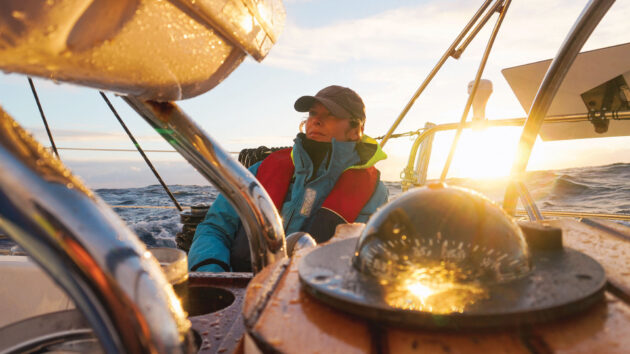
Most sailing manuals focus on the practical: diagrams for how to rig a storm jib, troubleshooting guides for a temperamental diesel engine. But a successful passage also has an invisible framework to it – the neurobiology, the psychological rhythms, and the unwritten human code required to forge a resilient, high performing offshore crew. Here are four essential rules for mastering the human element of offshore sailing.
1. The 3-Day Rule
I’ve done offshore passages on 15m yachts and 55m yachts — some with chefs, aircon, and warm showers; others where it’s a pot noodle and a bucket of salt water on the aft deck. No matter the vessel, one thing remains consistent: it takes time for everyone to find their groove.
Passages often begin with hurried exchanges at shift changes. The cockpit is manned only by those on watch because once each shift ends crew retreat immediately to their bunks, exhausted. But as 24 hours becomes 48, and 48 becomes 72, the atmosphere shifts. As if emerging from hibernation, the crew begins to surface, and the cockpit fills with happy, acclimatised sailors.
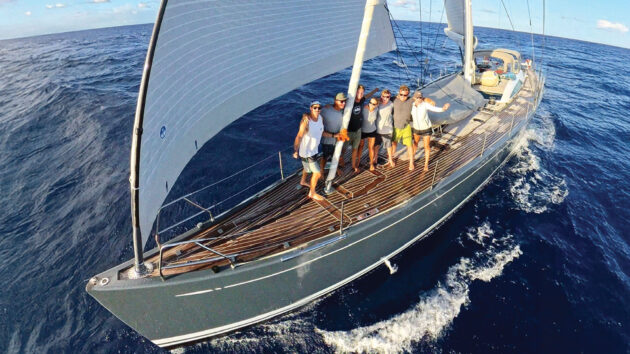
A well-bonded team will make any passage more enjoyable. Photo: Project World Sail
The first step toward a cohesive, resilient, and safer passage is understanding that the irritability, fog, and exhaustion that can occur during the first days at sea are the symptoms of a body forced to recalibrate its sense of reality.
The three-day rule is more than just a sailor’s superstition; it is a well-documented phenomenon in behavioural science and neurobiology. You slip the lines, but your biological operating system remains stubbornly tethered to the dock.
For the first three days you’re caught in a neurological tug-of-war. Your inner ear is confused that the world is tilted, your circadian rhythms are fighting a watch schedule, and your brain is struggling to power down from life on shore. Science calls this physiological habituation and it’s based around three pillars:
■ Neuro-vestibular habituation: your vestibular system – the structures in your inner ear that detect motion, tilt, and gravity – are sensing the non-stop movement of the boat. Meanwhile, your eyes report that the cabin, chart etc are stationary.
This sensory mismatch forces the brain to work overtime to rewire its understanding of balance, often manifesting as seasickness, lethargy, and poor judgment. By day three the ‘rewiring’ is complete; your brain has mapped this new environment, freeing up the energy you need to simply be yourself again.
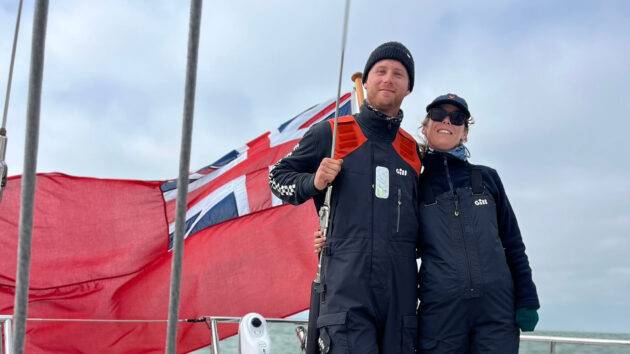
Charlotte DC and JP Baudains are professional sailors who alternate working and racing on superyachts with cruising. Find out more at projectworldsail.com and @projectworldsail. Photo: Project World Sail
■ Circadian entrainment: you are forcing yourself into a polyphasic sleep pattern (broken into short bursts). For the first 72 hours your hormonal regulators – like cortisol and melatonin – are out of sync, leading to the brain fog and irritability common in early watch shifts. By day three, your body begins to optimise these shortened sleep windows, prioritising REM sleep to recover.
■ Cognitive decompression: on land, most of us rely on ‘top-down processing’, an analytical, goal-focused style of thinking managed by the prefrontal cortex. Offshore, that focus is not just useless – it’s exhausting. To be a great sailor, your brain needs to pivot to ‘bottom-up processing’, where you interpret the world through raw sensory data. It takes three days for your prefrontal cortex to stop the analytical chatter and tune into the rhythm of the ocean.
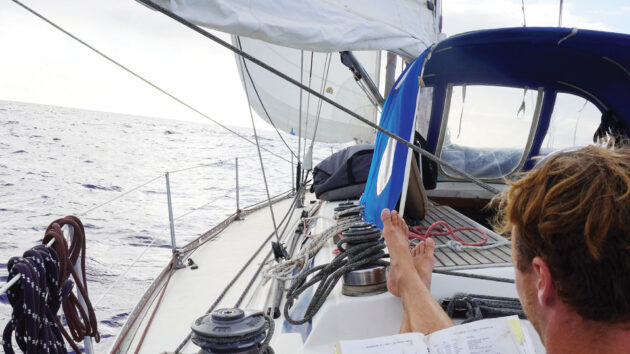
Rituals and habits, whether shared or solo, can help give structure to each day offshore. Photo: Project World Sail
2. Same, but different
Long offshore passages are unlike anything else. They are simultaneously awe-inspiring and, once the novelty fades, dangerously monotonous. Combatting this is critical; keeping a crew’s mind sharp is every bit as important as keeping them physically safe. To do this, we balance two psychological schools of thought.
■ Something different every day
It’s day 15. You haven’t seen anything but the horizon for two weeks. The days are merging into a continuous blue blur and the grand, poetic adventure is beginning to feel like a chore. This is the danger zone where motivation wanes and complacency creeps in. To break the cycle, we created the ‘Something different every day’ rule.
Some days, the ocean does the work for you: a pod of dolphins dancing in bioluminescence, a breaching whale, or a comet streaking across an ink-black sky. But when the sea is quiet, it is up to the crew to manufacture novelty.
Whether it’s a ‘half-way’ party, a themed dinner, or baking cookies, it’s a communal responsibility to keep the atmosphere fluid. These seemingly small events are more than just passing the time; this is a vital safety protocol.
A bored brain is a dormant brain. By engineering novelty we force the brain to exit its ‘Default Mode Network’ – that daydreaming state where accidents happen – and keep the ‘Task-Positive Network’ online.
Staying engaged is, quite literally, a way of ensuring that when the ocean does demand our full attention, we are awake enough to give it.
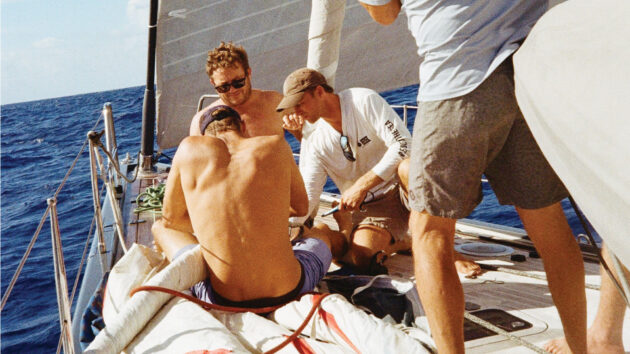
Even a benign crossing will require teamwork and problem-solving skills. Photo: Project World Sail
■ Re-occurring rituals
While our brains crave the jolt of novelty, they need the comfort of ritual. Offshore time is measured only by the sun and the watch schedule. Without a sense of rhythm, days become an amorphous expanse.
We combat this by having some recurring rituals – small traditions that occur (more or less) every day. Often, these fall into place organically. Some involve the whole crew; others are between watch partners; and I even set my own rituals when holding a solo watch. They are vital temporal anchors that give the crew something reliable to look forward to.
Examples could be 2am mid-watch noodles, a sunset quiz or a mid-morning work-out, but these habits serve a psychological function: they shrink the passage into manageable, human-sized bites and provide a vital sense of continuity.
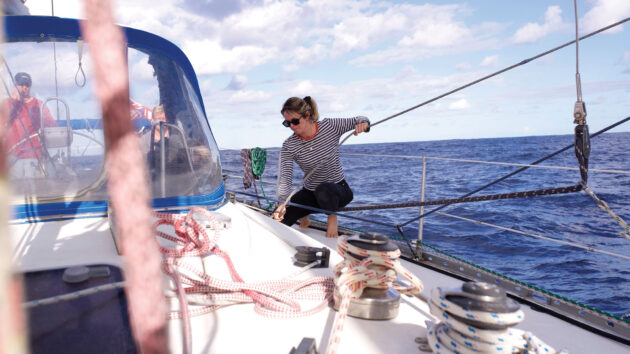
After around three days, most crews will have settled into life at sea. Photo: Project World Sail
3. Be a Good Human
Life at sea is demanding and tasks that are effortless on land – like making a coffee, drying a jacket or finding a tool – can quickly become laborious. It only takes one rough night of sailing to trigger a cascade of sleep deprivation, irritation, and fatigue. Yet meals must still be prepared, watches adhered to, and the vessel maintained.
This requires a total team effort. When one person breaks the chain, it disrupts the entire rhythm of the boat and sparks friction.
The most effective way to manage crew dynamics starts long before you leave the dock: with crew selection. Over the years, JP and I have learned that we’d rather sail short-handed than sail with the wrong person. Managing heavy weather is a technical challenge; managing a difficult personality is a structural nightmare.
Joph Carter, captain of the Swan 90 Freya, agrees. Having completed more than 100 offshore passages, he prioritises character above all else: “Finding the right mix is vital. It doesn’t matter how big the boat is; they become very small after a few weeks at sea.”

Small celebrations, for example by toasting the half-way mark or having a ‘theme’ night, can help stave off monotony. Photo: Project World Sail
Every crew member is responsible for the health of the group. If you’re tired, your crewmates are, too. It is tempting to leave a task for someone else, but in the confined space of a yacht, that mentality is toxic.
Take the dirty mug scenario. It’s 4am.You’ve just finished a rough watch; you’re soaked, exhausted, and every fibre of your being is yearning for your bunk. It is entirely understandable to toss your mug in the sink and collapse. But it would take an extra 10 seconds to wash and stow it. Those 10 seconds of sleep will not affect your recovery, but leaving the mug creates a ripple effect.
Essentially, that dirty mug sends a silent message: “My need for rest is more important than yours.”
Small acts of consideration are the currency of a happy boat. When you take those 10 seconds to tidy up, you aren’t just doing a chore – you’re telling your watch partner that you respect their time and their comfort. In the middle of an ocean, that’s the most valuable thing you can offer.
These conscious decisions take only a fraction of your time, but they make a massive difference. Just as negativity can spread, so can its opposite. If you leave your watch with the cockpit in order, lines flaked, rubbish removed, and the kettle filled for the next person, chances are they will do the same. Kindness, consideration, and respect flow through the boat.
This isn’t to say you won’t slip up. Everyone has an off-day; it is a reality we highlight in every pre-departure briefing. On those days, it’s the job of the rest of the crew to be the ones who step up – to be the person who washes the mug for their teammate when they simply cannot.
Ultimately, being a good human offshore is a tactical decision. By prioritising the collective over the individual, you help turn a group of sleep-deprived sailors into a cohesive team.
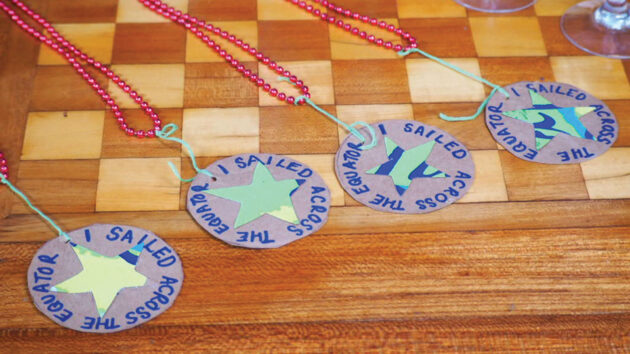
Home-made medals to mark a successful transatlantic. Photo: Project World Sail
4. Low-panic Culture
Technical skills are what we talk about in training manuals, but culture is what keeps a boat safe in the middle of an ocean. Safety at sea is not just about equipment; it is about the environment you create for your crew to speak up.
American offshore racer Erica Lush, who has skippered The Maiden Project and competed in the gruelling Solitaire du Figaro, understands the extreme mental toll of the sea as well as anyone.
She notes: “Sailing offshore with a crew requires above all good emotional intelligence. Forming a team where crew members feel valued and that they’re all contributing to the overall goal is crucial to the atmosphere on board, not to mention getting the most out of your team.
“For that to happen you need to keep your ego in check and stay empathetic to your teammates – even when you need to discuss a problem.”
For us, the policy on safety is binary: we reef without question. If a crew member asks for a reef, the conversation is over. We don’t debate the weather model or analyse the gust strength. We reef. There is no ego in sail trim, and there is no benefit to waiting until the wind is howling to do what you could have done comfortably 10 minutes earlier.
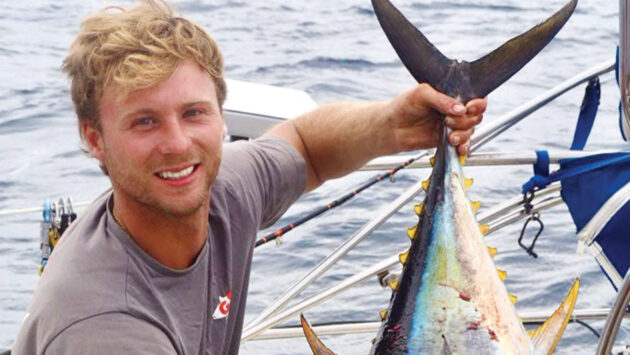
Sometimes the ocean provides its own memorable moments, such as a successful catch! Photo: Project World Sail
We maintain a strict rule: if anyone on board raises a safety concern, it is treated as a priority, even if they have never sailed a day in their life. Often, a beginner hasn’t yet learned to normalise danger. If they feel unsafe, the boat is unsafe. By empowering the least experienced person to hit the pause button, you build a stronger safety net.
This all feeds into one non-negotiable mantra: ‘This is a low-panic boat.’ In the heat of a crisis – a sail blowout, a mechanical failure, or a sudden squall – the most dangerous thing you can introduce is adrenaline-fuelled chaos. Raising your voice doesn’t make the boat sail faster; it only spikes the cortisol levels of the crew, causing them to make mistakes.
We maintain a quiet, calm, and deliberate deck. If you feel panic rising, your only job is to communicate it, step back, and let the process take over. In a low-panic environment, we don’t react; we solve. Shouting is replaced with clear instructions and frantic movement with steady action. Safety isn’t just about avoiding accidents; it’s about maintaining the clarity of mind to handle them when they happen.
But what if you’re solo? “You need to be confident, but not too confident,” says Erica. “Keep a cool head even when the circumstances are outrageous. Due to the fatigue you’re also sure to feel your emotions more intensely – so allow yourself to feel them (scream if you want to, it won’t affect anyone!) but then let them pass, because you’ll need to get on with it.”
Article continues below…
The tropical weather signals every offshore sailor must know
Sailing in the tropics, as you get to within about 30° of the equator the barometer will start to exhibit…

How to provision a yacht for a long passage
Provisioning a yacht for a long period away from conventional shops, with limited cold store space, dry goods stowage and…
Disciplined Thinking
So what makes the difference between a good offshore sailor and a great offshore sailor? For Joph it’s ultimately rooted in a mindset of discipline: “Preparation, which equals experience. If your boat and crew are prepared you can handle most situations – and usually enjoy it. This means knowing your boat and crews’ capabilities.
“Don’t be a cowboy, no one’s going to remember when you get the boat there safely, unbroken without injury, but if someone gets hurt or you have a major, people remember.”
 If you enjoyed this….
Yachting World is the world’s leading magazine for bluewater cruisers and offshore sailors. Every month we have inspirational adventures and practical features to help you realise your sailing dreams.Build your knowledge with a subscription delivered to your door. See our latest offers and save at least 30% off the cover price.
Note: We may earn a commission when you buy through links on our site, at no extra cost to you. This doesn’t affect our editorial independence.