



A passage across the Atlantic’s least-sailed waters was a true adventure for Elena Levon.
The message was short: “If I don’t make it, know that I love you.” I pressed send to someone who’d stood by me for many years and placed the phone on the chart table. Ahead of us a wall of squalls and lightning stretched across the Gulf of Guinea.
The numbers on the display were climbing toward 40 knots faster than I could pull on my rain gear, and continued to climb. Thunder rolled across the black sky in deep echoes that left little doubt about what was to hit us.
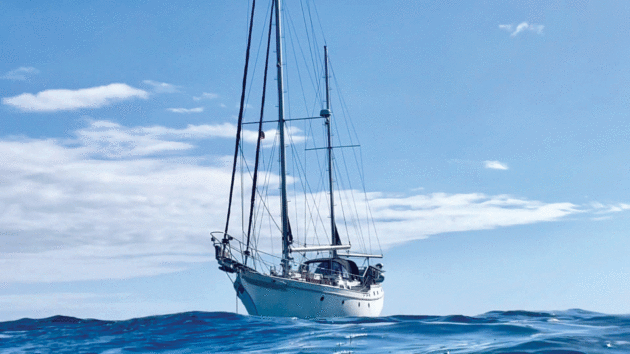
Rebels was the first private sailing yacht in recent recorded history to anchor off Liberia. Photo: Elena Levon
With only two of us aboard our loyal yacht Rebels, a Vagabond 47 ketch, there was no easy option. The skies flashed again. We began counting seconds between the strike and the thunder. Four. Three. Two. Then there were none.
The air filled with a sharp, metallic, ionised odour as lightning struck nearby, mixed with rain and the taste of salt. The ocean’s rhythm turned into something harsher – long, hissing waves wrapping themselves around the hull like an army of angry snakes.
And in the pit of my stomach there was a quiet, unmistakable feeling. Fear. “Do we push through?” I shouted to Robert. He stood at the helm already in full storm gear, eyes fixed on the chartplotter – nervous, yet intensely focused. “Change course?” I continued. “Or drift and wait it out?”
The Gulf of Guinea gave its own answer: ‘There is nowhere to hide here…’
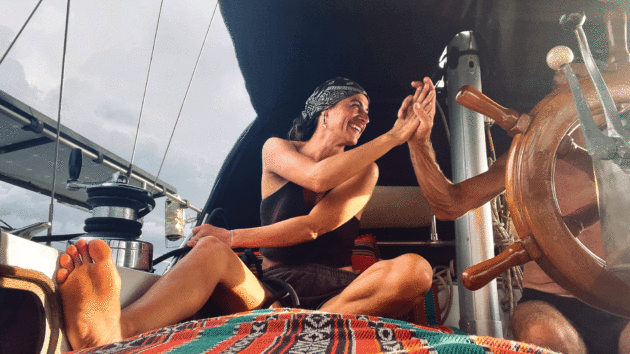
The author Elena, and co-skipper Robert ‘Kamikaze’, are sailing double-handed on an unconventional route, south-east from the Canaries. Photo: Elena Levon
Against the Grain
There are different ways to reach São Tomé and Príncipe, a two-island nation in the Gulf of Guinea off western central Africa. Some routes from Cape Verde head south first, positioning along more stable equatorial conditions before turning toward the islands. Others arrive from Angola or Gabon to the south-east.
We began inside the Gulf basin itself – where currents, squalls, piracy zones, and unstable weather systems shape every mile and every decision.
Later, in São Tomé and Príncipe, cargo captains showed us piracy attack zones on their navigation screens. The Gulf of Guinea is often described as ‘the world’s most dangerous place to sail’: ships travel with razor wire along their rails and fortified ‘citadel’ rooms where crews hide if pirates board.
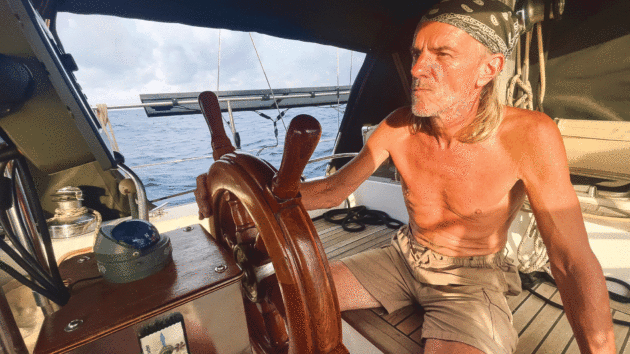
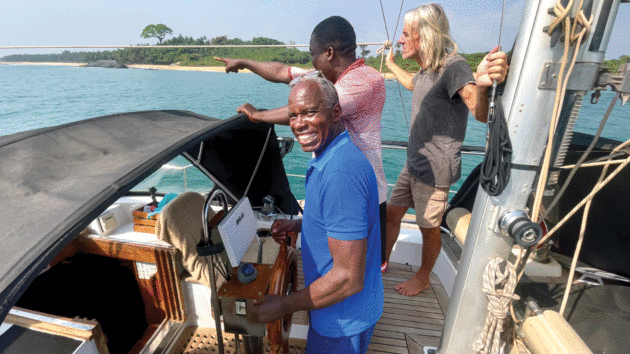
Robert D at Rebels’ classically styled helm while underway. Photo: Elena Levon
Cruise ships passing through darken their decks and travel with armed guards. Rebels had none of that. Just two sailors. AIS on, navigation lights glowing.
By the time we entered the Gulf of Guinea, Rebels had been moving south for months. Most yachts leaving the Canary Islands in autumn follow the trade winds west toward the Caribbean – towards the well-worn Atlantic crossing routes sailors have repeated for decades. We turned the other way.
Since September 2025 we have worked our way down the West African coast – through Cape Verde, Senegal, Guinea-Bissau, Sierra Leone and Liberia – on a route few modern cruising yachts attempt, sailing Africa ‘the wrong way’, north to south. The name of the boat seemed appropriate. She was not built for the obvious path. And perhaps neither were we.
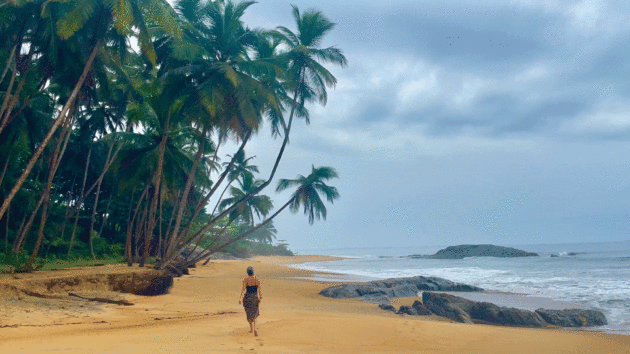
Deserted beaches could be enjoyed during an unplanned stop near Coconut Cove Retreat in Liberia while waiting for engine spares to arrive. Photo: Elena Levon
Before Rebels, both Robert and I had spent much of our lives as solo explorers. Robert Dalinger, known to many as ‘Kamikaze’, crossed continents by KTM motorcycle and even followed the Dakar Rally from start to finish on his own bike.
I’d travelled alone across six continents – visiting the Darién Gap jungle, witnessing an endocannibalism ritual deep in the Amazon, and interviewing rebels in war-torn Mali – while also working in the art world and moving through red carpet events that belonged to another universe entirely.
But life on a 47ft sailing yacht demands different skills. It requires two very independent people to become one functioning crew. Six months of constant sailing and living on the hook had turned our partnership into something closer to true co-captainship.
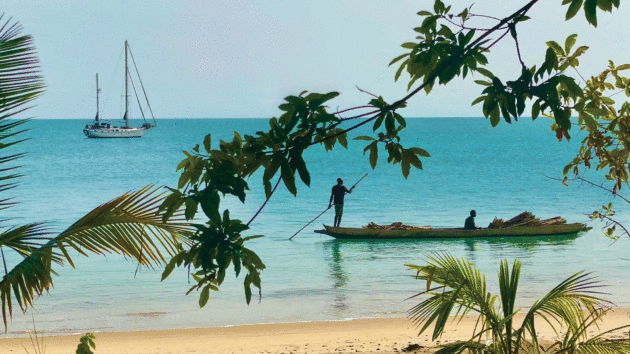
Photo: Elena Levon
Robert, with his genius, instinctive understanding of machinery, could almost sense when something was about to fail. Before departure he rebuilt the entire electrical system, later he repaired the engine and autopilot in the middle of the Atlantic. I’d taken on the human side of the expedition – variously becoming diplomat, logistics coordinator, public relations officer and de facto maritime lawyer.
We both cooked, cleaned, maintained the boat, stood six-hour shifts and made decisions together. By the time the squalls closed around us in the Gulf of Guinea, we were one crew.
Rebels herself rarely went unnoticed. Slightly worn Moroccan fishing nets bought from local fishermen in the port of Agadir were secured on the bow, serving as a uniquely characterful but extremely durable fender storage solution. Four wooden barrels bought from a winemaking family in the Canary Islands were lashed along the deck. Officials often asked what was inside them. “Rum,” I would say, “But I drank it all.”
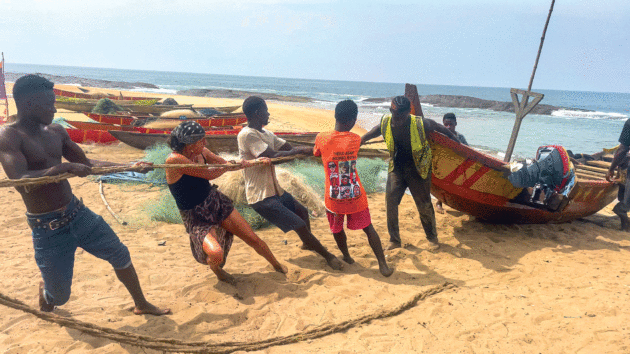
Returning the favour and helping locals drag a fishing canoe up the beach. Photo: Elena Levon
Liberia Diversion
Days before we entered the heart of the Gulf of Guinea we’d left one of the most unexpected anchorages of the entire voyage behind us. Even before reaching Liberia, Rebels had already begun attracting attention along that stretch of coast. After staying in Freetown, Sierra Leone, for several weeks, we sailed to the Banana Islands, where a large luxury yacht lay anchored.
Not long afterward an armed patrol from the Sierra Leone Navy approached us while we’d stopped to make water.
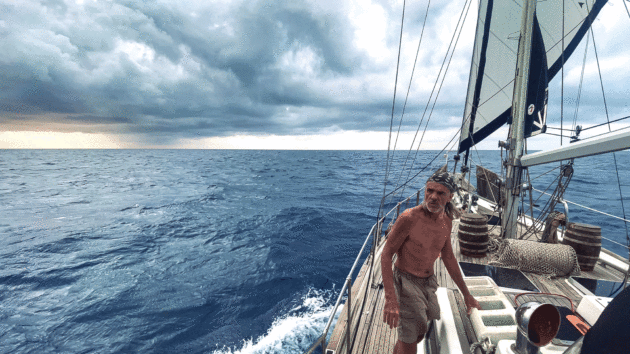
Stormy horizons – a frequent feature of the equatorial Atlantic. Photo: Elena Levon
The luxury yacht had called the Navy on us. Private cruising yachts are almost unknown along this coastline, and our small ketch moving slowly under sail clearly raised suspicion. The officers circled Rebels cautiously, weapons visible, asking who we were and what we were doing. Once they understood we were simply sailors passing through, the tension eased quickly – but it was an early reminder that this was no ordinary cruising ground.
Further along the coast the sea delivered another surprise. One afternoon offshore Robert disappeared into the engine compartment for longer than usual. When he finally emerged his expression was serious. “The cooling system is kaput,” he said.
The heat exchanger for the oil had failed, and saltwater had begun entering the gearbox. Under sail we altered course toward the Liberian shoreline while I began pulling every lever available: Starlink on, weather models checked, possible anchorages studied, local contacts researched. But the part we needed could only be purchased in the United States.
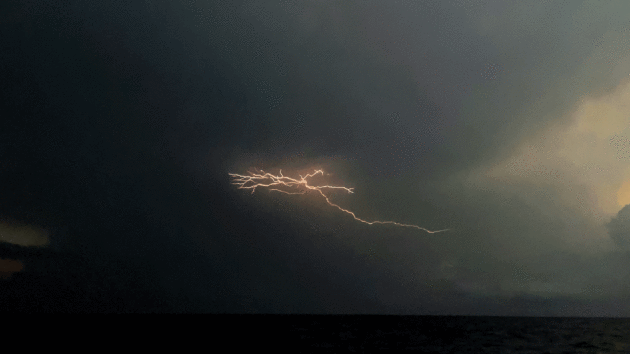
Lightning storms, squalls, and rapidly changing conditions required high levels of concentration. Photo: Elena Levon
By remarkable coincidence, an American pastor assisting the locally owned Coconut Cove Retreat in Liberia was in the US at that exact moment. He agreed to bring the part back with him the following week, while our irreplaceable onshore Rebels crew mate in America arranged shipping across the country so it could reach him before his flight.
Just a day before I’d wondered aloud: “I wish we had time to sail to Liberia.” Mami Wata – the powerful water spirit of West African coastal traditions believed to guard the ocean and those who travel upon it – must have been listening.
With the wind turning in our favour, Rebels glided under canvas alone toward the Liberian shoreline near Bullom Town Point. Land lay just metres beyond the bow when we dropped the anchor. There was no marina, no breakwater or harbour of any kind – only strong surf rolling toward the beach, an anchorage where none was known.
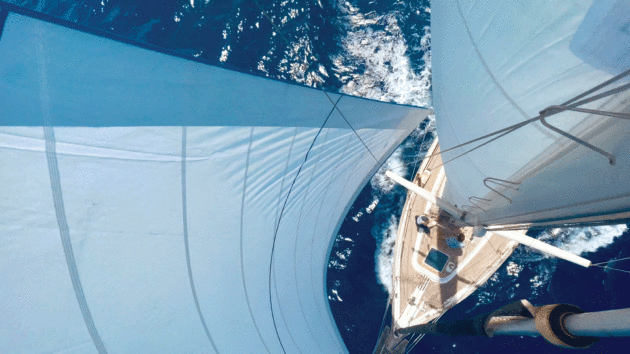
View from the rig during a moment of ideal sailing conditions. Photo: Elena Levon
Based on available cruising records and local accounts, SV Rebels is believed to be the first documented private non-commercial sailing yacht in recent recorded history to anchor near shore off the Liberian coast.
Our arrival caused suspicion almost immediately. Some fishermen believed we might be illegal fishing pirates – nobody there had ever seen a sailing yacht before. The National Fisheries and Aquaculture Authority was contacted to verify who we were. Once officials understood that Rebels was simply a private yacht stopping for emergency repairs, suspicion quickly turned into a warm welcome and practical help.
At that point, our passports had not yet been stamped, and the yellow quarantine flag still hung beneath the Liberian flag while authorities – contacted by Anthony, co-owner of the Coconut Cove Retreat – tried to sort out what to do with two sailors who’d anchored in their waters.
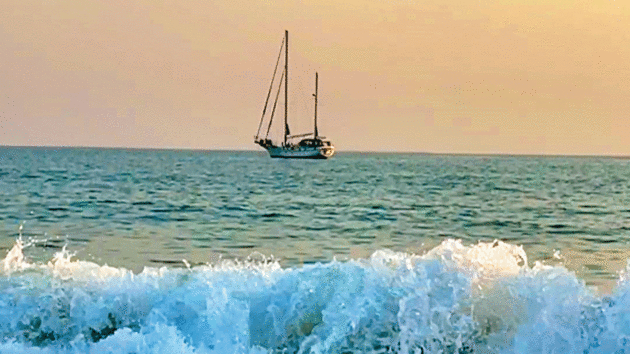
Anchored beyond the breaking surf – locals helped land their tender. Photo: Elena Levon
Children gathered on the beach when we first came ashore in our dinghy. They took my hand and we walked barefoot through giant palms, clean sand, huge rocks breaking the surf and exotic flowers. In the morning mist the coastline looked like something early explorers might have seen when arriving on a new continent. A lone fisherman sailed his simple wooden canoe out to provide for his family while others repaired their nets on the beach.
One evening locals used their long dugout canoe to carry our dinghy through the surf back to Rebels, with us inside. The following morning we returned the favour, helping them drag their largest canoe far up the beach. At night the coastline smelled of wood smoke as fires burned along the beach, guiding fishermen safely back toward land. For a week, Rebels became part of the rhythm of those hospitable shores.
One of the most memorable moments of the entire expedition was meeting a man named Amos Margai, a co-owner of Coconut Cove Retreat. Amos had lived through the Liberian civil war: during the darkest times he’d been forced to wear a human skull around his neck. But his greatest fear was the ocean.
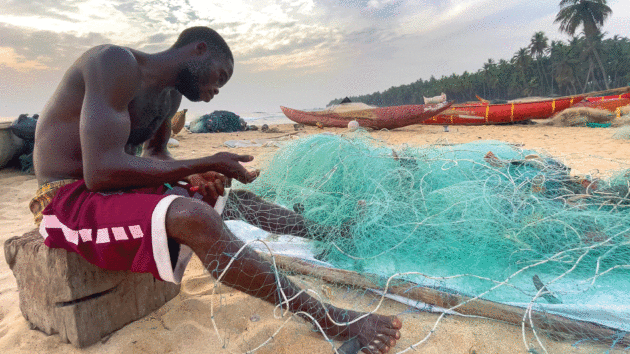
A fisherman tends to his nets at Bullom Town Point. Photo: Elena Levon
Amos had never been in the ocean, but curiosity brought him down to the beach where Rebels lay at anchor. Anthony arranged for a canoe to ferry him out through the surf to the boat. It was astonishing to watch someone confront his fear so directly. It still makes me smile when I think back to that moment.
At one point I jokingly asked Amos what a Liberian jail looked like – just in case our unusual arrival created trouble with authorities. He laughed the idea away. “You are under our wing here,” he said. And that is exactly how it felt.
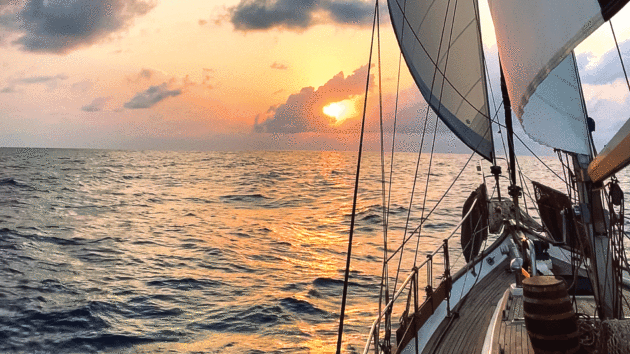
sailing towards a new dawn – the heavy 47ft ketch performs best on a reaching angle. Photo: Elena Levon
Gulf of Guinea
When the heat exchanger finally arrived and Robert was able to get the engine running again, the time came to leave Liberia. The anchor rose from the sandy bottom and Rebels turned her bow toward Cape Palmas. Ahead lay more than a thousand miles of open water across one of the least-visited sailing regions in the Atlantic.
Rebels is a heavy bluewater ketch built in 1989, and like many true ocean boats she has her own preferences. She is a bit of a fussy lady. She does not enjoy sailing too close to the wind, and she dislikes running directly downwind.
What she truly loves is a comfortable angle – somewhere between 60° and 150° to the wind. Occasionally, when wind and waves align to her liking, she allows us the pleasure of sailing a little closer. But most of the time she prefers to move through the ocean on her own terms.
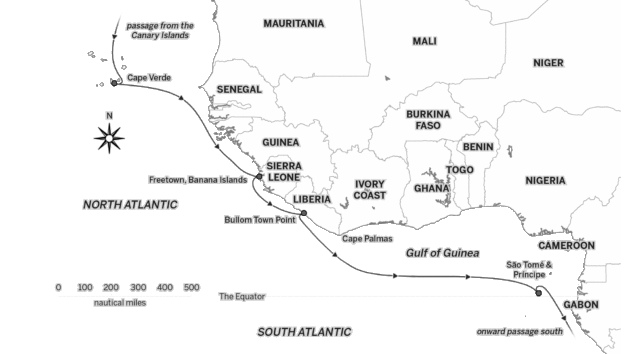
The route. Photo: Richard Thomson
The Guinea Current became our ally, pushing us first east and then gradually south-east, adding precious knots to our speed. At times I even saw more than seven knots on the chartplotter. With the main set and the outer jib drawing steadily, Rebels moved comfortably through the confused equatorial seas. Over the course of our journey toward São Tomé we mostly sailed.
At times we motor-sailed, keeping the engine turning quietly at around 900rpm, helping stabilise the boat and charge the batteries when our solar panels were not getting enough sun. Only when storms closed in and the sea became chaotic did we rely more heavily on the engine, pushing through the most dangerous squall lines until it was safe to set sail again.
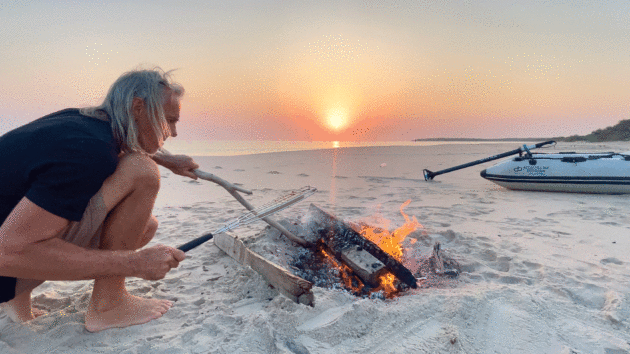
Sunset driftwood-fired barbecue on an idyllic, deserted West African white sand beach. Photo: Elena Levon
“I feel as though we’ve been thrown into a witch’s pot,” Robert said, as we endlessly shook out and put in reefs.
The Gulf of Guinea is known for its unforgiving weather. Warm equatorial waters feed towering squall systems that build with startling speed. Pressure shifts rapidly, wind accelerates within seconds, and lightning storms roll across the sea in long chains stretching far beyond the horizon. The atmosphere builds, explodes, settles briefly – and then begins building again.
We were grateful for the Guinea Current, but the Gulf does not offer gifts without balance.The first downpour came suddenly at noon. I remember reaching up into the rain, feeling alive under the warm water. But by sunset the tone had changed. The heat dropped, a cold breeze moved across the deck, and the sky closed in with startling speed.
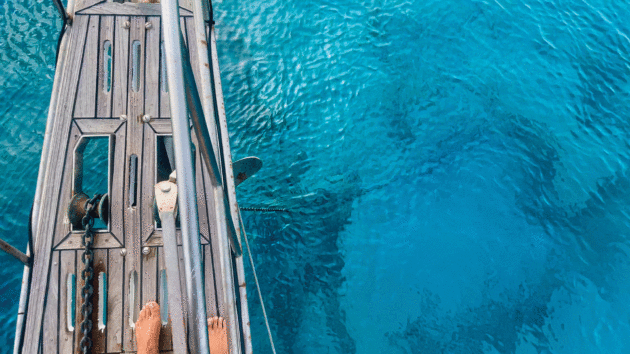
a change of ocean colours to turquoise tones heralded the couple’s approach to São Tomé. Photo: Elena Levon
At first we believed we could outmanoeuvre the storms. We gybed, adjusted course, thinking we’d outsmarted the system. Silly humans. Within minutes we were reefing hard, the main reduced almost to a storm sail, engine on, pushing through whatever opening we could find between the walls of lightning ahead of us that guarded the equator.
As the wind rose toward 46 knots and rain erased the horizon, a small fishing canoe appeared ahead of us. No AIS. No radar reflector. Only a single torch. The fisherman flashed his light repeatedly to signal his presence.
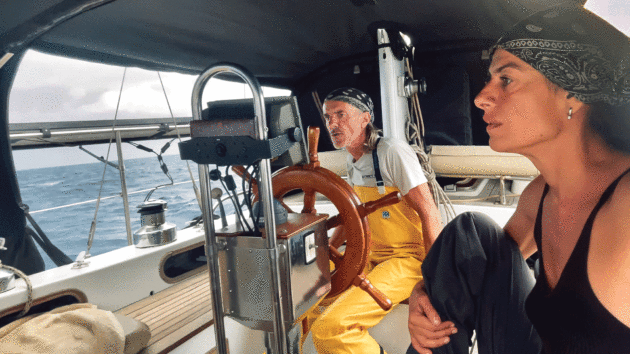
Photo: Elena Levon
Based on our position, I believe he was likely from Ivory Coast, whose waters we briefly crossed before turning Rebels toward São Tomé. Alone in the darkness, in storm and lightning, he calmly continued fishing. That man will remain our hero forever.
Article continues below…

Sailing to South Africa: A demanding sail from the Seychelles
“Quick, close the hatches!” my partner Wietze calls down while we prepare an early Monday breakfast. All is ready to…

Sailing from South Africa to Europe: Chris Tibbs’ top tips for a smooth passage
There are a number of advantages to doing this, as well as saving around 3,000 miles of sailing, but the…
At ease
After several hours, the conditions began to ease, and I was able to rest briefly before returning on watch in the early hours. That night marked our true introduction to the Gulf of Guinea. What followed were days of volatile equatorial weather, easing in intensity as we approached São Tomé. This Gulf rhythm became our routine: build, strike, recover – and then begin again.
After several days something unexpected happened. The lightning no longer brought the same fear. Instead, there was focus – watching wind direction, trimming sails, feeling the boat respond beneath our feet.
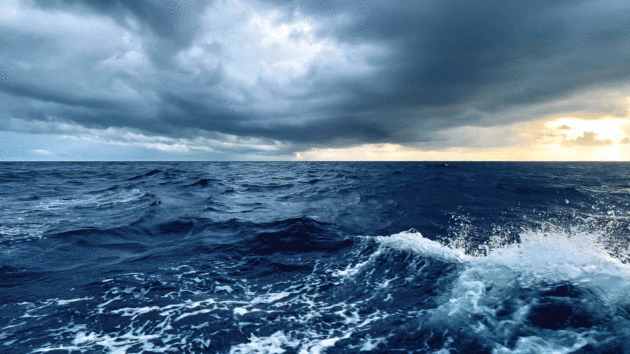
Photo: Elena Levon
Here, nothing moves in straight lines. Tracks bend, break, and shift with each flash of lightning and every exhausted decision. A real crossing of the central Gulf of Guinea is not a perfect curve drawn across a chart, but a series of chaotic moments lived inside the weather itself.
I had only begun learning to sail in September 2023. Even for Robert, sailing double-handed full time was something new. Offshore, the ocean has a way of compressing the learning curve. Seamanship is not theoretical offshore. It is practised in fatigue and decisions made in darkness. To stand by each other through a truly rough time in one of the most unpredictable places on earth – that is what makes you a true co-skipper.
And sometimes, between the storms, the Gulf revealed another side. During calm windows, we stopped the boat and slipped into the water, swimming in the tropical Atlantic. Floating beside the hull mid-ocean, with storm clouds building along the horizon, I felt something unmistakable: freedom.
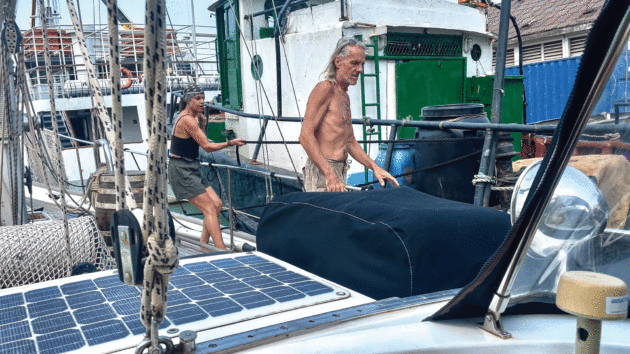
Rafting alongside commercial boats in São Tomé. Photo: Elena Levon
Zero Degrees
After 11 days offshore from Liberia, green mountains appeared on the horizon and turquoise water gently hugged the hull.
Some encounters leave you negotiating paperwork long after the sails and Q flag are down. Others stay with you for different reasons. While we were dealing with port formalities in São Tomé, a message arrived on my phone from Liberia: “Dear Elena, we miss you. It’s March now. I know you said your birthday is in March, but I don’t remember when. Please don’t forget to let me know – Amos.”
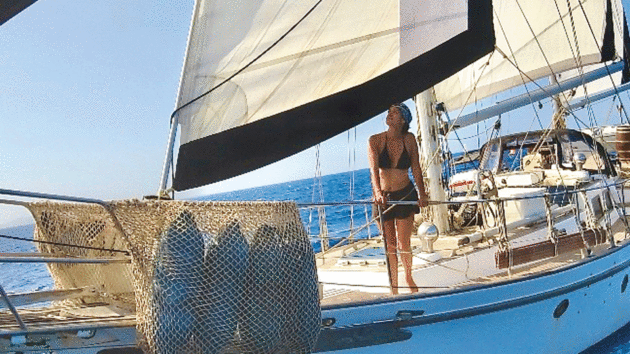
Rebels has several distinctive features, including recycled fishing net for fender stowage on the bow, and wine barrels lashed to the deck for more stowage. Photo: Elena Levon
After three weeks, we departed São Tomé and the numbers on the chartplotter finally ticked toward zero. Robert and I sat together at the helm, watching the display and counting.
“Three… two… one…”
“Zero!” I shouted into the warm night. We had crossed the equator.
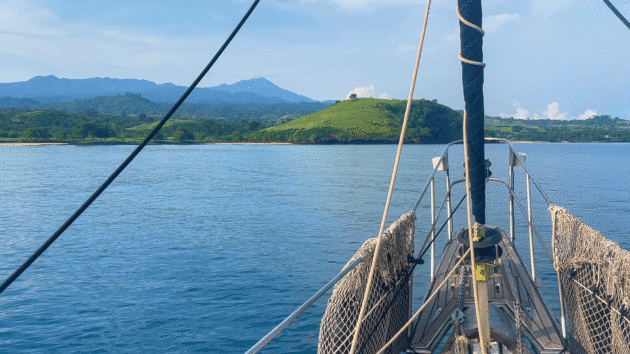
Arriving in lush São Tomé and Principé. Photo: Elena Levon
Six months at sea had changed the rhythm of life aboard Rebels. Two independent explorers had gradually become a true team. We had crossed the Prime Meridian, the equator, and an unspoken line within ourselves.
We eventually left the Gulf of Guinea behind our tired, salt-streaked stern, but no one leaves it unchanged. Sailing the West African coast from north to south during our half-year, double-handed expedition demanded patience, humility, and respect – for the ocean, for the people, and for the lands we passed. Every sailor who crosses the powerful Gulf of Guinea leaves a part of themselves behind, suspended in its heavy air.
 If you enjoyed this….
Yachting World is the world’s leading magazine for bluewater cruisers and offshore sailors. Every month we have inspirational adventures and practical features to help you realise your sailing dreams.Build your knowledge with a subscription delivered to your door. See our latest offers and save at least 30% off the cover price.
Note: We may earn a commission when you buy through links on our site, at no extra cost to you. This doesn’t affect our editorial independence.