


The city of Les Sables d'Olonne has saltwater in its veins. Viveka Herzum takes a closer look at how it became an offshore solo sailing capital
Ulysses has watched the entrance channel to Les Sables d’Olonne since 2024.
He saw Yoan Richomme, Sebastien Simon and the late, great Charlie Dalin sail out and back again to celebrate their own homecomings.
The tide rises and falls over his legs while he listens, one hand bound to the mast and the other cupped around his ear. But it’s not the calls of sirens‘ the sculpture seems to be reaching for.
It’s the alluring, enduring call of the open sea, one the citizens of Les Sables d’Olonne have been heeding for generations.
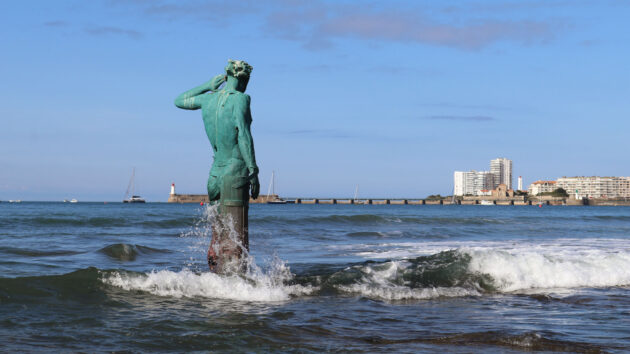
The Statue of Ulysses by Cristophe Charbonnel was inaugurated on 2 July, 2024 in Les Sables d’Olonne. Bronze, 3 meters, 700 kilos. Photo by Viveka Herzum
It’s a city of mariners and adventurers, a place of sand, salt and maritime solidarity.
Since 1989, when it hosted the first edition of the Vendée Globe, the French city has also become a hub for offshore solo sailing.
It has since welcomed other solo offshore races; the Mini Transat, the Solo Maître CoQ, Les Sables-Les Açores, Les Sables-Horta, most recently the Golden Globe Race.
While attending the GGR start in September, I ventured beyond the pontoons to find out how exactly this unassuming place became such a hotspot for offshore solo sailing, and to learn about its wider relationship with the sea.
Early history of Les Sables d’Olonne
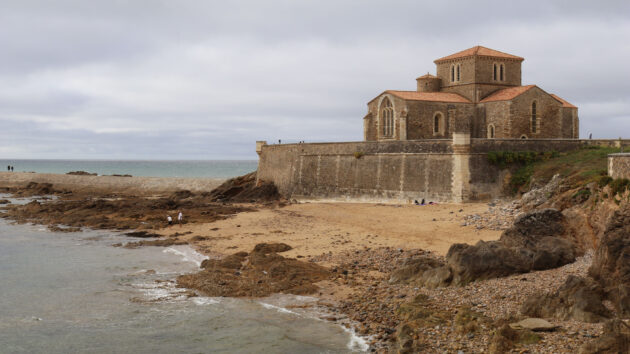
St. Nicholas priory was rebuilt by fisherman who’d been saved from a shipwreck. In the last edition of the Vendée, the Church gave every sailor an almond shaped ‘sportelle’ with the black virgin. Some believe this is why there were no accidents.Photo by Viveka Herzum
The small coastal city has lived many lives since its founding in 1218.
In the 9th century, vikings found safety in its harbour.
In the 12th century, the forests that run towards Cayola Bay functioned as Richard the Lionheart’s royal hunting reserve.
On the wild coast west of Ille d’Olonne, medieval monks gradually filled in the waters around the islet to create marshlands in which they could produce salt, a necessity on fishing vessels, and wine.
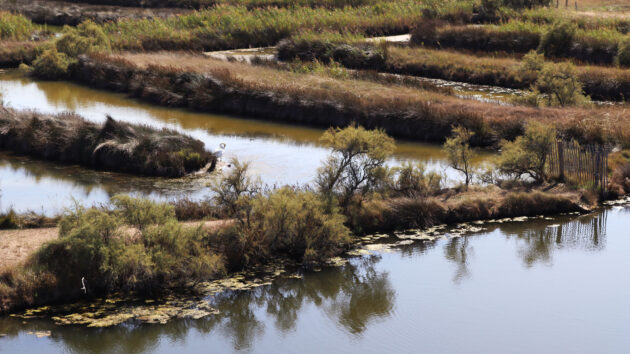
The marshlands in Les Sables d’Olonne are home to a rich ecosystem which includes avocet, herons, and egrets. Photo by Viveka Herzum
The city’s harbour within the Bay of Biscay acted as a whale-fishing stopover port in the 16th century and a centre for cod fishing, then tuna in the 17th, while throughout the 18th century, boats came from the Netherlands to stock up on salt to preserve their catch.
Les Sables lived off of these trades until the building of the railways in 1866 brought the first waves of seaside tourism to its shores.
Trains bring tourism to Les Sables d’Olonne
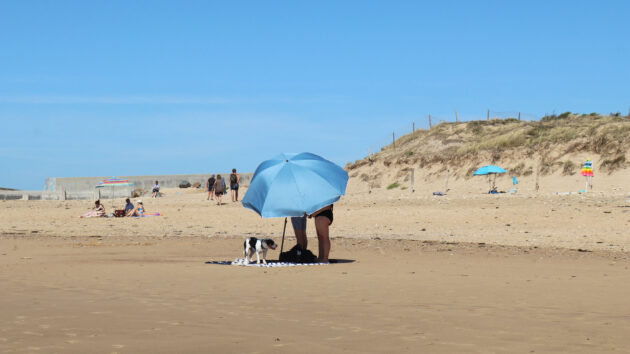
The dunes on Les Sables d’Olonne’s wild coast are protected, along with 11 km of protected forest planted in the 19th century to counteract coastal erosion and protect the town from rough seas. Photo by Viveka Herzum
Nathalie, who works as a press liaison for the LSO Tourist Board, tells me that the second half of the 19th century saw the explosion of seaside tourism in Les Sables D’Olonne.
The influx of a new, seasonal population drastically changed both the city’s economy and its appearance, she says.
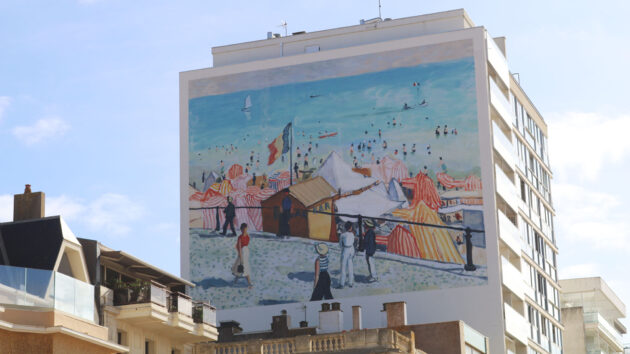
Mural depicting seaside tourism in Les Sables d’Olonne through the ages. Photo by Viveka Herzum
Wooden horse-drawn bathing cabins, villas, and seaside resorts sprung up around the waterfront.
The streets became an unusually vibrant pastiche of influences, as many seasonal visitors opted to preserve their own region’s architectural style when building their second homes.
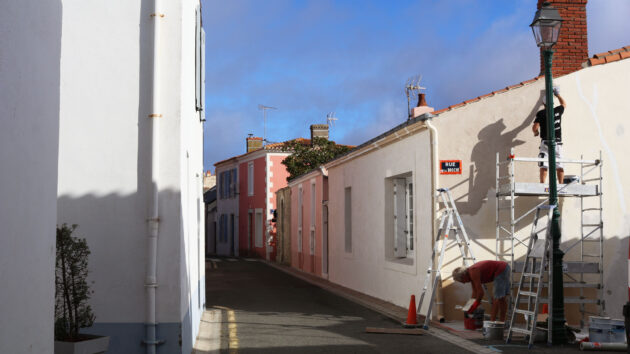
Still today, Basque chalets sit next to Mediterranean villas with porticos and terracotta tiles, in between Brittany style homes with slate roof and stone facades.
Many are emblazoned with the Vendèe region’s double heart, signifying faithfulness to God and the king.
Tourism’s long-standing impact shows in the details like the low, shuttered windows in many basements, implemented already in 19th and 20th century as locals converted basements into living quarters to be able to rent out the top floors of their homes.
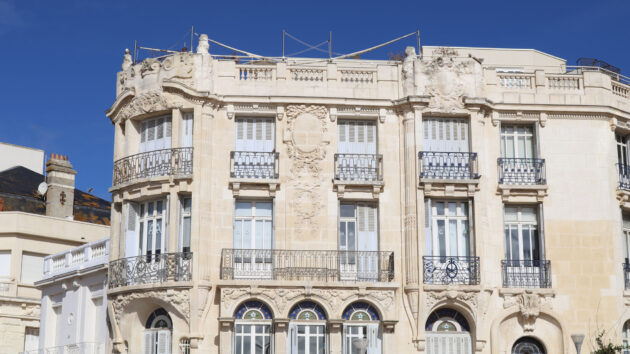
Photo by Viveka Herzum
The town now counts 112,000 tourist beds. Around Ferragosto, the peak of the tourist season, its population swells from 55,000 inhabitants to five times more.
While this yearly influx has come to represent one of its main economies, Les Sables still holds on to its historic trades.
It remains a thriving fishing port, generating a total turnover of 361 million euros per year.
Busy modern fishing port
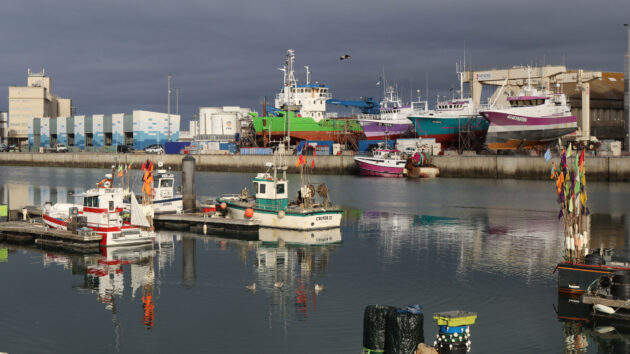
The fishing harbour in Les Sables d’Olonne, with a view of La Cabaude. Photo by Viveka Herzum
Today, Les Sables d’Olonne is the 4th fishing harbour of France, with 250 operative local fishermen working in Irish waters and the Bay of Biscay.
Many come from across the Basque region to sell their stock in the fish auction.
The main catch is sole, hake, and cuttlefish, though it varies by season; scallops in winter, sole in spring, crustaceans in summer, muscles in early autumn.
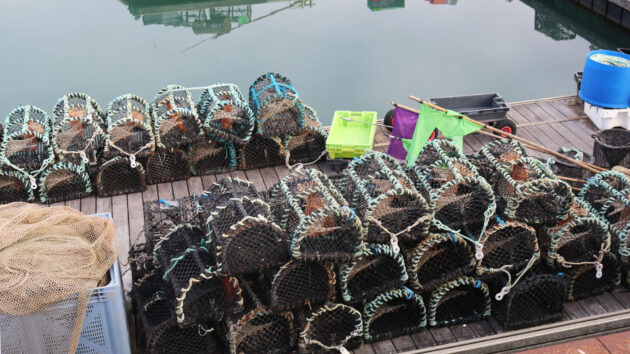
Lobster pots in the fishing harbour of Les Sables d’Olonne. Photo by Viveka Herzum
Between fertilisers, sand for construction and salt, Les Sables d’Olonne also exports around 1 million tons of raw material for trade through La Cabaude, once a mud islet, now where the commercial shipyards and silos sit within the commercial port.
Living off the sea
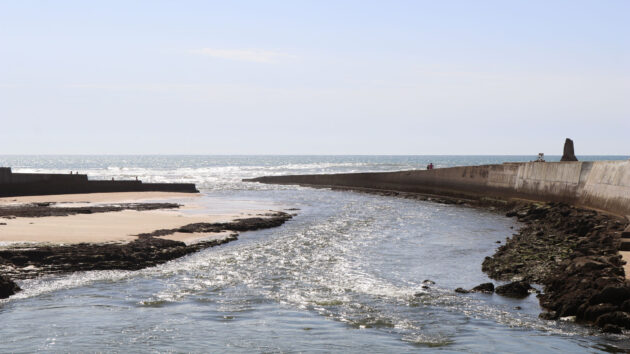
The city’s very name, ‘Les Sables’, meaning ‘the sands’, and ‘Olonne’ above water, encodes its inextricable relationship with the sea. Les Granges beach in Les Sables d’Olonne. Photo by Viveka Herzum
Centuries of lives lived off the sea shape the city’s every detail.
In Rue Bisson, built to link the commercial port to the beach, where the finest houses in the old quarter were once built off of fishing money.
The traditional sardine candy, a caramel, lollipop-style sweet that dates back to the town’s early days as a seaside resort and is still only produced when winter brings the right humidity and temperature.
In the seashell murals of l’Îlle Penotte, in which contemporary artist Danièle Arnaud-Aubin adorns public streets with marine and mythical mosaics made of shells, pebbles and shards of sea glass.
In the local trades, including the enduring family owned salt marshes, which have seen their best year in memory in 2026.
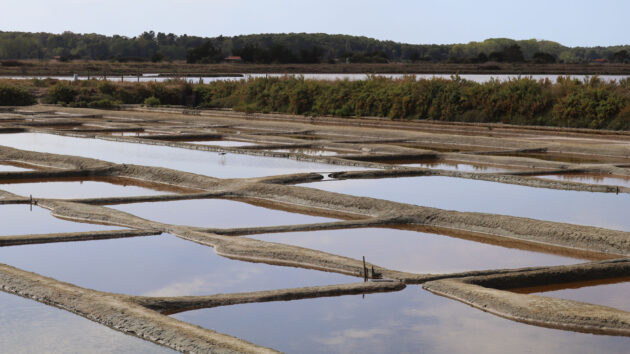
Each litre of ocean water produces approximately 33g of salt. Salt marshes bring water from the ocean with a system of lochs. Small wooden pillars open valves, allowing water to flood the shallow basins. Photo by Viveka Herzum
Global temperatures rising may have spelled a bad year for the biosphere, but it marked salt production as an industry in expansion.
This summer’s prolonged droughts yielded a record 1.5 tonnes of salt per day (50-55 tonnes across the high season), more than in 1976, their last best year yet.
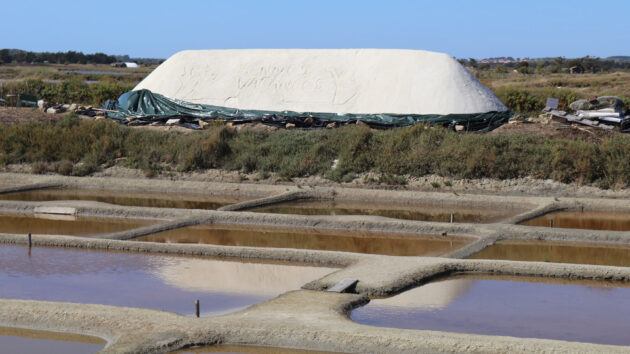
The pink tinge in salt marshes derives from microalgae in ocean water, and indicates the process of salt crystals forming. Photo by Viveka Herzum
No where, however, is the city’s entanglement with the sea more present than in the old fishing quarter of La Chaume.
La Chaume
Though La Chaume is the oldest district in the city, it wasn’t always part of Les Sables d’Olonne. For centuries the two towns, separated by a channel, maintained a rivalry.
During the wars of religion, La Chaume maintained a Protestant majority, while Les Sables was Catholic.
The unruly quarter was finally annexed to Les Sables d’Olonne in 1753, but it still kept a distinct identity.
Even with the start of tourism and the overdevelopment of the coastline, much of its architecture remains unchanged.
No seafront new builds here; the fisherman’s village kept its low houses and traditional courtyards.
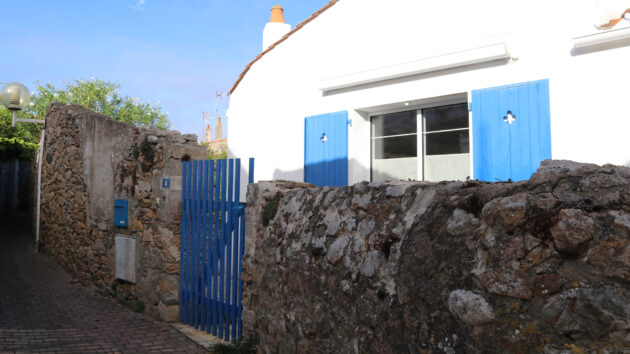
Walls made of old ballast in the streets of La Chaume. Photo by Viveka Herzum
The fishing trade is woven into fabric of the area, and the history of its materials.
The low stone walls between houses are made of old ballast from the fishing ships, once traded by incoming foreign fishermen for salt to preserve their cod.
The houses were once painted the same colours used on the trawlers.
The system to dry and repair the fishing nets, typical of fisherman’s quarters, is still visible over the walls of a private garden, and the quay’s sides still show indents where heavy mooring lines were repeatedly dragged over stone.
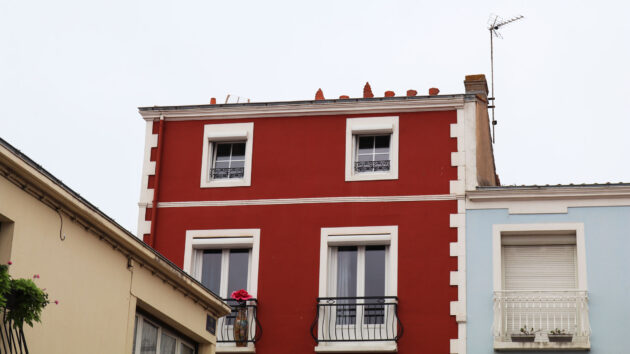
The sculptures on the roof of this house in La Chaume reflect the evolution of Les Sables d’Olonne’s traditional headdress over time. Photo by Viveka Herzum
Local women were most often the ones helping the incoming ships moor, as the men had been out to sea.
They also manned the canning factories in town and received the incoming catch.
When the alarm sounded in the night announcing the fisherman’s return, they would rush to the factories to preserve it while it was fresh.
La Chaume today
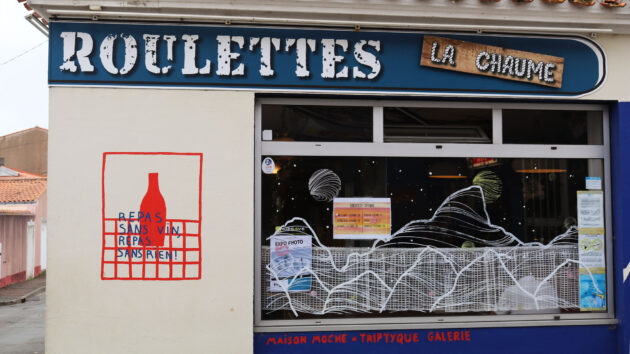
The bars in La Chaume are frequented by fishermen and offshore sailors alike. In some cafes, you can still hear the fisherman’s patois (for example Ma petite fille becomes map’tit foile). Photo by Viveka Herzum
Strolling through La Chaume, I was surprised to walk right past the quarter’s preschool, previously formerly École maternelle de La Chaume, now the ‘École maternelle publique Jean-Luc Van Den Heede’.
Van Den Heede, Vendee alum and 2018 Golden Globe Race winner, is a notable resident of this city of sailors mariners, and adventures.
Also, it seems, a quiet supporter of its infrastructure.
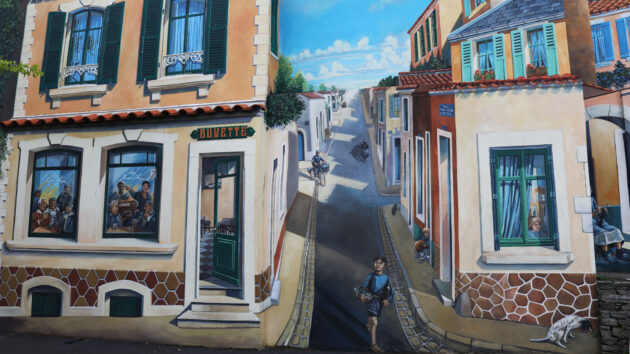
Fresco by Manfrede Landreau, a longtime resident who recently passed, shows the many lives of the quarter. He painted real inhabitants of la Chaume into the scenes, including his own children. Photo by Viveka Herzum
Van Den Heede worked as a maths instructor in his native Brittany before he came to Les Sables d’Olonne for the first Vendée Globe in 1989.
His relationship with the city would go on to last a lifetime, and to play a role in bringing making Les Sables d’Olonne the sailing mecca it is today.
How Les Sables d’Olonne became an offshore sailing capital
Les Sables d’Olonne’s identity as an offshore sailing hotspot actually has less to do with its geography than with its people, Nathalie says (though overlooking the Bay of Biscay does help).
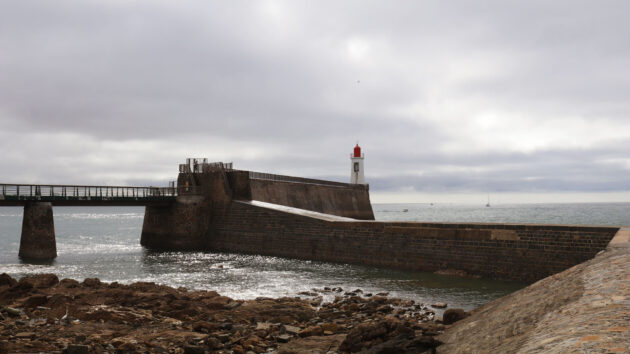
Photo by Viveka Herzum
Rewind to 1989, and the start of the Vendee Globe. Les Sables d’Olonne’s pleasure port, founded in 1978, has held no national events… yet.
French Yachtsman Philippe Jeantot, who is living in Les Sables, has sailed in two BOC Challenges and now craves something more challenging– a non-stop ‘Everest of the Seas.’
Alongside Philippe de Villiers, he develops ‘The Vendeé Globe Challenge’ and meets with then-mayor Louis Guédon to seek support for the venture.
Seeing an opportunity, both the town and region join as sponsors.
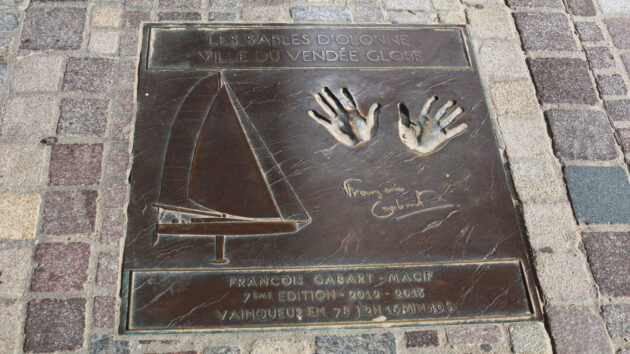
Vendée Globe winners are commemorated in plaques bearing their name, times, and handprints pattering out along the pier, and more on the waterfront promenade just across the water. Photo by Viveka Herzum
On 26 November, 1989, thirteen skippers including Jean Luc Van Den Heede, Alain Gautier, Jean-François Coste, Loïck Peyron, and Titouan Lamazou, winner of this first edition, set off for the great offshore adventure.
Thirteen boats start; seven finish. Lamazou goes around in just over 109 days.
The iconic race goes on to run every four years, most recently in 2024-25.
Sailing and solidarity
Solo sailing events have kept coming to Les Sables d’Olonne in large part, Nathalie says, thanks to previous mayor Yannick Moreau’s interest in and support for offshore racing, and the Golden Globe Race is no exception.
It was Jean Luc Van Den Heede who introduced GGR Race founder and director Don McIntyre to Moreau, securing an agreement for Les Sables to host three iterations of the race.
Jean Luc Van Den Heede and Don McIntyre share at the start of the Golden Globe Race. Photo by Viveka Herzum
The third edition is now underway, and with Nicolas Chénéchaud’s entry as mayor of Les Sables D’Olonne in March of this year, the future of the race, and perhaps of the area’s offshore sailing presence more broadly, remains uncertain.
Chénéchaud has yet to declare whether Les Sables will continue hosting the Golden Globe Race for years to come, but many hope the event will return.
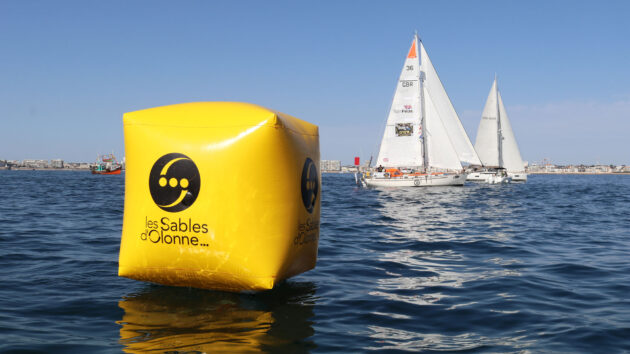
Henry Wootton crosses the start line on Privateer for the 2026 Golden Globe Race. Photo by Viveka Herzum
Ultimately, Nathalie says, the city’s eminence in solo sailing is based on the strength of its relationships and of a sailing community built organically over time.
Investing in new and returning events is key to make sure it thrives.
Les Sables d’Olonne today
Nathalie works with the local tourist board to cultivate new relationships, sharing the territory’s unique character and supporting its athletes and artisans.
We visited local businesses, shipyards, and knife-maker Fabien Servant, the creator of l’Olonnois, a regional knife, with handles made in pieces of IMOCA from famous circumnavigators like Alex Thomson and Michel Desjoyeaux.
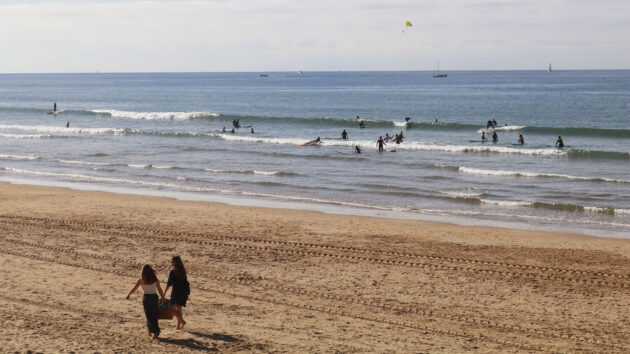
Nowadays the sand, the city’s very namesake, dwindles due to coastal erosion. Since 2000, it is maintained and replenished by the Ecoplage system, a drainage network buried beneath the beach that reduces erosion by managing the sand’s humidity levels and accelerating natural sand recovery after major storms. Photo by Viveka Herzum
At Les Granges beach, we stopped into the Octopus School, run (and was founded) by waveskiing world champions Mathieu Babarit and Caroline Angibaud.
She told me of a totem on Paracou Beach made by surfer, director, and sculptor Francois le Suisse raised after he spent a while surfing in Polynesia and the biological wine producers Domaine de Granges and Domaine de St Nicolas, where Terry Michons works with his sons, plays the accordion, and is known to still do handstands well into his 70s.
While city’s appeal lies in part in its unique sailing character, my days in Les Sables d’Olonne left one thing clear: the world beyond the marinas is well worth a visit.
 If you enjoyed reading about Les Sables d’Olonne….

Yachting World is the world’s leading magazine for bluewater cruisers and offshore sailors. Every month we have inspirational adventures and practical features to help you realise your sailing dreams.Build your knowledge with a subscription delivered to your door. See our latest offers and save at least 30% off the cover price.
Note: We may earn a commission when you buy through links on our site, at no extra cost to you. This doesn’t affect our editorial independence.