



Visionary serial boatowner Jack Setton, a demanding sailor and racing car enthusiast, passed away on 4 November, aged 77, leaving a long legacy of outside-the-box thinking in his wake
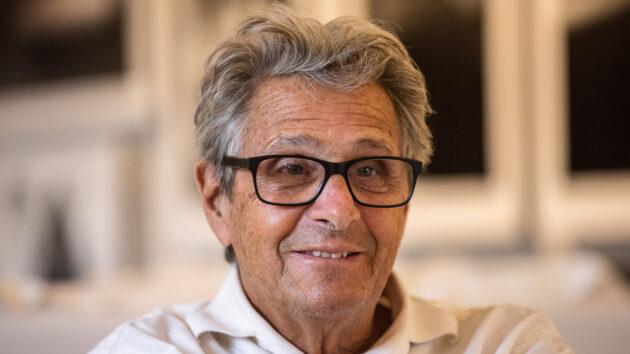
In an industry that requires a rare combination of imagination and deep pockets to move it forward, Jack Setton arguably did more to keep the gears of marine design moving than any other individual enthusiast of our generation.
I was fortunate enough to sail with Jack, or Jacky, on two occasions, once on the 110ft maxi cat Swift, which he converted into an extreme bluewater cruiser – and again just two years ago when we trialled his latest JV60 daysailer, Jaro, the pinnacle of purist ‘upwinder’ daysailers he was long passionate about.
These are fitting examples of the breadth of design involved in a fleet of vessels this pioneer owned or commissioned, ranging from a Herreshoff dayboat and 12ft Hobie to a 255ft ice-breaking tug.
We spent two days with Setton, sailing Jaro and his other current daysailers from his Sardinian home, where we learned more about his past and inspirations.
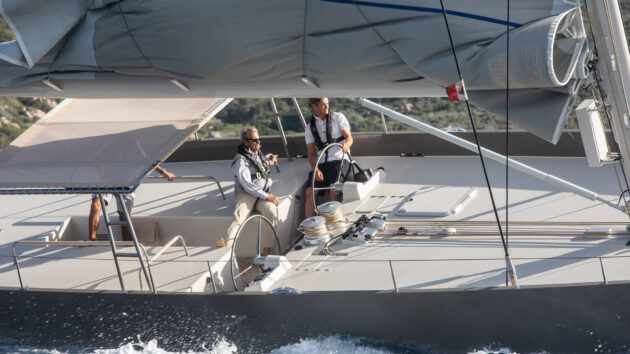
Jack (left) sailing Jaro with Yachting World’s Toby Hodges. Photo: Richard Langdon
Jack the driver
Jack Setton’s business life started with marketing Pioneer car stereos, and grew to include real estate and one of the world’s most prized racing car collections. A hands-on driver on land, in the air, and at sea, he was also clearly a perfectionist.
One of the reasons Setton had so many custom yachts was the enjoyment he found in the design process – working with naval architects to tailor-make a vessel to his exact requirements.
The reward is when they then come alive under sail. Being light on the helm and seakindly was crucial to Setton. “It’s like cars – if the steering is heavy, the pleasure goes away,” he told me.
So which was the best racing car he drove? “The 1975 Niki Lauda Ferrari,” he answered without hesitation – “that’s the only one I wanted to drive on my race track, for its perfect ergonomics. And it’s the same here [on Jaro]. Ergonomics are so important.”
When sailing with Setton, whether on the 60ft Jaro beating into a 25 knot+ Mistral, or heading offshore in his stayless 32ft catboat, I had to remind myself he was (then) 76. And he remained sharp, passionate and enthused about sailing until the end.
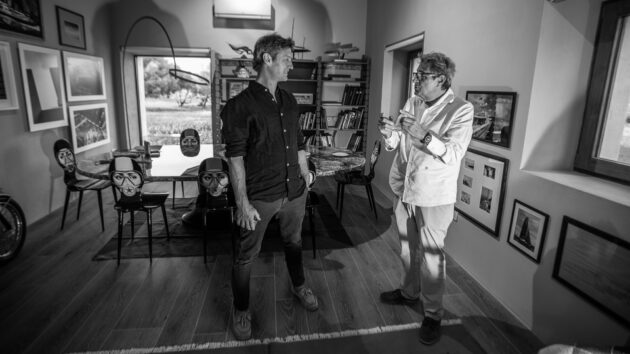
Talking boats in Jack’s office studio. Photo: Richard Langdon
This is a person who has had, or could own, yachts of any size, but found as much pleasure from the smallest designs.
I spoke with him shortly before he passed, when he was still desperately keen to sail his latest project, Jamain, a folding trimaran he commissioned from Antoine Mainfray in La Rochelle. The project was inspired by one of his favourite boats, the pedal-assisted 12ft Hobie trimaran he kept in the Virgin Islands, and involves a forward-facing central helmsman’s seat with joystick steering.
Many of his past vessels weren’t classically pretty, yet he had an eye for lovely lines. Instead, he valued more utilitarian and purposeful craft. One wall of his office was adorned with framed prints of dozens of these past craft, while the other featured his black-and-white photographs that were used in an exhibition in the Louvre.
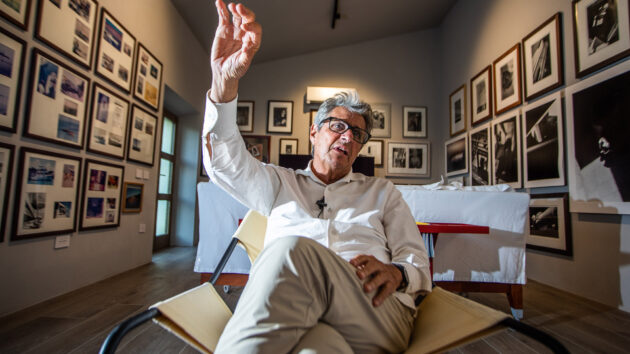
Jack Setton, with his past boats on the left and his photography on the right. Photo: Richard Langdon
Art and craft
Jack Setton was an artist, and his love of music led him to become a distributor for Japanese electronics firm Pioneer. But his primary passion was always the sea. He began motorboating with his father as a child, and bought his first yacht, a Dick Carter 33, in his twenties.
Jack helped his father, Joe Setton, design the offshore powerboat Bullit 298, as an outboard-powered alternative to the Magnum 27, which the US Army later used to drop from Hercules aircraft.
His enthusiasm for outboards then spilt over into sailing. Most notably, he fitted the 78ft Andre Mauric-designed sailboat Pioneer with twin 200hp motors, which could push this cigar ULDB to the late teens under power.
Setton had various forays into the marine industry, including buying into Hood Sails, “because I wanted the furling mast that Ted Hood had developed”. He was self-critical, both about that venture and his poor people management. Similarly, he never got on with yacht racing and acknowledges he was not patient enough with racing or good with crew, hence why he preferred sailing solo.
He took risks, challenged the norm, which helped push designs forward and into build. Ocean sailing and circumnavigations on his superyachts helped him respect seaworthines and range in a design. But he loved purist craft and sailing solo.
“I love cruising boats but when you start to cruise that means you have to have an anchor, a chain, water tanks, and with all the weight in accommodation, 25º becomes a 40º windward angle and you never get there! So I came to love daysailers,” he explained.
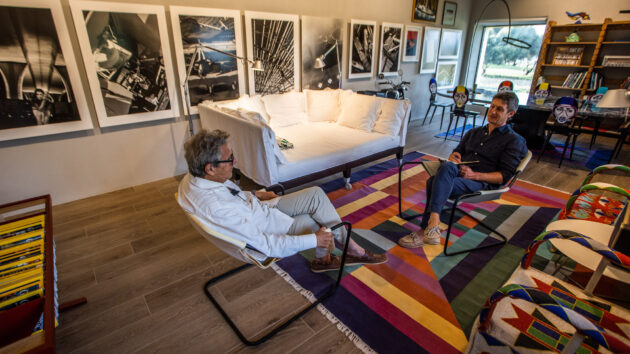
Jack talks to Toby in his colourful Sardinian studio in 2024. Photo: Richard Langdon
Key features Jack Setton learned to appreciate were heavy ballast (50%+) to compensate for hiking crew, big rudders to prevent stalling, strong keels, and, most importantly, a ‘nice impression’ on the helm.
Many of his yachts were built by composite wizards Multiplast. Setton collaborated with top designers, including German Frers, Rolf Vrolijk, and Marc Lombard, but he also had a nose for recognising up-and-coming talent such as Antoine Mainfray and Paolo Bua. His custom designs were often named to reflect this collaboration, including Jaro and Roljack (Jack/Rolf), Paja (Paolo/Jack) and his latest Jamain (Jack/Mainfray).
“But I hate making my own because no one wants to buy them!” he admitted. “If I could, I would never make a custom boat… I’m a keen lover of a production boat that does it in the right way”, he added, listing examples including his Saffier daysailers, Dragonfly trimarans and the Laser Stratos.
Jack Setton maintained he had no idea how many boats he’d owned (but it’s over 60). He didn’t have a favourite, a question he hated, but the 2009-built 60ft Frers daysailer Ciao Gianni is the one he most regrets selling.
It was, like most of his custom projects, ahead of its time… like the French pioneer himself.
Jack Setton’s groundbreaking boats
57m explorer yacht Senses. A trendsetter as the most advanced exploration yacht, it carried a Nelson 42 that used a ramp to launch while the mothership was moving.
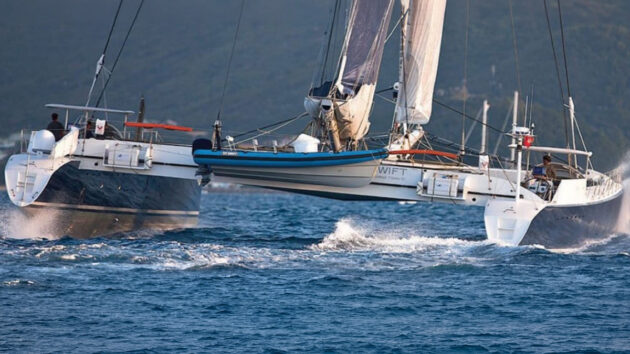
33m 110ft maxi cat Swift (above) – former Orange/Kingfisher/Gitana 13, converted for Pacific cruising.
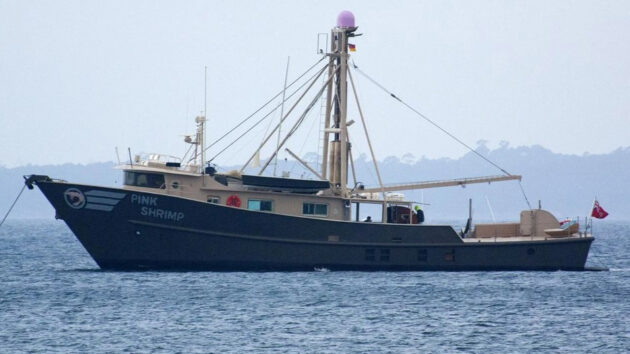
Refitted shrimper vessel Pink Shrimp, a 32m low-maintenance fishing boat from the Gulf of Mexico, which Setton retrofitted with jet drives to cruise at 40 knots. It carried his Frers designed daysailing catboat Fresnet.
78ft Pioneer, an aluminium Mauric design based on the racing yacht Kriter VIII, but fitted with twin 200hp outboards.
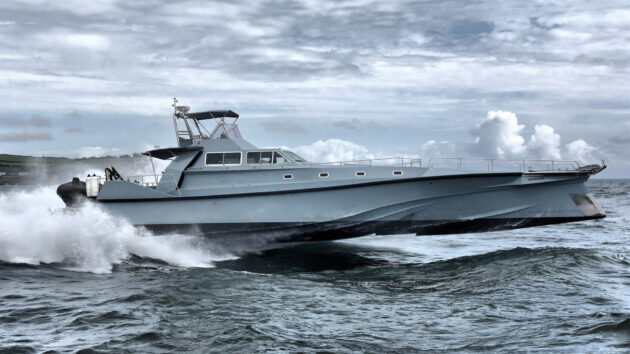
Offshore wave-piercing Safehaven XSV20 from Ireland, a 45-knot monocat design with hydrofoils.
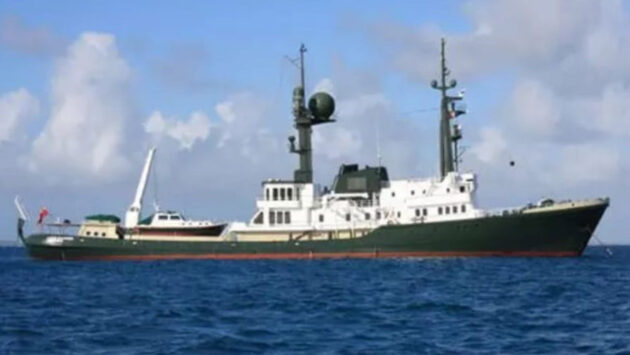
77.7m icebreaking tug converted for cruising and renamed Simson S
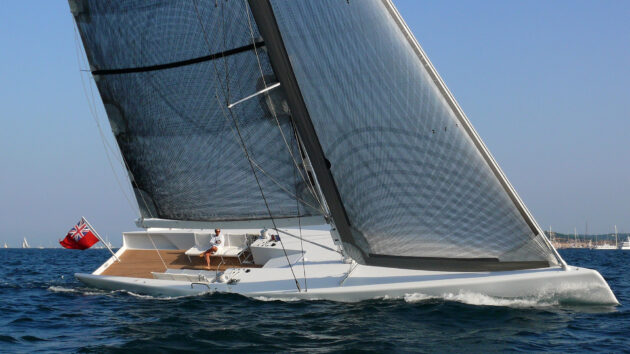
60ft Frers daysailer, Ciao Gianni, a stunning white weapon with inverted bow and low freeboard, named in tribute to the late Gianni Agnelli. The much admired and copied yacht Setton most regrets selling.
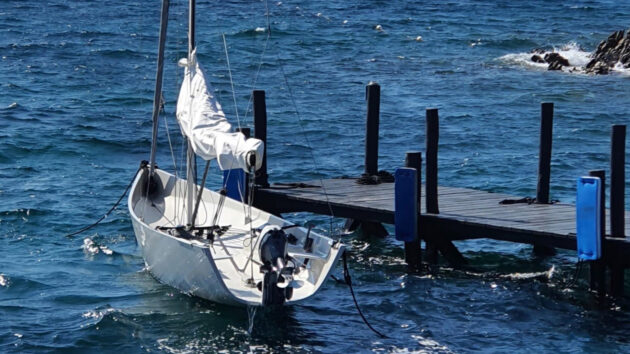
30ft open-decked super skinny daysailer Paja,a 2020-built modern version of a Valhalla whaleboat.
 If you enjoyed this….

Yachting World is the world’s leading magazine for bluewater cruisers and offshore sailors. Every month we have inspirational adventures and practical features to help you realise your sailing dreams.Build your knowledge with a subscription delivered to your door. See our latest offers and save at least 30% off the cover price.
Note: We may earn a commission when you buy through links on our site, at no extra cost to you. This doesn’t affect our editorial independence.