



What counts as ‘normal’ for an Ultim skipper is hard to get your head around, but when Matt Sheahan stepped aboard the new Gitana it gave some clues
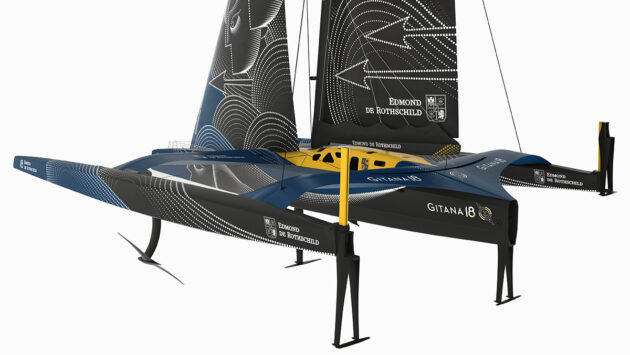
I’ve learned to pinch myself regularly when I’m talking to Gitana 18 skipper Charles Caudrelier, especially when we’re discussing the Ultim trimaran. Without the occasional jolt to the senses it’s all too easy to start thinking that his explanations as to what he feels comfortable with, at eye-popping speeds, are normal. For most of us, they’re not.
In fact his offshore world is so far from typical that if it wasn’t for the giant tri usually beside him as he explains his rationale you’d be forgiven for thinking his words were just theories and bold talk.
Aside from those in the America’s Cup, SailGP and ice yachting, who else thinks that sailing at over 40 knots is normal – let alone doing it offshore, single-handed for days on end? The idea of sleeping while your machine is barrelling along at such speeds is beyond imagination for me.
But I’ve talked to Caudrelier a lot over the years about his life in the fast lane, and his calm, understated, ego-free manner frequently ends up with me starting to think it all makes sense and that 32m trimarans on foils are the obvious choice for a safe, solo ride around the world.
My most recent meeting with Caudrelier and the Gitana team took things onto another level as I joined them for sailing trails aboard the new beast at their base in Lorient, ahead of November’s Route du Rhum.
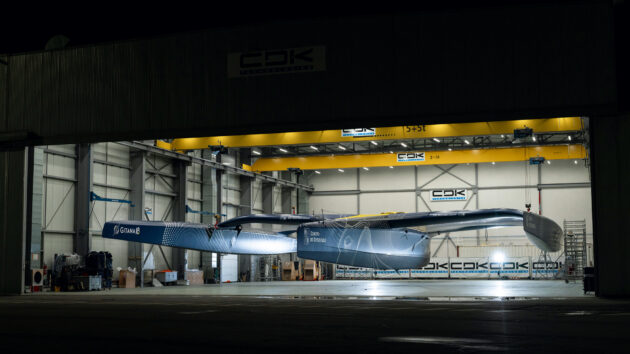
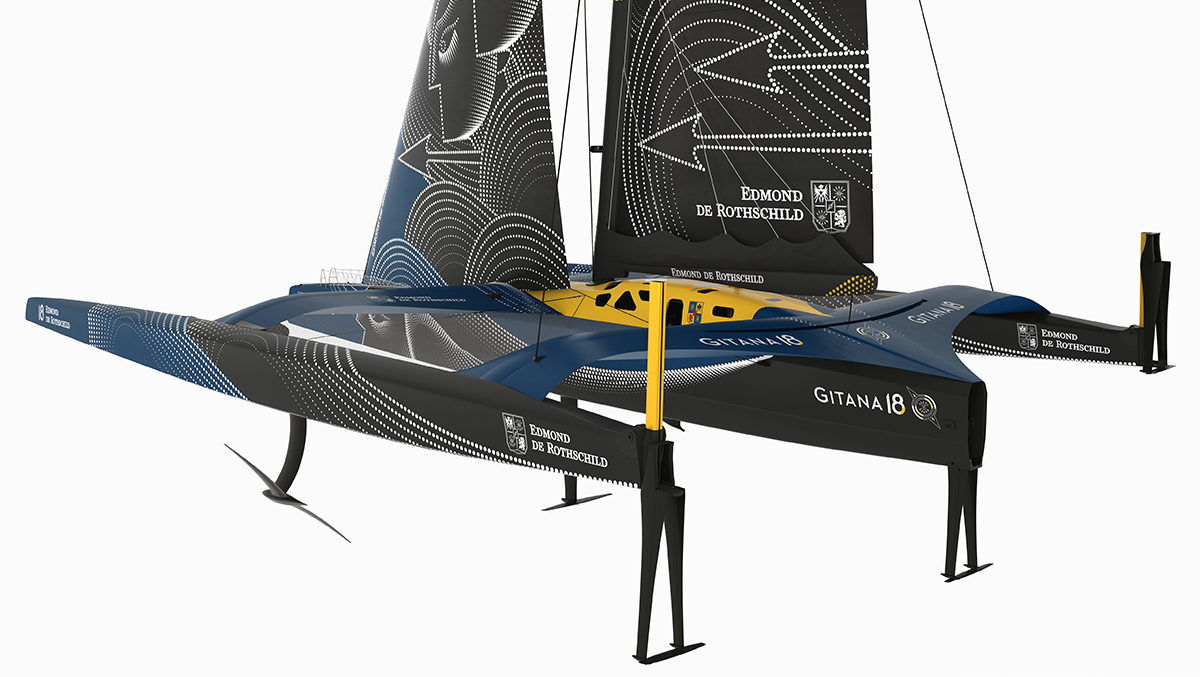
Gitana 18 leaving her shed at launch earlier in 2026.
This is an insanely complex boat with around three times as many hydraulic systems as the previous Gitana (see an in-depth report on her technology at yachtingworld.com). And yet a few months after her launch Caudrelier completed a 1,500-mile solo qualifier in which he wound up the blue and yellow machine to well over 40 knots. He is clearly very confident with the results so far.
So confident, in fact, that he happily handed me the helm during our trials before immediately walking away to chat to the crew. No briefing, no hand-holding, no peering over my shoulder and talking me through the target numbers. As I took the wheel I could start to see why. This is a maxi like no other I have ever helmed.
The small sports car-like steering wheel delivers a light and responsive feel more akin to a grand prix race boat a third of her size. Sharp and direct on the helm, she feels planted as she copes with a wide range of wind angles and speeds.
Even more impressive is that this stability doesn’t come down to flight automation, which is not allowed in the Ultim class, instead foil trim adjustments are manual.
I’m lucky enough to have sailed on her predecessor, Gitana 17, and that steering was completely different. The large conventional yacht-style wheel almost felt like it was connected to the rudders using bungee rather than rods by comparison.
The main reason for Gitana 18’s direct and efficient feel is that her rudders are controlled using electric motors, a fly-by-wire type system, much like many of us now have in our cars.
Article continues below…
The smartest boat ever built? 500 sensors, custom autopilots, and the future of foiling
Lorient is the Hollywood of ocean racing. Like the movie factory of Los Angeles, the Brittany port is a seemingly…
Have you ever seen rudders like that before? Radical top-secret Gitana 18 Ultim unveiled
When the Rothschilds and Gitana team unveil a new boat, they do it properly – and last night the huge…
The result is that the helm has a more direct feel, with feedback too. The rudders are also set up to turn at different rates depending on whether they are on the inside or outside of the turn. This makes the whole operation more efficient.
Elsewhere the key controls are also a step up. From the T-foils on the Cup-style canting arms that can be operated independently to optimise vertical and lateral lift, to the canting daggerboard on the main hull that not only has a T-foil with flaps and a trim tab – the entire system can rake forwards and backwards. The bottom line is that these developments are more than design refinements, they are major steps forward.
Caudrelier and his team have built their confidence in this complex machine quickly. Just over three months since it was launched, after clocking up 30 days of sailing trials, they were treating the boat as if they were several seasons down the line. How they have arrived at this point so rapidly, when there are so many complex interactions to consider, let alone the relentless task of calibration to get to grips with, is beyond me.
But Caudrelier brings it back down to reality when he talks of how G18 compares with her predecessor. “With Gitana 17 I was happy up until around 40 knots. Above that she got quite twitchy,” he said.
“Once you got into the low-to-mid-40s it became quite difficult to control and on two occasions I Chinese gybed.” Alone, offshore and on a runaway bus that had spun out. It was time for another pinch, Caudrelier had lost me again.
 If you enjoyed this….
Yachting World is the world’s leading magazine for bluewater cruisers and offshore sailors. Every month we have inspirational adventures and practical features to help you realise your sailing dreams.Build your knowledge with a subscription delivered to your door. See our latest offers and save at least 30% off the cover price.
Note: We may earn a commission when you buy through links on our site, at no extra cost to you. This doesn’t affect our editorial independence.