



Is sailing a sport? A hobby? A way of seeing the world? Of course it can be all of these things – sailing is a broad church
Weighed down by a steel frame and two panniers of touring equipment and clothing (essentially my sailing kit repurposed), I rode the ‘granny gear’ up and over several famous Pyrenees Cols this August on a cycling mini-expedition to test my legs.
There was one particular moment, slogging up my most arduous climb, when I counted the 50th lean Lycra-clad road biker to overtake me and I realised how objectively different our two activities were. And yet here we were on the same mountain, tackling the same gradient, both on a bike.
Sailing’s extremes aren’t so different. It reminded me of a RORC Caribbean 600 start a few years ago where an Ultim Class trimaran’s foiling hull flew high alongside, going triple the speed of the XP-50 I was racing.
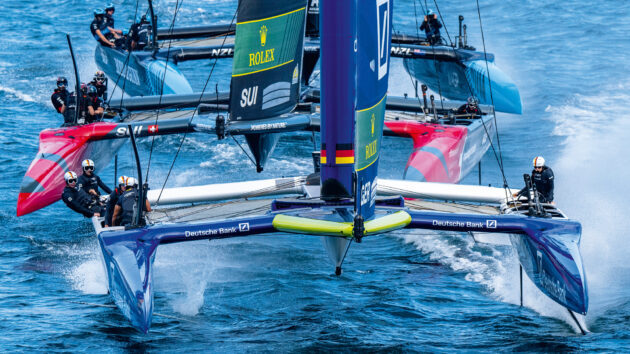
It’s slightly confusing that we compete on the same course – that you can be a sailor and race an F50 catamaran around a tight inshore course, participate in the Round the Island Race on a Cornish Shrimper 19, or cruise the Baltic on a 30ft Hallberg-Rassy.
And it could be easy to view the apparent fragmentation of sailing to be a weakness – that sailors, like cyclists, aren’t really sure whether we are primarily athletes, hobbyists or self-sufficient travellers.
It’s hard to explain to a non-sailor how the Vendée Globe, Cowes Week, high-latitude expeditions, Wednesday night dinghy racing and anchoring off a Caribbean Island are all the same activity.
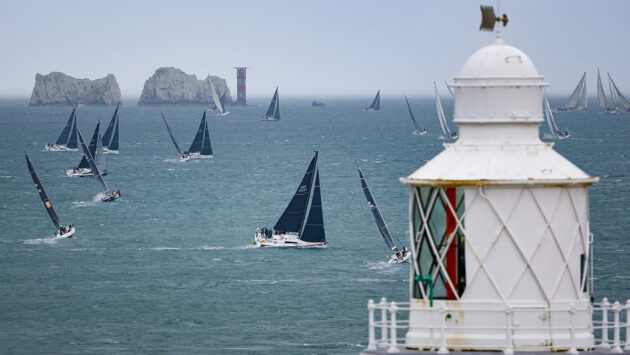
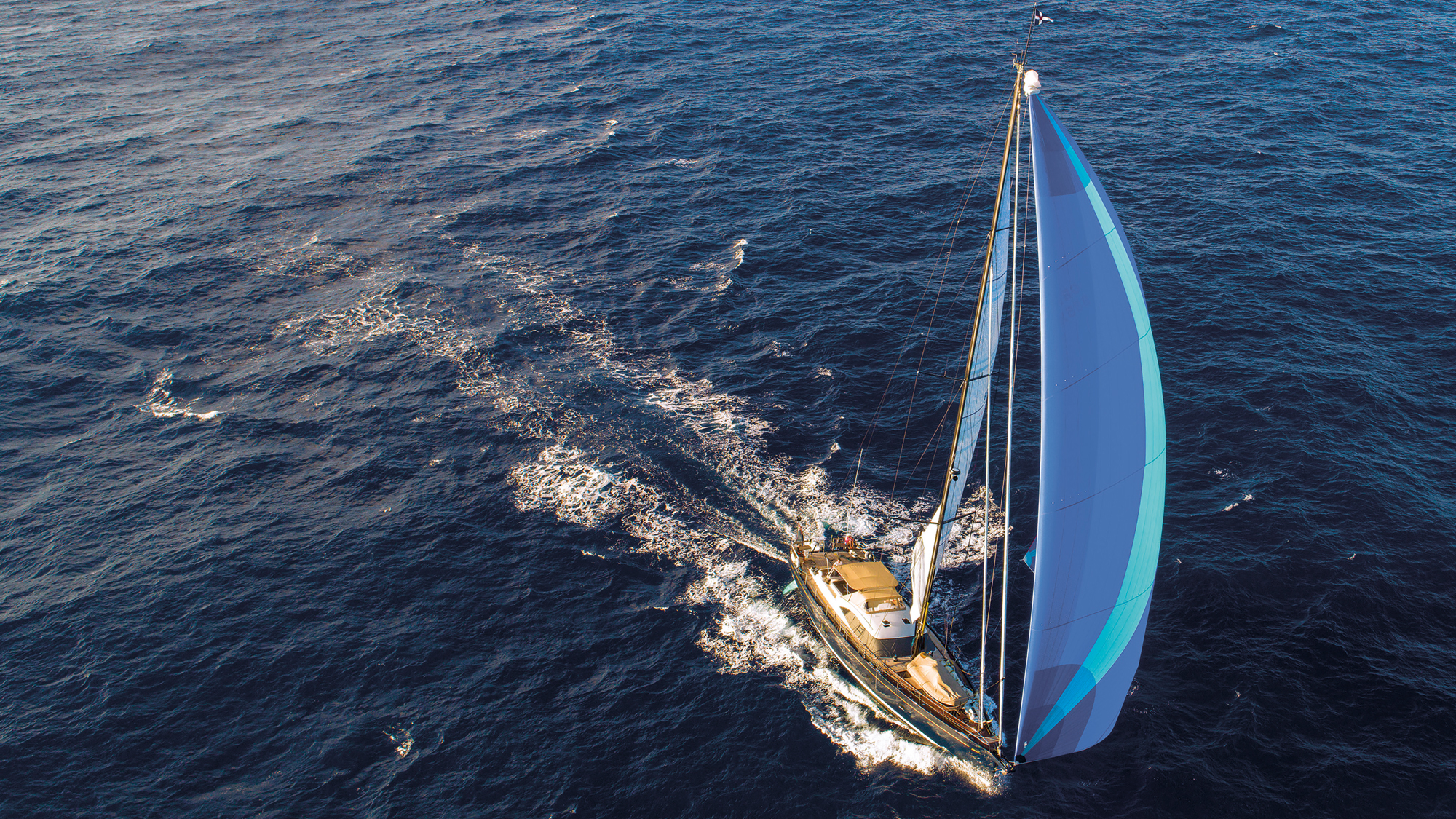
The Fastnet race is one race where top of the range racers compete against amateurs. Photo: Carlo Borlenghi/Rolex
But what struck me climbing the mountain pass at 4mph, as the immaculate athletes zoomed past going faster uphill than I could on the flat, was how brilliant it is that both the sports I love have so many avenues to enjoy them.
The other way to look at the fragmentation of sailing is that the breadth in the sport means there’s always another way to enjoy it. It doesn’t get boring. You could grow up competing in Optimists, cross an ocean for your 30th birthday, race a Fife for fun in your 50s, sell up and buy a cruiser in your 60s and potter around the fjords of Norway in your retirement. Each avenue complements the next. The variety keeps it interesting.
As with offshore sailing, there is rather a lot of time to think when cycle touring, interspersed with sharp moments of intense concentration and effort. Half an hour later, I made it to the top, where I paused to peel some pre-boiled eggs and put together a second breakfast while the pros slammed an energy gel and pressed on.
Enjoying the view, I reflected on other parallels between sailing and cycling: a passion for carbon fibre, a rhythmic cadence, balancing forces, risk management, and a reliance on the weather.
Most of all I realised how I really felt part of a tribe up that mountain. As I’d climbed and then descended, every biker nodded or fist pumped me in response to my smile and wave, as if we were all acknowledging that although these were essentially two different sports, we were of the same breed.
The steep incline, two wheels and gravity served to level us. And it’s the same in sailing. At least at sea it is. On land, it can be a little different. Go into any pub during Cowes Week and we’re certainly all speaking the same language. But perhaps sailors could do more to recognise our likeness within the sailing community.
Article continues below…
Has technology reduced sailing’s spirit of adventure? – Nikki Henderson
Now that we’ve entered a new chapter in sailing with the proliferation of affordable, high speed internet at sea, is…
Rallies provide safety, but they don’t replace independent thinking – Nikki Henderson
Fifteen days ago, as I write this from the paradisical shores of French Polynesia, we weighed anchor in the Galapagos…
I recently heard on a sailing podcast, where a racer admitted to having complained about cruisers for years until they went cruising themselves. Racers moan about cruisers; cruisers think racers are too full on; traditionalists question whether foiling is even sailing; adventurers worry that competitive technology will take away the joy of sailing altogether.
Let’s be careful not to fall into the trap of thinking there is any hierarchy in sailing. An F50 is not the summit of sailing, nor is a Shrimper at the bottom. They don’t even exist on the same ladder – they are branches of the same tree.
Grand Prix sailing serves as inspiration and pushes innovation which trickles down. Lower cost dinghies feed in new sailors from the bottom. Cruisers preserve the dream. Adventurers extend what we think is possible. Every part of sailing serves a purpose.
That’s what sailing really is – like cycling, a community that enjoys a human- or nature-powered form of motion in different ways. The breadth in sailing isn’t something to just tolerate. It’s what makes sailing so special.
Enjoyed reading this?
A subscription to Yachting Monthly magazine costs around 40% less than the cover price, so you can save money compared to buying single issues.
Print and digital editions are available through Magazines Direct – where you can also find the latest deals.
YM is packed with information to help you get the most from your time on the water.
-
-
- Take your seamanship to the next level with tips, advice and skills from our experts
- Impartial in-depth reviews of the latest yachts and equipment
- Cruising guides to help you reach those dream destinations
-
Follow us on Facebook, Twitter and Instagram.
Note: We may earn a commission when you buy through links on our site, at no extra cost to you. This doesn’t affect our editorial independence.