



If your family hasn’t – yet– fully caught the sailing bug, we have the latest ideas to get them hooked. Here's how to get your family into sailing
For many, sailing is a generational habit – learned from their parents, maybe by pottering about a local reservoir in a beaten-up dinghy, or hopping from port to port and creek to creek in a small cruising yacht, where half the adventure was spending a night squished into a saloon berth.
There are plenty of sailors that still come to the sport via this traditional route, those who fall in love with it maybe moving onto club racing or cruising further afield, perhaps realising that sailing can take them anywhere in the world they wish to go. But life, and sailing, has changed. Dinghy parks are filled with fewer of those traditional double-handers – the Mirrors, Cadets, Wayfarers and GP14s – and more single-handed or high performance racers.
Photo: Pure Latitude
Cruising yachts are bigger – more comfortable, yes – but often less suitable for creek-hopping than a compact bilge keeler. Meanwhile leisure time is now our most precious commodity of all.
But if you don’t have the boat, the skills, or the time, to build your family’s sailing foundations this traditional way, there are now many more options to make the sport accessible, appealing – and above all fun.
Maybe you’re a lifelong sailor whose partner, children, or grandchildren are yet to be convinced. Maybe you’re newer to sailing, and figuring out how you can develop the skills as a family you need to go on grand adventures afloat together. Or maybe you just want to have some enjoyable sailing time with zero pressure.
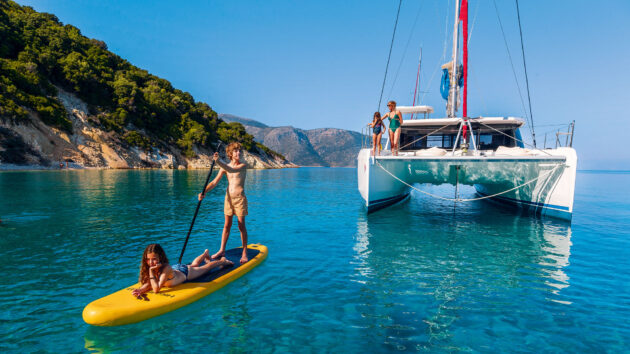
A charter can be the ideal introduction to sailing. A catamaran offers a stable platform and plenty of accommodation, Keep your daily mileage low to enjoy plenty of beach, swimming and paddleboard time. Photo: Sunsail
What puts people off
If you’re a long-time or passionate sailor, it can be hard to remember why some people don’t enjoy it. The most immediately off-putting experiences include being cold, wet and uncomfortable; seasickness; boredom; and feeling stressed or fearful. If you want your family to enjoy sailing, you need to avoid these danger zones at all costs.
That might mean, even if you are a highly experienced skipper, that you’re not actually the best person to teach your children or partner to sail in a low-stress manner (for the same reason most of us defer to driving instructors when it comes to putting teenagers behind the wheel of a car).
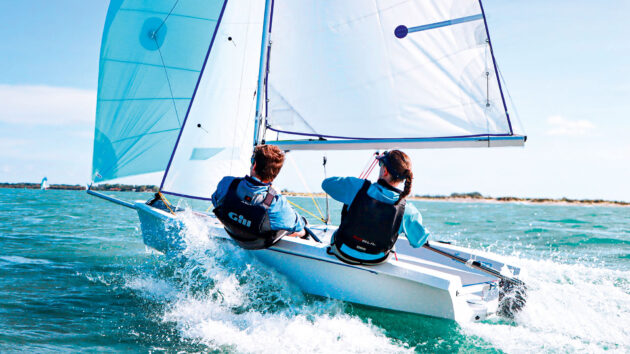
Fast, manageable fun – the Vago dinghy from PSA. Photo: Performance Sailcraft
It might mean, even though you have your own yacht ready and waiting, it’s not automatically the ideal boat for family cruising. And it might mean that a bright and breezy spring weekend is not the right time to take them out for a first sail.
So what are the alternatives? We look at some of the latest ownership, charter and instruction options.
Head for the sun
It’s not hard to see the appeal of a sailing charter holiday – and most of it comes down to near-guaranteed good weather. If you want your family to fall in love with sailing, sunshine and warm water will only help.
But there are other benefits. Allowing newer sailors to get to grips with handling a yacht that is not yours removes some potential stressors; it’s a rare owner-skipper who doesn’t find their blood pressure rising if the jib flogs a little longer or the engine is revved a little harder than ideal.
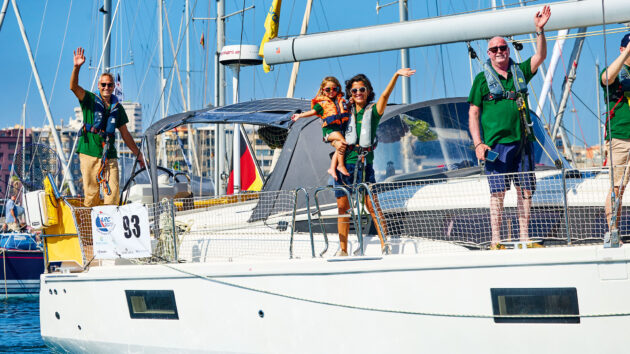
Photo: James Mitchell/WCC
You can intentionally pick a cruising area with predominantly light wind and low swell conditions. And even if you don’t feel that you need the support of sailing with a group, if you have children, a family flotilla route can give them a pontoon of instant friends in every port.
All the charter operators we spoke to reported a surge in popularity of multi-generational holidays, partly due to larger charter yachts coming into service. Catamarans are now ubiquitous in many charter destinations, and the split hull set-up offers space and privacy for sharing with another family, or to give grandparents some peace and quiet.
“We’ve seen an uptake in cross-generational bookings, up around 10% year-on-year, with families and friends now making up roughly 43% of our charters,” reports Sunsail’s Caroline Barbour. Among this demographic, lead bookers are often in their 50s and 60s, and flotillas are particularly popular.
James Foot of Helm has seen similar trends.
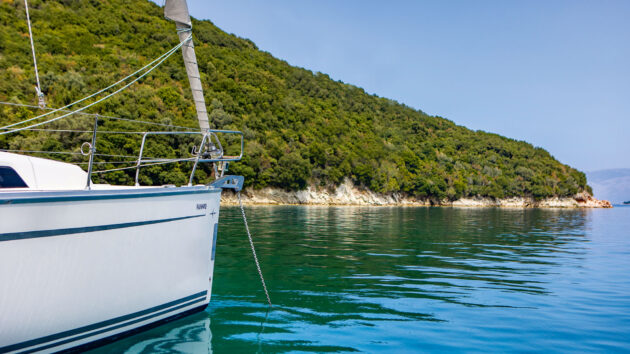
Photo: Michael Hartzenberg Photography/Sail Ionian
“Multi-generational holidays on boats have been booming for a little while now, and it makes sense – you can combine a bit of fun and gentle adventuring with family privacy and quiet time,” he says.
“What’s interesting, though, is how much they have grown in certain destinations. In Croatia we have seen a 60% increase in family bookings from 2024 to 2025, which reflects the growth of larger catamarans and motorsailers in the area, with more space and better toys. The Sporades – thanks to its Mama Mia links – has become more popular, too.”
Anyone planning a family charter holiday should consider their location carefully. “Choose somewhere reasonably sheltered, with short passages between stops,” adds Foot. “The South Ionian is hugely popular for this reason, it is easy to navigate, the winds in high season are always mild, and there are lots of very pleasant anchorages to splash about in over lunch.”
Hannah Kilroy of Sail Ionian confirms that the region is particularly suitable for families and mixed ability crews.
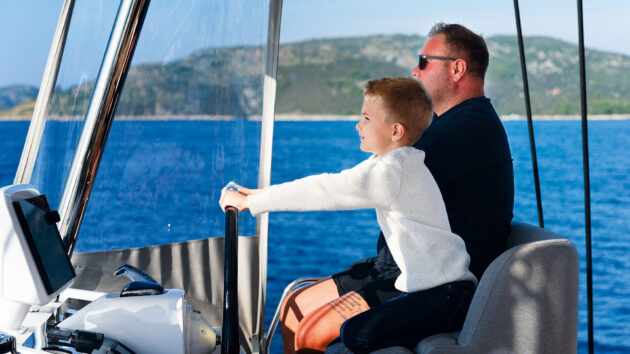
Give children the opportunity to take the helm – and you may not get it back! Photo: Helm.yt
“Distances between harbours are short. Our waters are generally calm with lots of shelter from the outlying islands, and you can always find an island to shelter behind if the wind picks up too much for comfort. In general winds in the Ionian are lighter than areas like the Aegean, which gets the summer Meltemi that can blow hard for days on end and present serious problems for open crossings between islands.”
When it comes to choosing the right yacht for a charter, her advice could apply to all aspects of sailing with family: “Match the boat to the people, not the dream.”
“Prioritise cockpit comfort and shade, easy access in/out of the water, a safe deck layout (and enough heads), so different generations can actually rest and relax.”
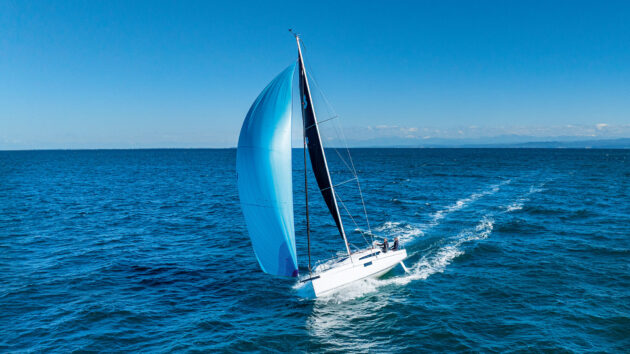
Beneteau’s First 30 planing cruiser. Photo: Vid Slapnicar
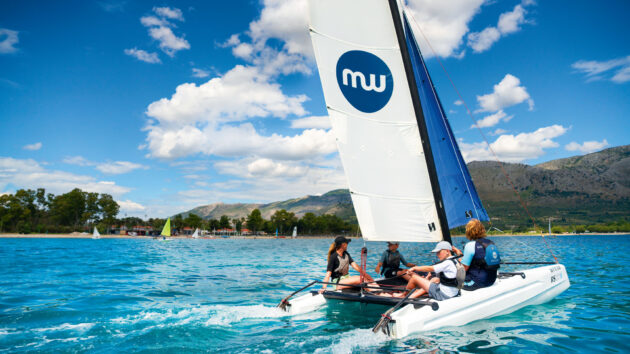
For the lowest-stress option of all, a beach club holiday offers all ages a taste of dinghy sailing – boats pre-rigged, all-important sunshine and warm sea, and wall-to-wall safety cover for reassurance. Most of the big operators are RYA training centres and offer Level 1 or 2 RYA sailing qualifications for complete novices, including junior groups, while more experienced sailors can often take out beach cats or foil boards.
Mark Warner guests can book a dedicated private lesson with an instructor to focus on gaining parents confidence to sail with their children (and vice versa!).
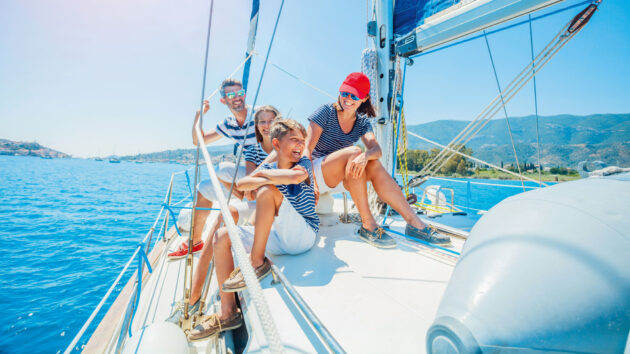
Sunshine and light winds for low-stress family fun. Photo: Helm.yt
Learn together to get your family into sailing
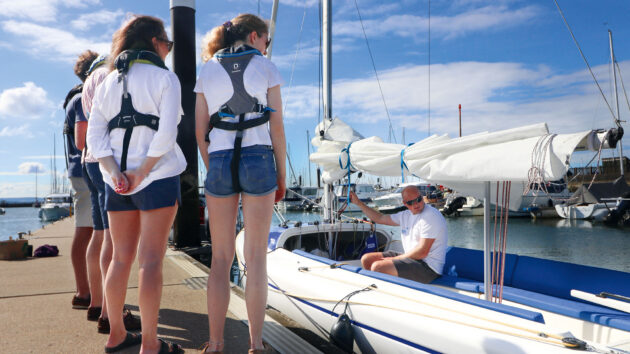
For families that want to combine learning or upskilling with a holiday, several operators now offer a private instructor charter option. Chris Lorenzo of Seafarer Sailing explains how it works: “The opportunity to charter a yacht with an RYA accredited instructor can be exceptional value, from under £1,000 per person.
“It involves exclusively chartering one of our RYA tuition yachts, usually for seven days, and running RYA practical course tuition over the week. The instructor fee is added to the charter price.”
A typical combination would be Competent Crew and Day Skipper courses, for up to a maximum of five students.
“Having mixed ability students is fine and very normal on any RYA tuition yacht,” he says, “The only thing we do not recommend is mixing Day Skipper with RYA Coastal Skipper as the syllabus is quite different.
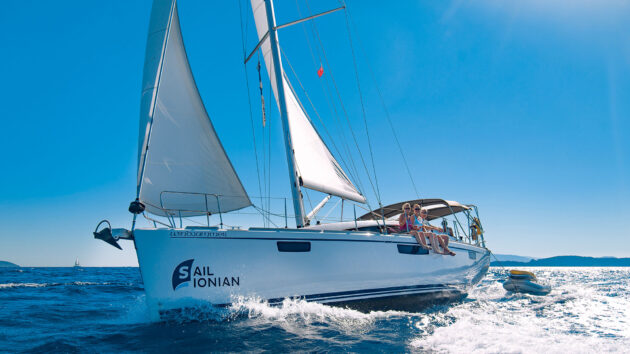
The Greek Ionian can offer ideal conditions for a family charter. Photo: Joe Snowdon Photography/Sail Ionian
“With the course being over the week rather than the RYA-designated five days, it leaves some time for lunch and swim stops, and a bit of time either first thing or later in the day to explore each destination.”
The minimum recommended age for an RYA Competent Crew course is 12, and 16 for Day Skipper. Children can complete an RYA Start Yachting course from age 8, though Lorenzo points out that if the group includes younger children who can’t take part in the instruction, you will need a designated adult to supervise them on board – it’s worth discussing this with your charter operator when booking.
Sunsail also runs a ‘Flotilla Hero’ practical course, which combines sociable flotilla sailing with RYA Day Skipper or Competent Crew instruction from Agana, Croatia, and Lefkas, Greece.
Article continues below…
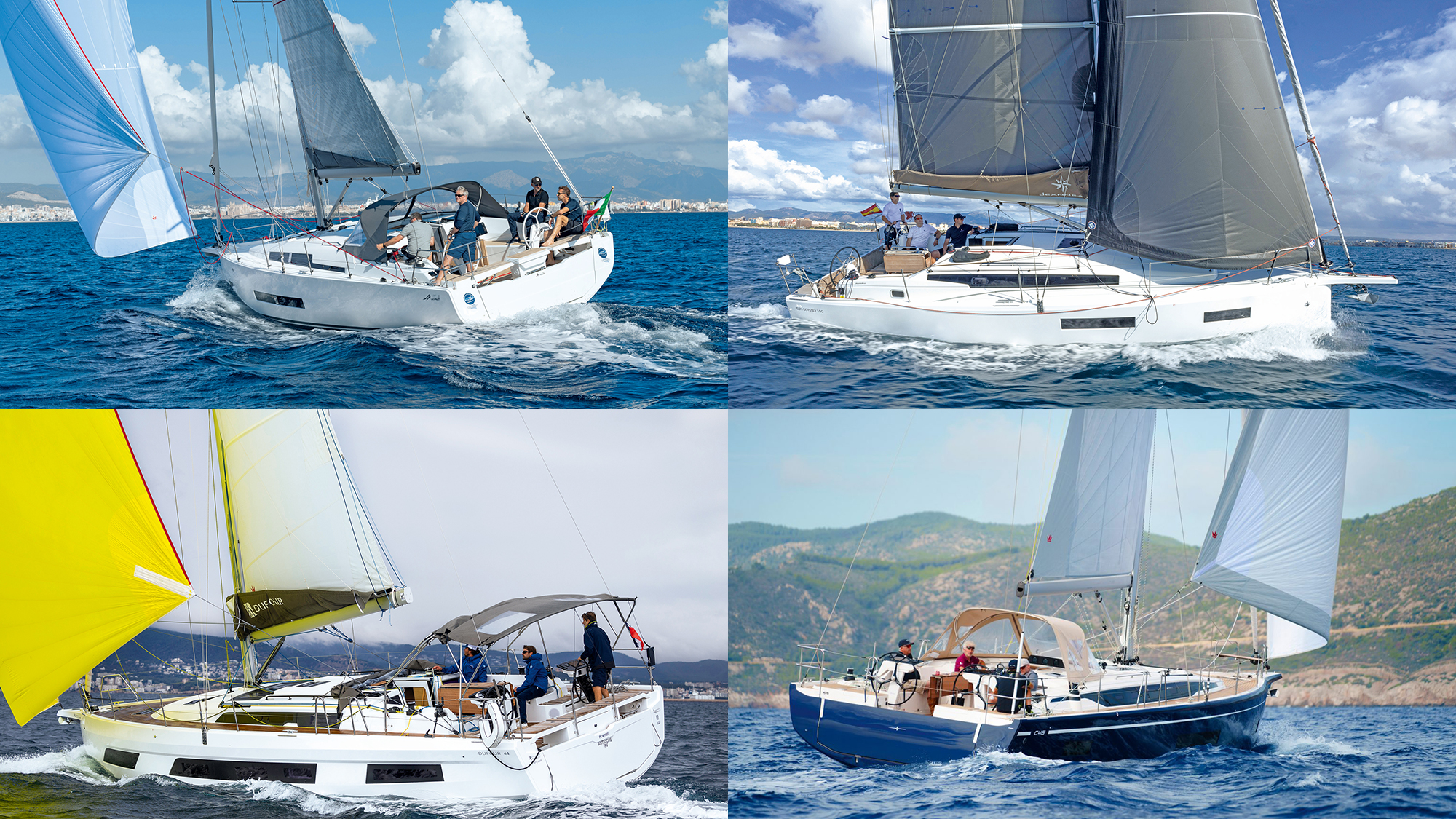
Best family yacht 2026: Adventures with the whole family
There are many categories in the European Yacht of the Year awards, from the best luxury yachts to performance yachts. But some of…
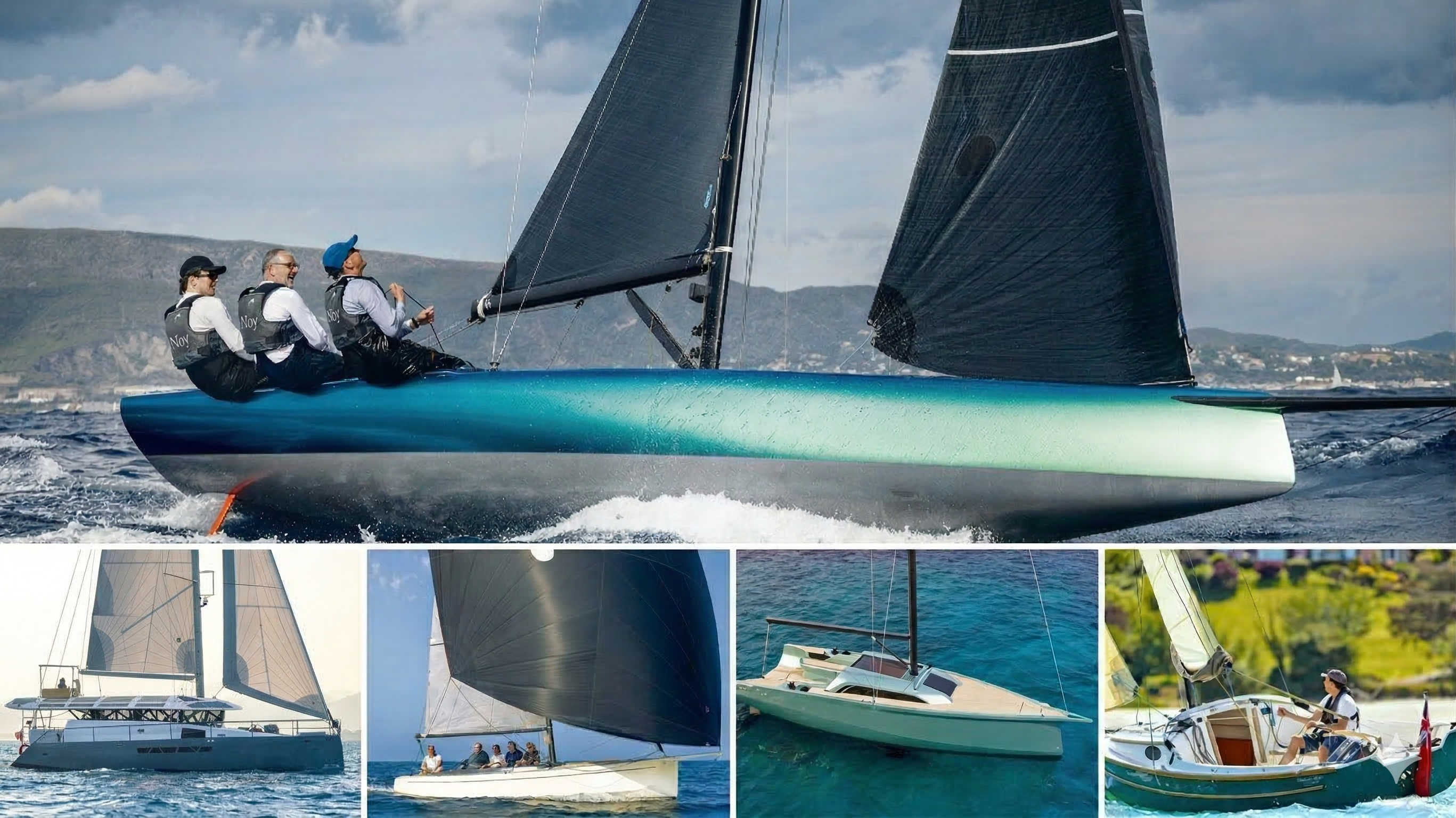
The Best Specialist Yachts 2026: Impressive daysailers and sportsboats
What do you do when you have yachts that are as diverse as innovative daysailers, a lake sportsboat, a recyclable…
The right boat
Despite the overwhelming trend for cruising yachts to get bigger and bigger – be that higher volume monohulls or larger multihulls – there have been some intriguing launches at the smaller end of the scale in recent years.
They include the hugely successful First 30, designed for fast cruising at a manageable size, while the pocket-rocket Bente 28 combines contemporary looks with compact accommodation that allows for some family weekending.
J-Boats last year launched the new J/7, a day cruiser that is intentionally simple to handle, with a furling headsail, high boom, comfortable and spacious cockpit – and firmly marketed at families and club or sailing school ownership.
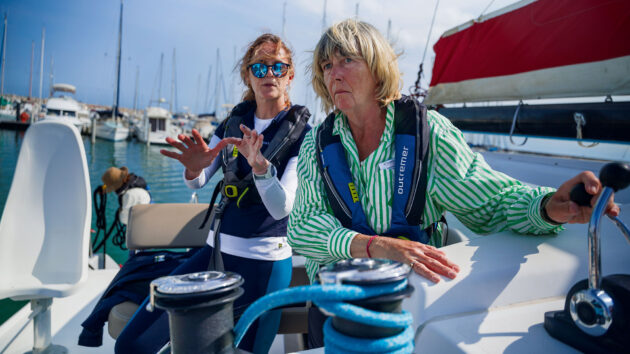
Women-only sailing courses – such as this session led by Nikki Henderson for Outremer catamaran owners – can be an empowering way for female sailors to build skills. Photo: Robin Christol/GLY
For years RS Sailing was best known for its one design race dinghies, although these days anyone visiting a beach club or sailing school may well come across its Adventure range, including cruising dinghies like the RS Quest, which is more than able of fitting in the whole family – and if not the kitchen sink, at least a hefty picnic.
Their latest addition is the Aira 22 dayboat, that was relaunched under the RS stable last year. RS’s commercial director Michiel Geerling grew up in the Netherlands and could see that elements of Dutch sailing culture had potential to widen the appeal of the sport beyond families like his own, where he grew up sailing from babyhood.
“There are a lot of people in the Netherlands that go sailing to learn [as adults], and they do that in small keelboats that could have an instructor and four or five people on board.
“And it is completely fine for people to not be skilled sailors, but just go out and learn as they go. That culture is so big that there’s thousands of boats every day rented out in the north of the Netherlands over the whole season, where people just rent a boat for €150 a day, bring the kids down, lifejackets, and off they go.
“But actually, this created a sailing culture that is quite a bit bigger [than other countries]. So the Aira 22 is actually a Dutch design, and we took it on because I believe that culture could be helpful around the world.”
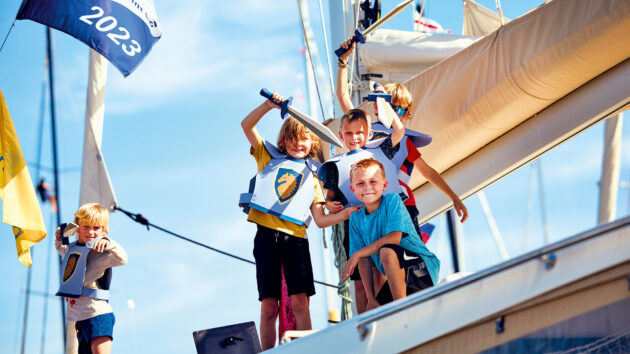
Dreaming of a bluewater adventure with your family like the ARC? Start by introducing children to sailing in a low-pressure environment. Photo: James Mitchell/WCC
The Aira 22 has an asymmetric pole, fixed or retracting keel options, long, padded cockpit seats that could comfortably seat six, a drop down electric outboard, and a small cuddy. Though there is no interior, there is an additional rotating cockpit table.
“It also has in the design these roll-up mat bases from IKEA that fit the Aira 22. So you can use it like a big tent,” says Geerling, who lives on the South Coast of the UK. “Having two little kids myself, this idea that we could go to Newton Creek and anchor there to stay there for the night and the next day we sail back. It’s a real adventure.”
He sees boats like the Aira appealing to first-time buyers who have built confidence after sailing them in lessons or at rental centres. “People phone me up and say, ‘Oh, I’ve sailed this boat, and I think I can do it. I want to buy one for myself.’ Those rental centres are actually really important for growing the cruising market.”
However, they also appeal to downsizers who want a simple yacht to sail double-handed or with family. “Take my parents. I’ve never in my life known my parents not own a boat, and they’ve now given up on owning, they just rent. They’re in their 80s, but they’re still sailing.”
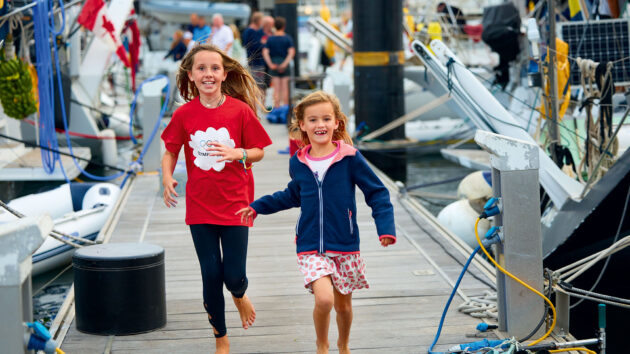
Photo: James Mitchell/WCC
Hassle free ownership
Over the past decade, shared ownership has been a major growth area in sailing. As subscription-based models become ubiquitous in all areas of life, ‘pay to play’ or shared liability options are increasingly appealing to both new and existing boat owners.
“In recent years, we’ve noticed a slow but persistent shift away from the traditional boating customer base towards a slightly younger demographic more focused on accessing experiences,” explains Ian Bartlet of Pure Latitude, one of the longest-standing ‘boat clubs’.
“Across all demographics, prospective members are now less likely to be seeking something akin to the traditional boat ownership experience. They better understand that they simply want low hassle boat access, so they can focus on enjoying the experience. Previously, we needed to spend more time educating that ‘ownership’ wasn’t the only way to get afloat.
RS Sailing’s Aira 22 dayboat is a Dutch design that aims to make family daysailing as popular in the rest of Europe as it is in the Netherlands. Photo: RS Sailing
“For most people looking at how best to get on the water, time is the biggest part of the equation. Sure, the costs of ownership are a significant consideration, but the real question is whether those costs will provide value for the time they have available. In our view, for sailors who want to spend 35-plus days a year afloat, ownership is likely the best route and can provide good value if utilised.
“But, for the majority, the reality is they can only really spare a maximum of 15-20 days a year for their sailing activities, alongside all of life’s other commitments.”
Offerings differ, from shared usage of a single yacht, to ‘club’ models where you pay to sail, choosing from a range of different boats. Pure Latitude members pay a monthly fee to access a range of sailing yachts, mostly in the 30-38ft bracket on the Solent (they also have powerboats).
Besides ‘free sailing’, members can join social cruises and organised passages, and skills courses on popular topics like berthing and sail trim.
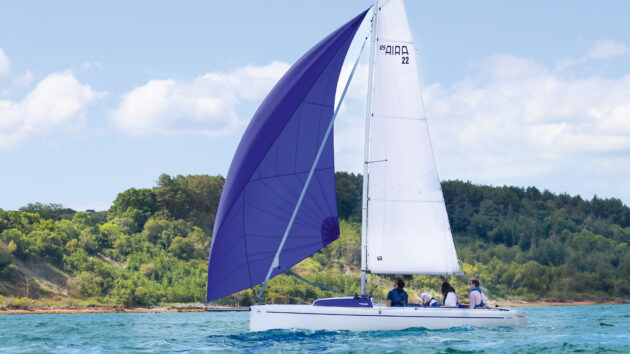
Photo: RS Sailing
New ways of buying
While finance has long been part of how people buy big boats, the owners of Performance Sailcraft (PSA) – builders of the ILCA (formerly Laser) racing one-design, plus family-friendly Bahia, Vago and Pico models – have launched a new option for dinghy ownership.
Under the scheme, called Magic, boat buyers put down a 30% initial payment, followed by 24 interest-free payments, which includes insurance with Navigators & General.
Nick Ogden is chairman of PSA, but before that had a background in financial technology. He could see that existing finance models didn’t service the small boat market. “You get talking to parents and you get talking to the sailors, and you start to realise there’s a fundamental problem in how they afford the kit they want.”
There is no getting around the fact that dinghies, like everything else, have gone up in price. A new PSA ILCA package starts at £6,500, and a Vago from £9,400. At these sums customers are looking for finance, but traditional financial services companies just weren’t interested.
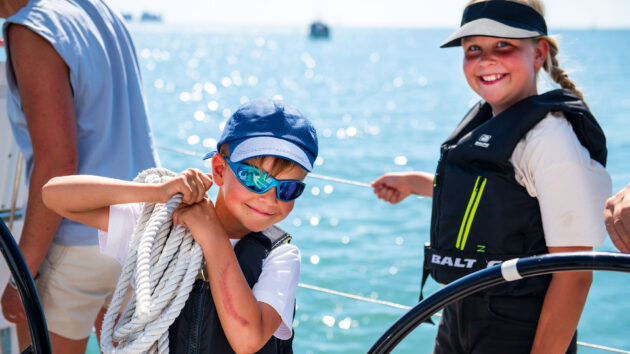
Photo: Mike Jones/Waterline media
“What people said to us is they’d like to either be able to trade the boat in, get a new boat, or own it at the end of the payment period. If they’re getting into sailing for the first time, they can get into it at less upfront cost. They don’t have to go max their credit card out. Basically, it spreads the cost over a couple of years.”
While it will initially only apply to PSA dinghy packages, the plan is to roll the Magic payment scheme out to boats from other manufacturers in future.
The right kit
There’s no need for anyone to be cold and wet on board any more. Sailing kit has never been better and thanks to the plethora of reselling platforms and marketplace groups, affordable second-hand gear can be found at the scroll of a phone.
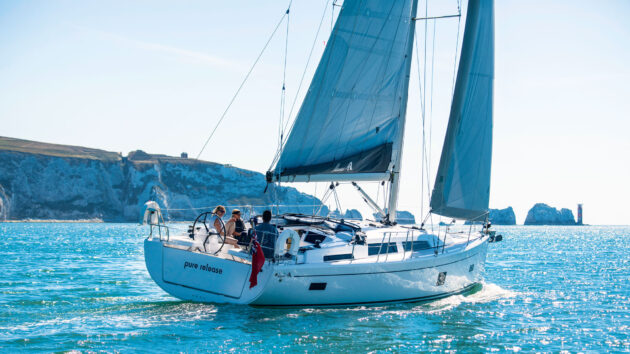
Time-poor families looking for a hassle-free and fun sailing experience are increasingly turning to shared ownership schemes like Pure Latitude based in the Solent. Photo: Pure Latitude
Junior sailing wear in particular has improved – look for brands like Rooster, which makes high quality dinghy and keelboat clothing for children, teens and adults, that lasts well and often appears on resale pages. Their cold weather clothing is particularly recommended, including thermal underleggings, undersocks and inner gloves for dinghy sailing (nothing puts kids off sailing faster than frozen hands and feet!), and the much-imitated Rooster Aquafleece top.
Crewsaver, Gill and Typhoon also offer great value clothing across all sizes. And don’t dismiss Decathlon – its Tribord range is ubiquitous in sailing-mad France, and impressively high-spec for the price.
 If you enjoyed this….
Yachting World is the world’s leading magazine for bluewater cruisers and offshore sailors. Every month we have inspirational adventures and practical features to help you realise your sailing dreams.Build your knowledge with a subscription delivered to your door. See our latest offers and save at least 30% off the cover price.
Note: We may earn a commission when you buy through links on our site, at no extra cost to you. This doesn’t affect our editorial independence.