




A quiet season has led some buyers to expect bargains. But stock remains tight, paperwork matters more than ever, and the market is proving more active than the mood music suggests

When activity levels drop, assumptions tend to fill the space. A softer economy should mean softer prices; fewer listings but perhaps more negotiating room. But for yachts in the 40-60ft bracket, the reverse is true. Supply is slimmer, values have held and, in many cases, strengthened.
Owners are hesitating to sell because replacing what they have is no longer straightforward, and many who might once have traded up or down are choosing instead to sit tight. The result is a quieter market that still behaves as a healthy one. Buyers are looking, brokers are fielding enquiries, but the flow of stock is slower and more selective.
In this environment, expectations need to adjust. This is not a distressed market and not an opportunistic one either. It is a narrower channel where clarity and preparation count for more than confidence.
No silly offers
“The myth dangerous to the buyer today is that we’re in some kind of buyers’ market brought on by an economic downturn,” says broker Alex Grabau. “We’re not, and most brokers will tell you stories of someone really wanting a boat, putting in a silly low offer, and it not working out well for them.”
That mismatch often spills into seller behaviour too. “The owner gets annoyed, gives an obvious ‘no’ at best, or just takes the boat off the market and keeps the boat,” he says. “People forget that sellers are often buyers. If they don’t see anything they want to move to, then why would they let go of the boat they’ve already got?”
Rising new boat prices have reinforced this. Many owners now see little sense in stepping sideways for a higher cost. The usual chain of upgrades has slowed, reducing the supply of well-kept yachts entering the market. Even owners who were previously quite active in the market are taking longer to decide, which contributes to the feeling of contraction from both sides.
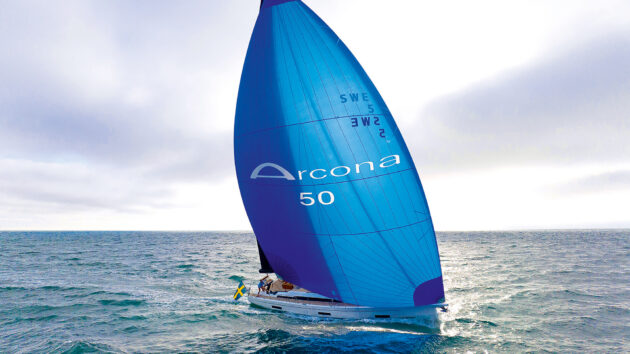
A weak Swedish Kroner has made Swedish yachts, such as this Arcona 50, attractive to buyers with stronger currencies. Photo: Arcona Yachts
Pace, not price
Despite fewer listings, good yachts are still selling promptly. “We’re achieving pretty good prices,” Grabau says. “Even above asking, in some cases. The market is quieter, but good boats at the right money aren’t sitting.”
The ‘right money’ reflects a shift in how buyers approach the process. Expectations of distressed discounts generally come to nothing. Sellers of clean, properly documented yachts know that their boats are competing in a thin field, and buyers who turn up prepared are often the ones who secure the boat.
The quieter pace gives buyers more time to think but doesn’t translate into cheaper deals.
In an update on the state of the market as 2025 drew to a close, Sue Grant of Berthon commented: “In most cases in this market, yachts are selling on price – additional equipment makes a yacht easier to sell – but not worth more.”
She also noted that: “Badly presented yachts are sticking. There is choice in the marketplace and buyers are currently ‘project’ averse.”
Some of the most straightforward sales now happen before a yacht reaches the open market. This is simply timing: photography, paperwork checks and listing preparation can all take days or weeks. In that period, a broker with a clear brief from a buyer can match the yacht before it appears online.
Article continues below…
Relying solely on listing alerts puts buyers at the back of the queue. Buyers who keep in contact tend to join the process earlier and more realistically.
“Some of the best boats never even make it online,” Grabau says. “If we know exactly what you want, your timeline and your expectations, we can move quickly.”
Cross-border sales may have become more administrative since Brexit, but they haven’t stopped. “If it’s the right boat at the right price, paying VAT doesn’t automatically make it the wrong decision,” Grabau adds.
“We’ve sold UK VAT-paid boats to Europeans who’ve paid VAT again.
“Sometimes it still makes sense, and the boat ends up with dual VAT status, which can help later.”
More often, delays stem from missing documentation. Evidence of VAT status, CE compliance and a yacht’s location at the end of the transition period remain fundamental. These elements, not sentiment, are what derail sales.

Rising new yacht prices and new build times continue to make well spec’d recent models such as this Fountaine-Pajot Isla 40 appealing on the second-hand market. Photo: Gilles Martin-Raget
Prep for success
For sellers, the basic principles remain unchanged. Yachts with clear information, good photographs and transparent history attract more interest. A buyer should be able to form an initial judgement from the listing alone. Anything less reduces enquiries. Proper preparation at the start – checking paperwork, gathering invoices, confirming VAT evidence – remains the single best way to avoid issues later on.
Grabau is clear on this: “Price on Application is something we push against. It puts buyers off.”
For buyers, the current environment rewards organisation rather than opportunism. Decisions on layout, length, displacement, VAT requirements and budget need to be made early. The more focused the brief, the more likely a broker can place the right boat before it reaches the market. Buyers who arrive with a realistic view of the market also usually have a much smoother experience, as there is less friction between expectation and reality.
The pace may feel slower, but when both sides are well prepared, transactions can move quickly. Buyers take more time to research; sellers take more time to compare. The resulting deals tend to be cleaner and more deliberate.
“Don’t assume the market is something it isn’t,” Grabau advises. “If you’re clear and sensible, you can still get exactly the boat you want.”
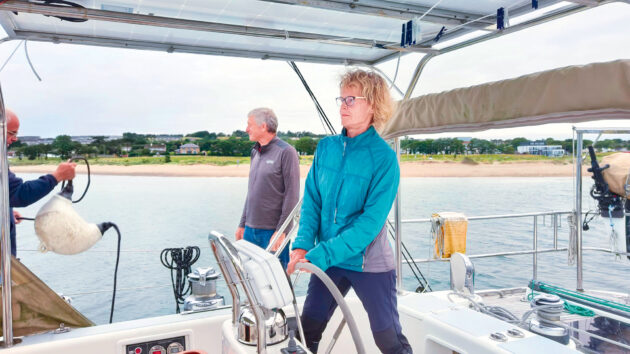
After two years of searching Julia Michard settled on a Hylas 54. Photo: Julia Michard
Case study – ‘We found our boat after a two year search’
Julia Michard and her husband spent two years travelling across Europe in search of a capable bluewater cruiser. Their search took them to Amsterdam, Palma, Italy, Dublin and northern Spain, and over time they viewed more than 25 yachts. Many of those looked competent in their listings but felt noticeably different once aboard.
“Some had leaks, some had heads that didn’t work, and a few had clearly been sitting untouched for a long time,” she says. “You stop taking photographs too seriously.”
VAT documentation became a repeated problem. Several yachts advertised as VAT-paid had no paperwork to support the status.
“People often believe what they’ve been told by a previous owner. But if the documents aren’t there, they aren’t there. You learn that quite quickly.”
As the search progressed, their real priorities emerged. Proper headroom for her taller husband, good interior light and a layout they could live with for years carried more weight than any item in a specification list.
The Michards’ long-term plan also shaped their thinking: seven years of extended cruising, beginning in the Mediterranean and crossing to the Caribbean the following year.
“We weren’t buying something for weekends. We needed a boat we could actually live on.”
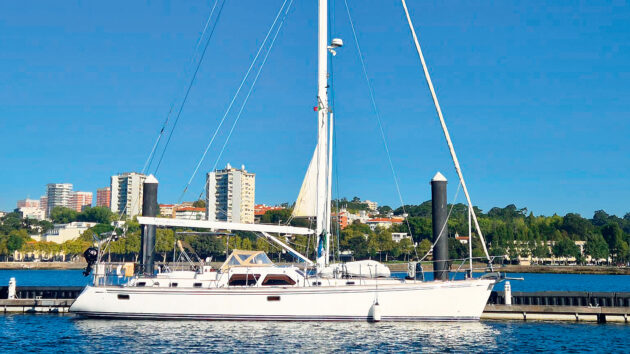
Photo: Julia Michard
After countless viewings and a few encouraging near-misses, a 2005 Hylas 54 came into budget. They hadn’t considered Hylas models early on, assuming they were out of reach, but by this stage they had seen enough comparable yachts to recognise its condition and specification immediately.
A viewing and survey followed quickly.
“It actually moved faster than we expected after two years of looking,” Julia says. “But when the boat is right, it’s right.”
The long search made the decision straightforward rather than difficult. Each rejected yacht had clarified something, and by the time they found the right one, they understood exactly why it suited them – and exactly what they were buying it for.
What we learned
What two years searching for the right yacht teaches you…
- Photographs only ever tell part of the story. Wide-angle interiors and bright deck shots often disguise long periods of inactivity, while a plain listing can hide a well-kept yacht.
- VAT status must be evidenced, not assumed. Several yachts described as VAT-paid produced no documents at all. Asking early avoids wasted travel.
- A viewing that rules a yacht out is still useful. Travelling long distances only to reject a boat isn’t failure; each visit clarifies expectations about layout, condition and what ‘well maintained’ actually means.
- The feel of the interior matters more than specifications. Headroom, natural light and a layout that works day-to-day consistently proved more important than equipment lists.
- Yachts left standing for years usually cost more than they appear to. Two seasons ashore or green dust in the cockpit often indicate deeper issues.
- Priorities emerge over time. What seemed flexible or subjective at the start of the search – stowage, brightness below, simple practicality – became non-negotiable after a dozen viewings.
- When the right yacht appears, momentum helps. We knew what good looked like, so the viewing, survey and purchase moved quickly.
 If you enjoyed this….

Yachting World is the world’s leading magazine for bluewater cruisers and offshore sailors. Every month we have inspirational adventures and practical features to help you realise your sailing dreams.Build your knowledge with a subscription delivered to your door. See our latest offers and save at least 30% off the cover price.
Note: We may earn a commission when you buy through links on our site, at no extra cost to you. This doesn’t affect our editorial independence.