



Brianna Randall explains how ten Hawaiian sailors navigated 1,600 miles of ocean with no GPS or compass, using only ancient Polynesian wayfinding
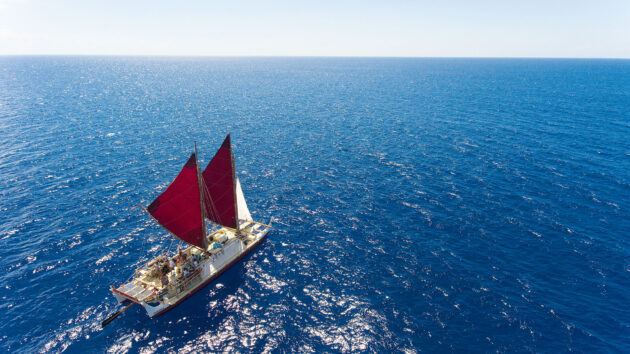
From the Cook Islands to New Zealand is some 1,600 miles of open ocean. In November 2025 10 Hawaiian sailors cast off their lines to make the passage. The wind was whipping whitecaps. Palm trees quickly became specks as they headed south-west, the crew settling in for two weeks of watch changes, and praying the cold southern swells stay tame.
But this crew had set off on the open ocean voyage with no engine, no GPS, no autopilot, no paper charts – not even a compass. Instead, they were to navigate using only clues from nature: the position of stars, the direction of swells, the flight path of birds, the colour of clouds. After 15 days they arrived in the Bay of Islands.
This vessel accomplishing this feat was Hōkūle’a, a replica of a traditional double-hulled Polynesian voyaging canoe: it’s crew, six women and four men ranging in age from 25 to 66, led by the experienced navigator and captain Lehua Kamalu.
This iconic canoe has voyaged more than 280,000 miles over the past half-century, all of them without modern instruments. Its mission is two-fold: to prove that early Polynesian voyagers did not drift on the whims of chance, but intentionally navigated between far-flung islands in the largest ocean on earth; and to revitalise the ancient art of wayfinding.
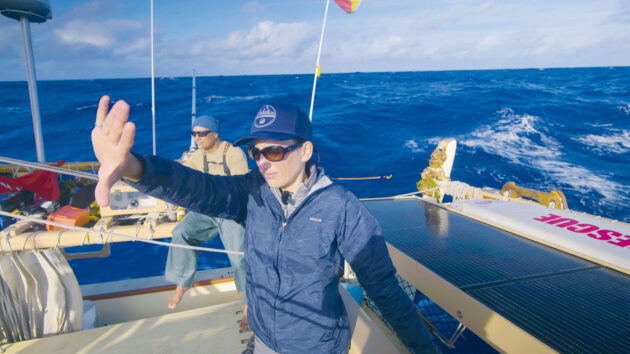
navigator and captain Lehua Kamalu using hands to measure the distance and position of the sun and stars. Photo: Polynesian Voyaging Society (PVS)
This is not a purely historical study, however. In an age of ever-increasing technology at sea, this ancient art is attracting new sailors.
Polynesian knowledge
Until the Polynesian Voyaging Society built Hōkūle’a and she was successfully navigated from Hawaii to Tahiti in 1976 using nothing but nature’s clues, many western historians believed that Pacific islands were populated by “people just accidentally running into islands”, explains Ray Ashley, executive director of the Maritime Museum of San Diego.
However, it’s now known that ancient Polynesians used sophisticated wayfinding strategies to intentionally set courses between distant archipelagos.“The fact that it’s possible to conduct navigation across thousands of miles of open ocean without instruments – it’s inspirational for all of us,” Ashley says.
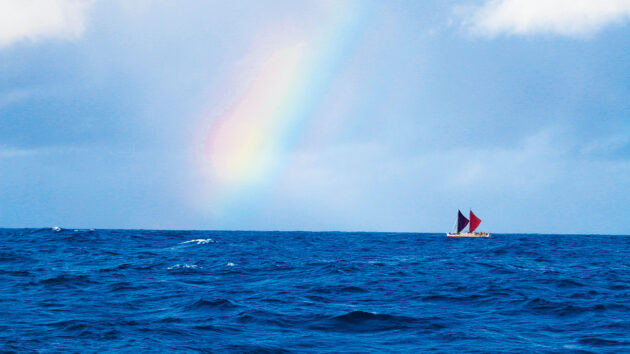
Photo: Polynesian Voyaging Society (PVS)
Hōkūle’a’s most recent crossing to New Zealand is part of the canoe’s six-year circumnavigation of the Pacific, a 43,000-mile journey designed to continue inspiring people about what’s possible when we sail like our ancestors.
“The ability to solve problems in ways that rely on logic and intelligence and courage – all the things this canoe embodies – it’s something that’s sorely needed now, which is why this vessel and the voyage she’s embarked on are crucially important,” Ashley says.
The Moananuiākea Voyage launched from the chilly shores of Juneau, Alaska, in June 2023, where master navigator Nainoa Thompson told the crew: “We want you to trust the road. Trust that the canoe knows its way. Trust nature, it’ll show you. Trust your ancestors.”
Thompson is the first native Hawaiian in more than 600 years to practice traditional wayfinding skills for open ocean navigation.
Along with a dozen or so others – who Thompson refers to as “the first wave” of modern Hawaiian voyagers – he studied under Mau Piailug, a master navigator from the island of Satawal in Micronesia, where Polynesians never lost the art of navigating by nature.
Piailug was born in 1932 and became a master navigator, or palu, by the time he was 18. He practiced the art of wayfinding for nearly 60 years until shortly before his death in 2010. Having become concerned that the old knowledge would be lost, Pialiug worked with the Polynesian Voyaging Society to recreate lost techniques, passing on his wisdom to sailors like Thompson.
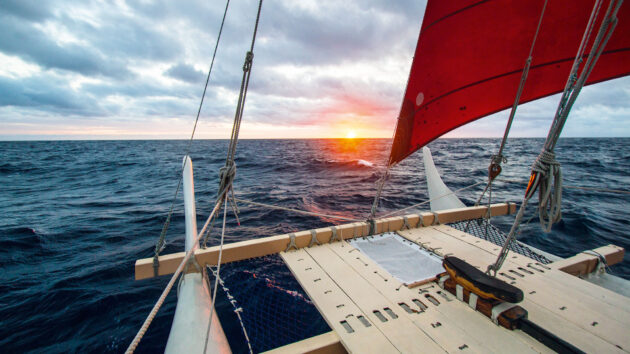
Navigators must memorise the exact rising and setting points of more than 150 stars in the night sky to maintain a heading. Photo: Polynesian Voyaging Society (PVS)
“Every day a navigator needs to make 5,000 observations – of a wave, or a bird or a star – and make 500 choices about trim, course, steering, and then make two decisions at sunrise and sunset,” says Thompson, who is also CEO of the Polynesian Voyaging Society.
Wayfinding means knowing where you are, where your destination is, and how to get between the two. While Polynesians travelled further than most early explorers, wayfinding skills have been used for millennia by many cultures around the world.
The Inuit of Greenland carved driftwood in the shape of coastlines to create tactile maps for their journeys over Arctic ice. The Evenki of Siberia use rivers as landmarks when hunting reindeer. The Pitjantjatjara of Australia use the smell of plants and seasonal changes to identify particular routes.
While traditional wayfinding does not include modern technology, navigators aboard Hōkūle’a do use two “very important instruments”, says Lehua Kamalu, captain and navigator during the New Zealand voyage: their body and the boat.
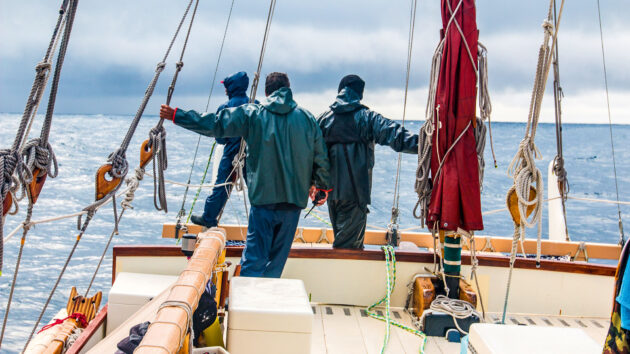
Photo: Maui Tauotaha/PVS
Hands are critical for measuring the distance and position of the sun and stars. Human senses are tools to feel the waves, smell signs of land, and see everything happening around you. The canoes themselves are intentionally designed with specific angles and shapes that serve as another tool for navigation.
Zenith star
Hōkūle’a means ‘Star of Gladness’, which is what Hawaiians call the zenith star, also known as Arcturus. It’s one of more than 200 stars that traditional ocean navigators must memorise, along with where they rise and set on the horizon, to pilot their canoes across the sea.
But last November when Kamalu and her crew sailed Hōkūle’a toward the Southern Ocean, the stars were often hidden, and the constantly shifting winds blocked their second-most helpful navigation cue: swell direction.
“Without the waves or consistent stars, we spent all day trying to make sense of wind directions or trying to see if clouds were following patterns,” said Kamalu. “You’re looking for anything. It was a continuous search for signs.”
The passage to New Zealand also required a lot of sail adjustments with the fickle winds. Since the canoe isn’t very nimble, each tack requires forethought, teamwork and time.
“These vessels don’t like to go upwind. They have their own personalities. Our crew often joke that you don’t command a canoe, you negotiate with it, suggest a direction, adjust the sails, and see who wins,” Kamalu laughs.
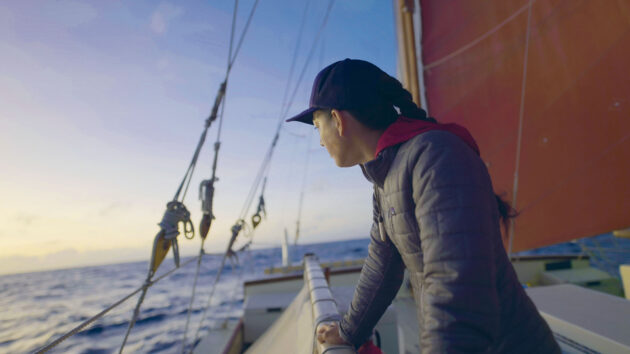
Kamalu watching the sky and swell; wayfinding requires constant observation of nature. Photo: Polynesian Voyaging Society (PVS)
Female sailors are playing a key role in this renewal of traditional navigation. Kamalu is expected to be one of the first women in known history to be granted pwo, or master navigator status (the current masters are five Hawaiian men who were granted pwo by Mau Piailug in 2007, along with Ka’iulani Murphy, also a navigator for Hōkūle’a).
To top off the navigation and sailing challenges, the Hawaiian crew – many of whom were serving on their first deep sea voyage – also endured cold, wet weather aboard a boat with no cabin, bimini or dodger. It was remarkably chaotic,” said Kamalu. “I can [laugh about it] now, but in the moment I was thinking, ‘Oh my gosh, this is really testing me’.”
There were deeply rewarding moments – as the canoe neared New Zealand’s North Island, marine life appeared in full force: whales surfaced, albatrosses wheeled, bait balls shimmered, and dolphins arced alongside.
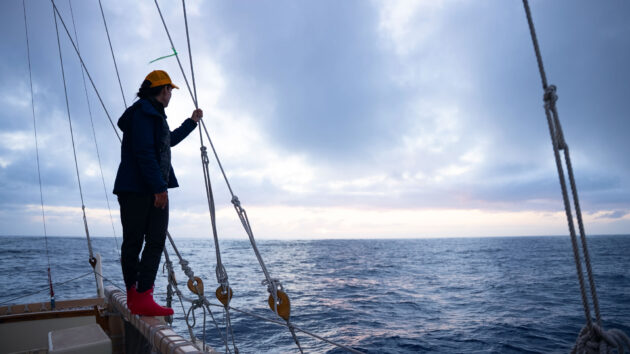
Photo: Kanako Uchino/Polynesian Voyaging Society
The crew bonded over the rhythm of watch rotations and in the shared practice of an ancient art so much so that re-entry to modern life felt tough. “I tell the crew it’s a sign of success if you’re struggling when we get back from a voyage. It means we created a very special, very sacred space on board,” Kamalu says.
New generation
In the wake of wayfinding’s rebirth in Hawaii 50 years ago, many young people now learn the basics of traditional voyaging in school. Some continue their learning by volunteering to help maintain the canoes or sailing with the Polynesian Voyaging Society.
About one-third of the crew members on the Moananuiākea Voyage are in their 20s, like Lucy Lee, who crewed aboard Hōkūle’a from the Cook Islands to New Zealand.
“There’s definitely a demand for this type of education because navigation at its core is about learning how to make decisions,” says Lee, 25. While she loves voyaging, Lee also feels it’s important “not to be blinded by traditions” when we live in a society filled with technology. Instead, she believes in meshing indigenous and scientific knowledge in a way that fits today’s world.
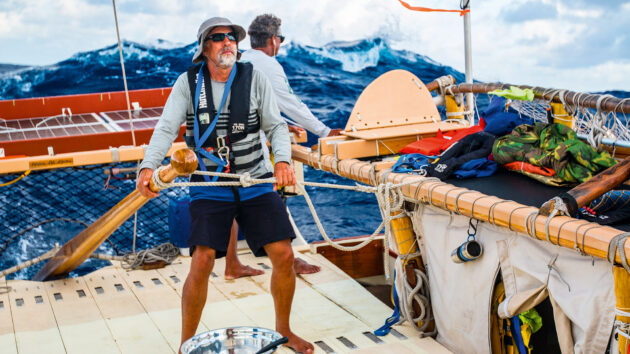
Handling Pacific swells; the canoe is steered with heavy oar-style rudders. Photo: Polynesian Voyaging Society (PVS)
One goal of the current voyage is to celebrate how other indigenous communities are integrating nature-based navigation – and to encourage communities to keep practicing these traditions in a modern age. Polynesian wayfinders are more than simply sailors: they are cultural emissaries.
Hōkūle’a’s landfall in New Zealand last November marked the 40th anniversary of the canoe’s first arrival. The 1985 visit ignited a renaissance in canoe building and traditional navigation skills, as well as the founding of other Māori voyaging organisations.
This renaissance was led by master carver and navigator Sir Hector Busby, whose Māori name was Heke-nuku-mai-nga-iwi Puhipi. After forming a friendship with Thompson and other navigators from the Polynesian Voyaging Society, Busby constructed more than 30 traditional wakas in his lifetime, and turned his home on the North Island into a school for carving and navigation.
The founders and original navigators of the Polynesian Voyaging Society could never have envisioned the ripples they would create by launching Hōkūle’a. “Back then, I just wanted to have fun and go out and sail – still do!” says Bruce Blankenfeld, voyaging director of the Polynesian Voyaging Society.
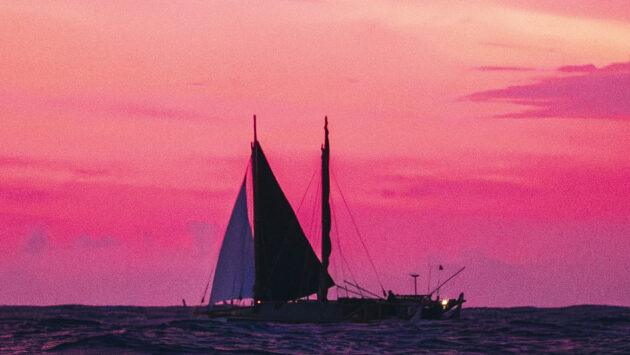
The canoe carries satellite communications, radar reflector and EPIRB for safety. Photo: Jonathan Salvador/Polynesian Voyaging Society
Blankenfeld was on both the 1985 and the 2025 voyages to New Zealand. He believes modern Polynesian voyagers have a responsibility to continue the tradition, and to keep learning from other seafaring communities, too.
“This is a living culture. It’s important it’s taught and practiced constantly, not just talked or written about.”
Full circle
After her transpacific crossing, Hōkūle’a underwent extensive maintenance and repairs while berthed in Auckland.
“We’re replacing rigging, checking sails, re-tying, re-splicing, re-lashing – really setting her up for as long as we can,” Kamalu says. The canoe’s next major overhaul is not scheduled until she arrives in Japan in 2027.
After setting off from New Zealand in the coming months, Hōkūle’a and her sistership, Hikianalia, will arc north through Tonga, Samoa and Fiji, then onward to the Marshall Islands, the Philippines, and Micronesia.
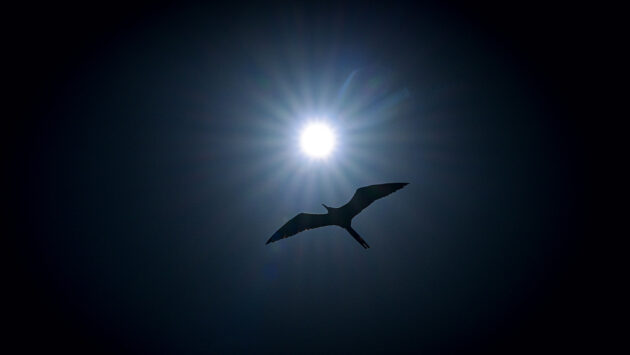
photo: Ernesto Benavides/Getty
In 2027, the Moananuiākea Voyage continues to Taiwan and Japan, then the two canoes will be shipped back to Hawaii. In 2028, Hōkūle’a will complete her great loop around the Pacific by sailing to the west coast of South America – a first visit to the continent – then back home through Rapa Nui and the Marquesas.
Picturing Hōkūle’a arriving on new shores, Kamalu reflects on what it would have been like to see 1,000 canoes paddling out to greet them – as was the case 500 years ago when the first European ships arrived. “It feels like we’re just starting to scratch the surface of what we know about navigation and voyaging. How do we sustain this lifestyle now? How do we keep this family together?” she muses.
Many of the upcoming destinations will be first-time landfalls for the storied Hawaiian boats. “It’s just a big kumbaya fest, meeting everyone in new places,” Kamalu says. “The canoe means so much to so many people.”
 If you enjoyed this….

Yachting World is the world’s leading magazine for bluewater cruisers and offshore sailors. Every month we have inspirational adventures and practical features to help you realise your sailing dreams.Build your knowledge with a subscription delivered to your door. See our latest offers and save at least 30% off the cover price.
Note: We may earn a commission when you buy through links on our site, at no extra cost to you. This doesn’t affect our editorial independence.