


What happens if you take one of the most agile performance cruisers on the market, shave off half a tonne, and add a carbon mast and all other racing gadgetry? Jochen Rieker finds out...
First 36 SE review: Definitely race-winning material

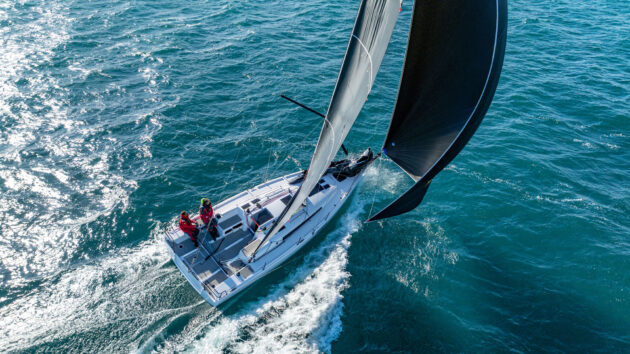
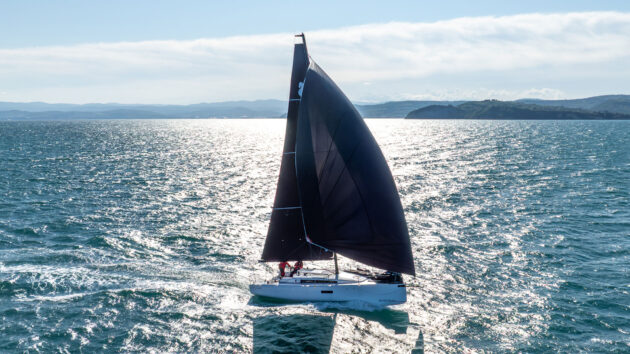
Piran Bay is the most scenic part of Slovenia’s short coastline. The medieval village that lends its name to this busy stretch of water marks the picturesque entry to a nautical hotspot.
Just a mile and a half further to the east, Marina Portoroz is buzzing with activities, the country’s largest and best-equipped harbour for private craft. While known for its predominantly light winds, the protected bay can also pose a challenge when a cold north-easterly blows from the mountain range and whips up steep waves.
Seascape, now part of Group Beneteau and responsible for the First range of performance cruisers, has made this place its preferred testing ground. While the yard is located an hour’s drive away near Ljubljana, the capital, it usually trials new models here. We joined co-founder and CEO Andraz Mihelin, a former Mini Transat racer, to put the First 36 SE through her paces.
This is the race version or ‘Seascape Edition’, as the yard puts it, of the acclaimed First 36, an easily planing performance cruiser that was crowned European Yacht of the Year in 2023. To deliver the more mainstream model first, before this thoroughbred is something of a novelty in the Slovenian yard’s 17-year history.
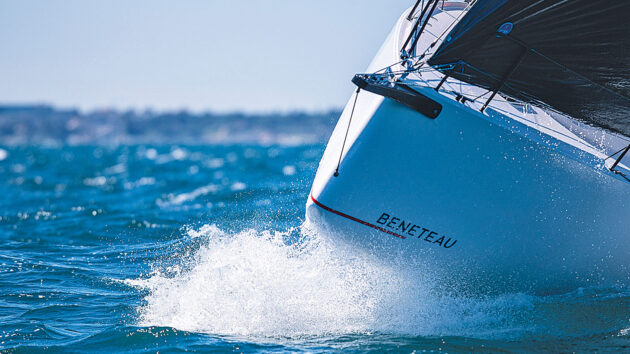
The bow has been modified to help with the rating but also to provide additional dynamic lift. Photo: Uros Kekus Kleva
While the brand always aimed at making performance sailing more accessible, it had a racing DNA at heart from the very beginning. This is evident in its light construction methods, modern hull shapes and details such as soft shackles instead of stainless steel fittings, thimbles where other yards would place blocks, and carbon rigs instead of aluminium masts.
When Beneteau bought a majority stake, Seascape widened its range, offering less expensive and slightly tamed-down base models. What were the Seascape 18 and 24, for instance, became First 18 SE and 24 SE, while the yard put out simpler variants like the First 24 and 27.
While not a semi-scow design, the bow provides ample buoyancy to be pushed hard in a breeze. Photo: Uros Kekus Kleva
With the First 36 and more recently the First 30 that strategy changed. Now the base models come first, followed by the hotter – and more expensive – SE versions.
Something else changed, too. Instead of developing the best possible, most fun boats for their purpose, regardless of their ratings, Seascape is optimising the racers now for ORC and soon for IRC as well. Gone are swing keels, square-top mainsails, oversized asymmetric spinnakers.
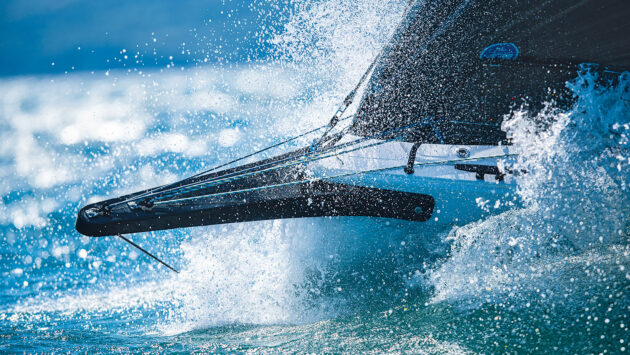
Photo: Uros Kekus Kleva
Under the hood
So how much of the spirit that originally defined the brand has survived this more measured approach? Quite a bit, if you look closely.
There are some obvious features, such as tiller steering or the carbon Axxon mast.
Less visibly, the bow section of the 36 SE has been modified. To shorten waterline length for a better rating and to increase dynamic lift, the yard developed an inlay for the hull mould to significantly change the shape of the stem post; compared to the plumb bow of the First 36 the forefoot of the race version is spatula-shaped – angled upwards as on the Pogo RC, also a Sam Manuard design.
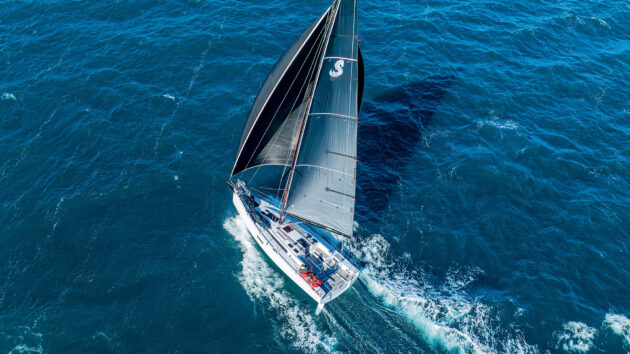
Planing comes so effortlessly on the 36 SE that sailing her downwind feels like riding a magic carpet. Photo: Uros Kekus Kleva
And there is more that doesn’t meet the eye. The keel is ORC-optimised, excessively shaped and trimmed, and it only draws 1.95m compared to the standard 2.25m of the First 36. While the test boat’s T-bulb was cast iron, it will be made of lead for future hulls, allowing for a slimmer shape and thus even less resistance.
The SE’s twin rudders are linked by an E-Bar, allowing the helmsman or main trimmer to adjust their angle by the push of two buttons close to the traveller sheet. When reaching, the ability to quickly change toe-in or toe-out can reduce drag significantly, especially in lighter conditions.
And then there are all the other must-have race boat gadgets on board, like Gori’s two-blade racing propeller or TruDesign’s recessed through-hull fittings – to make the hull as slippery as it can be.
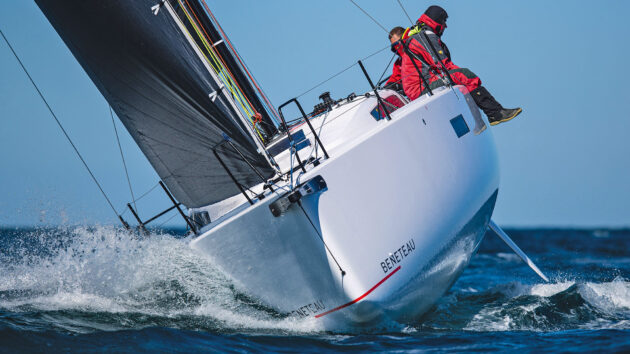
Despite a shallower keel the SE has similar stability to the First 36 but better acceleration. Photo: Uros Kekus Kleva
Shaving ounces
Seascape also worked hard on saving every ounce of weight. It shaved off almost half a ton from the already rather light First 36, arriving at 4.35 tonnes. To put that in perspective, the new MAT 11, reigning ORC world champion of similar proportions, weighs 5.05 tonnes in lightship configuration, and Italia Yacht’s slightly larger 11.98 Fuoriserie displaces 6.5 tonnes.
To achieve such lightness, the Slovenians did away with solid wood fiddles, plywood floorboards, lockers and shelves, the front cabin’s berth and mattress, hull liners and all teak-veneered doors. In fact, the 36 SE has only one door left, that to the heads, which is a feather-light foam-cored folding magnetic type (also available as an option for the two aft cabins).
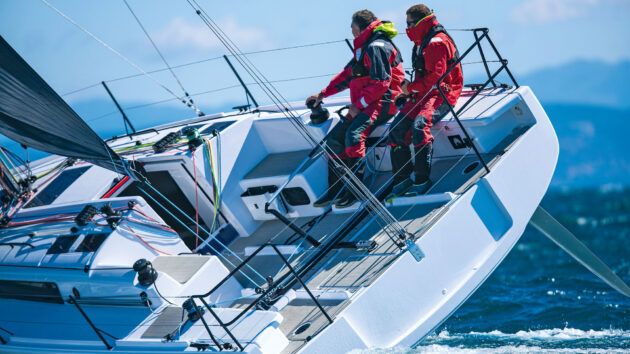
Not optimised for solo or doublehand racing specifically, but you can tell that the builders have a legacy in the MiniTransat class. Photo: Uros Kekus Kleva
The ambience down below is somewhat sober, typical for raceboats. Yet, bar the front cabin, which has been turned into a sail locker, and the oven replaced by a gimballed two-burner gas stove, the 36 SE provides the same functionality and volume as the performance cruiser it’s derived from. It also inherited the small heads compartment, which feels sub-standard on the First 36 but perfectly fine on the sportier SE.
Mihelin, Seascape’s mastermind since 2009, conceived the SE “to deliver the best ORC measurement possible”. Depending on sail choice, the all-purpose handicap for the 36 SE sits at around 520 seconds per nautical mile, with a time correction factor of 1.145 to 1.159 according to 2026 ORC Certificates.
That compares favourably to an optimised First 36, which rates significantly faster and matches the numbers of the new ORC world champion MAT 11 (which carries 600kg more weight).
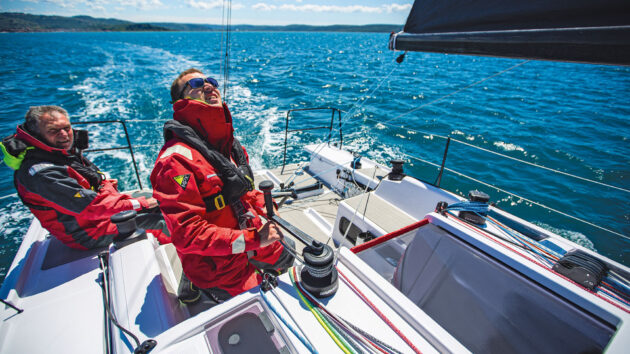
Harken winches and Spinlock stoppers are ideally positioned and generously specced, making the boat race-ready. Photo: Uros Kekus Kleva
While it’s still early to properly assess the 36 SE’s racing potential, the first indications look promising. Last autumn the test boat finished third in the ORC Double-handed Worlds. And a heavily stripped-down First 36 that served as something of a blueprint for the SE came in second in the 2025 Transpac, beaten to the line only by the 88-foot supermaxi Lucky (ex Rambler).
Lift off
So how does it sail and feel? Remarkable! Especially in very light conditions, it profits immensely from the low displacement, matching or exceeding wind speed in 5 to 7 knots on a tight reach under a fairly modest 133m2 A2 spinnaker and mainsail.
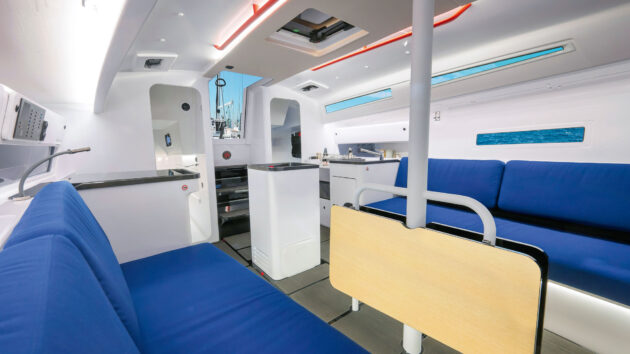
Topcoated hull sides and rather cold colour scheme give a Spartan look. Photo: Uros Kekus Kleva
Already then, the responsive tiller steering provides enough feedback to intuitively guide it along the slight variations in wind speed and direction. Thanks to the Spinlock tiller extension, the cockpit turns into a trimming haven for a small crew. And when single-handing, you can leave it to itself too.
Finely balanced, the 36 SE tracks so well, even in a slight chop, that the autopilot need not be engaged for small adjustments of sheets, tweakers, backstay or traveller.
To start planing, the boat only needs 12 knots of breeze, occasionally hitting double-digit speeds already at 120° true wind angle. When fully upwind, it easily matches its polars, doing between 6.2 and 6.4 knots, tacking through 80°.
While the First 36 is a quick boat already, the 36 SE is simply more versatile in the lower wind range and easier to sail to its full potential thanks to the more ergonomic cockpit layout. Yes, benches are way too short for sunbathing, but the access to winches and stoppers is massively improved by the fact that the SE is not available with the removable locker boxes that are an option on the First 36.
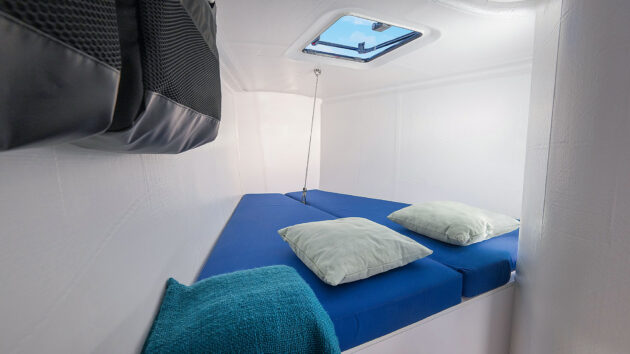
The two identical aft cabins offer 1.40m wide double berths and ample storage below. Up forward, where in standard configuration there is just a sail locker, owners can opt for another berth. Photo: Uros Kekus Kleva
In more breeze, the speeds of the racer continue to build. From 14 to 15 knots of wind, the stern wake starts detaching from the hull in 60-65° true, with speeds around 8 to 8.5 knots. Downwind the 36 SE then sits at 11 to 12 knots continuously, remaining firmly under control. And it can carry the A2 in 20 knots true and above, doing 14 to 15 knots speed.
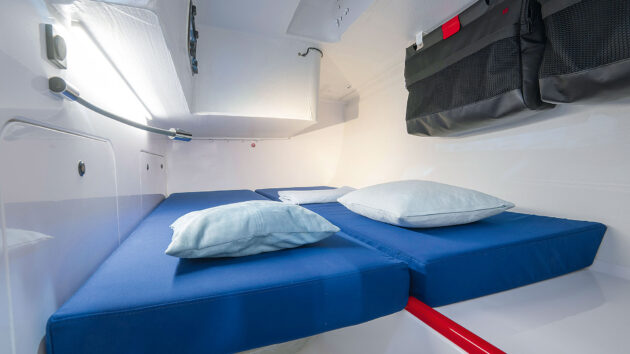
Photo: Uros Kekus Kleva
More/less to come!
According to information yet to be confirmed, Seascape is planning to introduce another variant of the First 36, scheduled to launch at boot Düsseldorf in January 2027 and aimed to be the most affordable version. Target price is between €200,000 and €210,000 ex tax, so roughly 25% lower than the standard 36.
The newcomer is said to inherit the simplicity and lightness of the hugely successful First 30 (which is roughly half the price of the 36). To close that gap, Seascape is exploring a new, reduced interior design as well as a more efficient building process. Hence the name, which may be ‘36 Pure’ or ‘36 Spirit’.
If the yard manages to meet the price point, it could be appealing to both private owners, the charter market and for sailing schools specialising in advanced training.
 If you enjoyed this….

Yachting World is the world’s leading magazine for bluewater cruisers and offshore sailors. Every month we have inspirational adventures and practical features to help you realise your sailing dreams.Build your knowledge with a subscription delivered to your door. See our latest offers and save at least 30% off the cover price.
Note: We may earn a commission when you buy through links on our site, at no extra cost to you. This doesn’t affect our editorial independence.
Verdict
While it doesn’t feel quite as explosive as the JPK 1050, for instance – the current IRC benchmark that rates similarly to the SE under ORC – the boat from Slovenia certainly doesn’t lack power. Indeed, early indications suggest that it does have race-winning potential. Stemming from a proper performance cruiser, the new First offers something else on top, though, which is lost on most other race-only designs: it is equally suited for short-handed as well as fully crewed racing, and you can even take your family on a long holiday cruise without compromising much. Seascape put the premium for the SE version at roughly €45,000, half of which covers the cost of the carbon mast alone. With the new keel bulb coming and all the other gadgets included, it looks like a fair deal for racing-minded owners.