



Ocean racing tech seems to be developing at breakneck pace – but it takes years to get these complex beasts up to speed

When Francis Joyon and his crew aboard IDEC Sport set a ground-breaking record for a non-stop lap of the planet in 2017 it was clear their trip had been an exceptional one.
They hadn’t just beaten the record set five years earlier, but smashed it – taking five days off the previous best. IDEC Sport’s record stood for nine years.
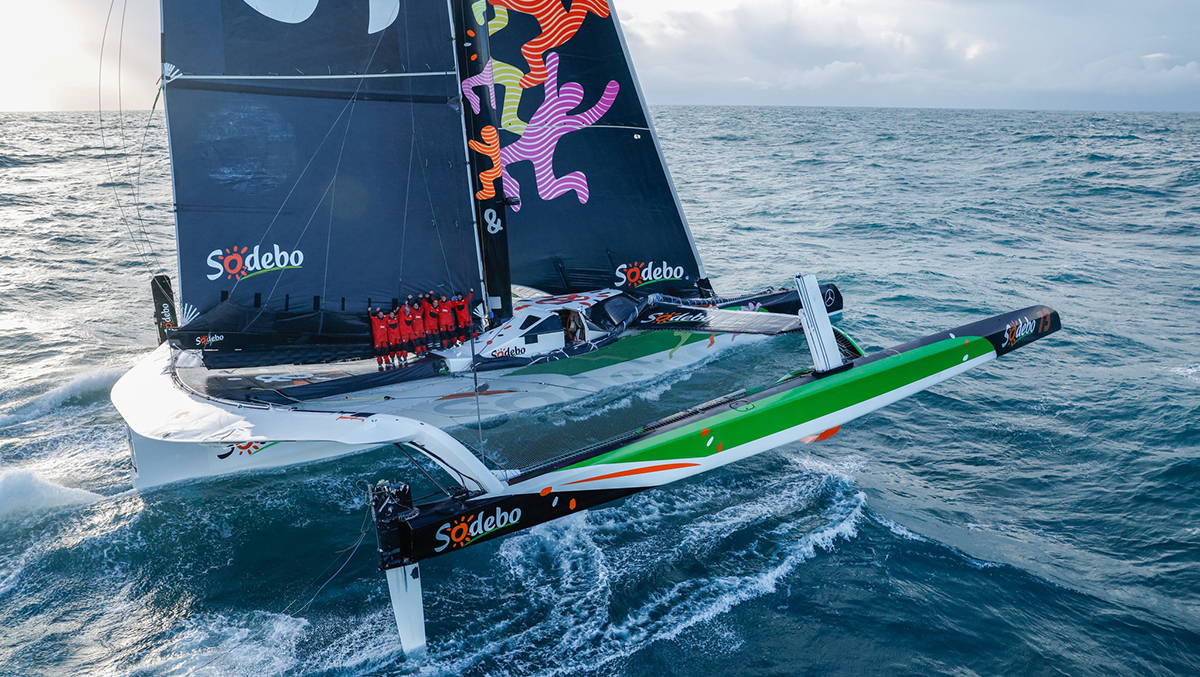
This January, Thomas Coville and his crew aboard Sodebo nudged the bar up once more, taking 12 hours off Joyon’s time. And while Sodebo’s performance was impressive, it’s interesting to reflect that, since Joyon’s record, design and technology have taken a big hike and yet the winning margin was relatively small.
Today’s Ultim tris are massively more powerful and sophisticated than their predecessors, thanks largely to the fact they can fly. And yet Sodebo only managed to take hours rather than days off the record.
To be fair, they had to slow down towards the finish to avoid Storm Ingrid. If they hadn’t it’s likely they could have taken more than a day off the record.
They’d also travelled much further to search out the best conditions. In all, Sodebo sailed around 2,000 miles more than IDEC Sport.
Still, there’s no question the world of high-performance sailing is going through a revolution as foils start to show what they can do offshore and in waves.
The giant 34m Baltic 111 Raven, with its huge canting foils, set a very impressive recent new course record in the RORC Transatlantic Race, crossing in just 6 days, 22 hours.
Not only had they set a new time, but they took the record from a boat that has long been widely regarded as the fastest supermaxi in the world: Comanche.
According to some of Raven’s crew, who’d also sailed aboard Comanche, the most impressive thing was to be sitting at record-breaking pace at just 6° of heel. Aboard Comanche it would have been 23°.
For me, this is a big pointer to what might be in store for racing and perhaps cruising: fast and flat.
Article continues below…
Have you ever seen rudders like that before? Radical top-secret Gitana 18 Ultim unveiled
When the Rothschilds and Gitana team unveil a new boat, they do it properly – and last night the huge…
Around the world record broken: Sodebo takes Jules Verne Trophy in 40d 10h 45m
Thomas Coville’s Sodebo team crossed the virtual finish line between Ushant and Lizard Point this morning at 0746 (French time),…
But what also came across was that it had taken two years to get to the point that Raven’s crew were happy to enter the race. Two years to get to grips with the systems, the loads and the handling to understand and exploit the potential of this radical machine.
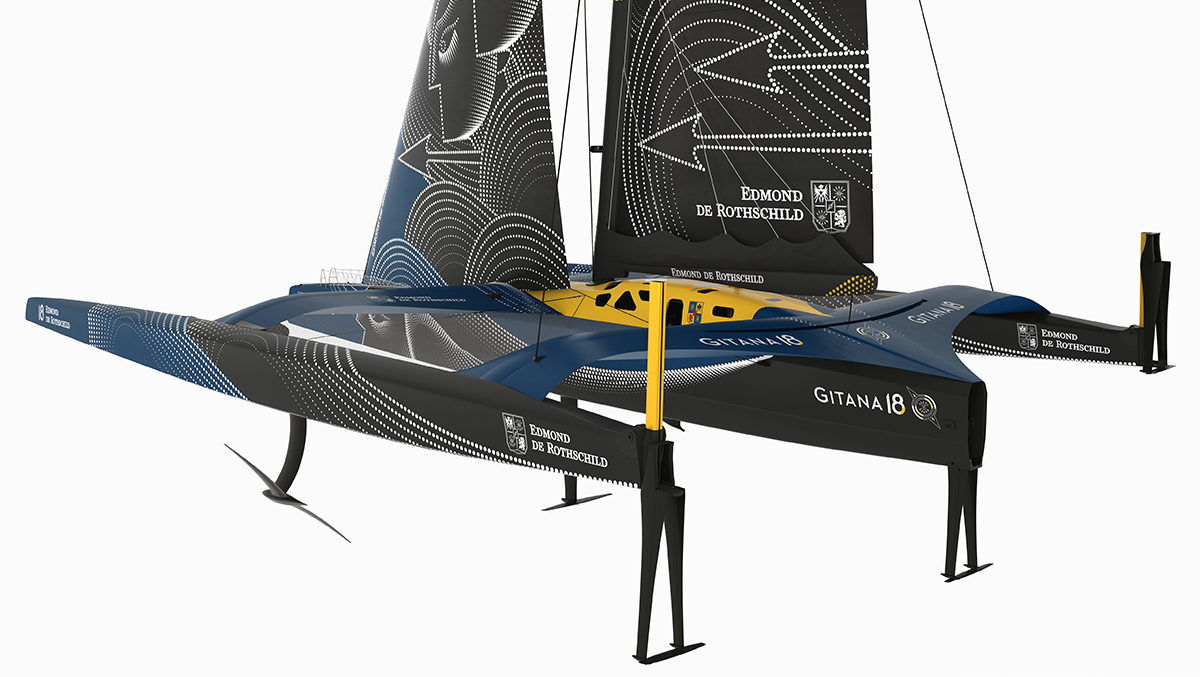
Team Gitana and skipper Charles Caudrelier have spent the last two years working to create their latest Ultim, Gitana 18, which launched as this column went to press.
It’s a beast of a machine and looks just like the kind of offshore weapon that will rip through the record books. But according to Caudrelier it will take four years before the team can fully exploit the potential of the new trimaran and make it reliable enough to attempt a new world record.
The main reason is that while we know far more about how to make big gains in performance, the modern generation of designs have become significantly more sophisticated.
Sodebo was launched in 2019 and it’s only now that it looks like it’s really finding its feet. The team had two attempts at the Jules Verne last year and both resulted in retirements after breakages.
You only have to look at the technical spec to see how complex the next generation of record-chasers is getting. The previous Gitana 17 had 18 hydraulic cylinders, the new boat will have 44.
Even more immense is the task for the Ferrari Hypersail project. Understanding how to balance a 30m monohull on an America’s Cup style foil system to fly around the world is one thing, making it robust and reliable enough to chase the clock is something else. So it will take longer than you might expect to see the big records tumble.
But that’s not to say the world of record breaking will go quiet. In the RORC Transatlantic race, Antoine Magre’s Mach 50 Palanad 4, a 50ft custom scow-bow design, took the race on corrected time, easily.
If you’re wondering where all this development might be leading for the broader sport, take a look at the new 12m-long Skaw A (skawsailing.com/skaw-a). With a set of large retractable C-foils the overall package drives home what a performance cruiser of the future might look like.
But just as it takes time for the ocean chasers to work up to record-setting pace, it might take a little while before the mainstream adopts it.
 If you enjoyed this….
Yachting World is the world’s leading magazine for bluewater cruisers and offshore sailors. Every month we have inspirational adventures and practical features to help you realise your sailing dreams.Build your knowledge with a subscription delivered to your door. See our latest offers and save at least 30% off the cover price.
Note: We may earn a commission when you buy through links on our site, at no extra cost to you. This doesn’t affect our editorial independence.