


We were handed the helm to this new Faurby 360DS before it had even touched salt water. Theo Stocker trialled this fresh model in its Danish home waters.
Faurby 360DS review: Morning maiden sail for a Danish rarity

Cruise for more than a week during a British summer and at some point you’ll run into rain, drizzle, thunder, fog, hail or other tempest. Sitting it out in harbour can sometimes be a less-than-pleasant experience.
Instead, imagine your morning coffee in the comfort of a saloon which offers full views to take in the beauty of the place to which you’ve sailed, or at least to feel smug about the rain lashing against the windows. There’s little doubt deck saloons make absolute sense for cruising boats, but finding a small one with graceful lines is rare.
Danish yard Faurby has gone further than most in tackling this conundrum, building a range of quality-built, comfortable deck saloons that are engaging to sail.
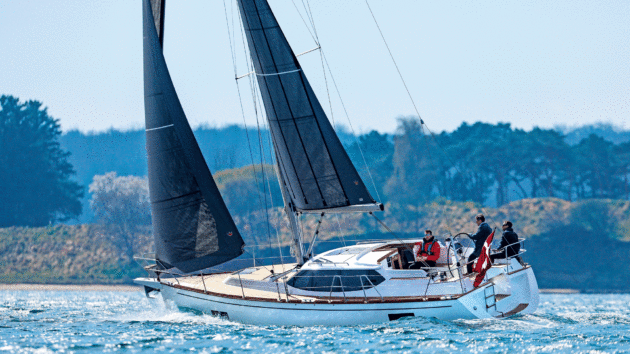
Visibility forward is excellent thanks to a high cockpit sole. Photo: Paul Wyeth
The Faurby Deck Saloon 360 was first launched as the Nordship 360 in 2009, but has now been given an extensive overhaul to bring it up to date.
By way of context, Faurby and Nordship began as two separate yards, building rather different boats; Faurby is known for slender, fast cruisers, while Nordship was all about luxurious deck saloons.
The yards weren’t far from each other, and built their boats to similarly exacting standards and in similarly small numbers. What began as sharing skilled workforces became one brand, Faurby (after the brand’s founder), with the Nordship name subsumed as the Faurby Deck Saloon range.
The 360DS is a 2009 hull designed by Nordship founder Niels Peter Faurby. The lines accommodate what is, even by today’s standards, a generous volume, while the clean sheerline disguises a moderately high freeboard.
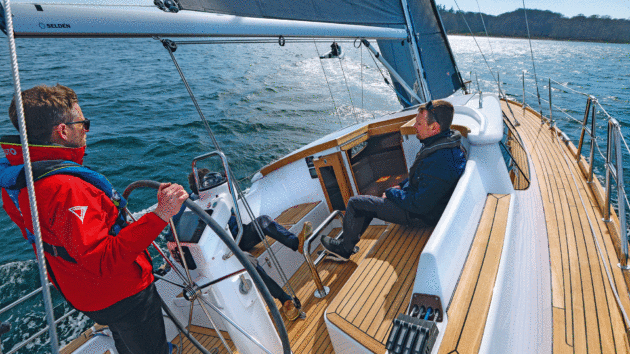
Cockpit table stand provides substantial foot bracing. Photo: Paul Wyeth
Updates to the new version, hull number 26, on which we were to have the maiden sail, include an extensive redesign of the coachroof, windowline and deck hatches, making the latter flush and the former large with integrated panes of double thickness safety glass.
Hull windows have been added into the topsides, while extra deck space has been found by moving the stanchion bases outboard into recesses in the toe rail – especially helpful when moving forward at heel.
A new GRP bowsprit integrates offwind sail tack points, anchor stowage and bow ladder. Below, the advances are mostly tweaks and technological gains – our test boat included electric propulsion, lithium batteries, induction cooking, 300W rooftop solar panels and a diesel generator.
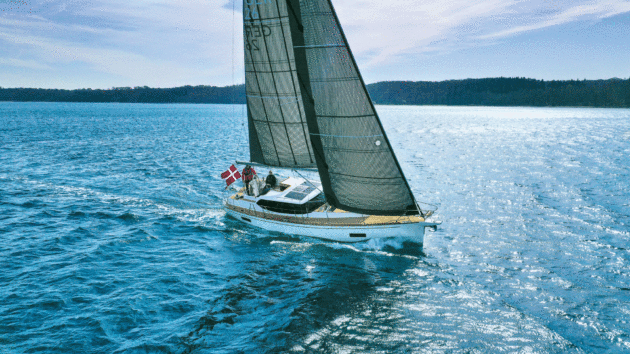
A neat walk through and sugar scoop transom allows easy access to the water. Photo: Paul Wyeth
Straight out of the box
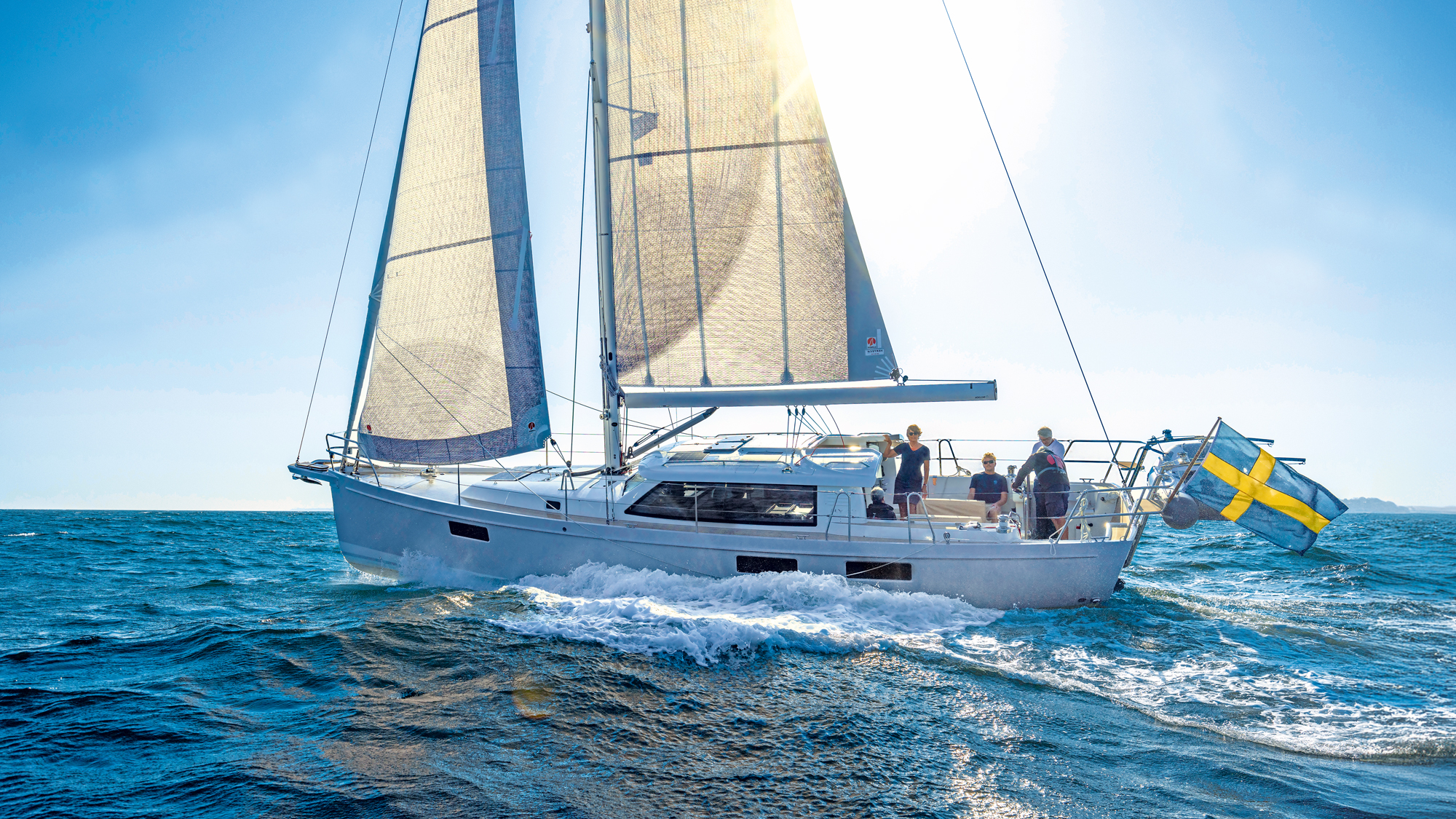
It’s a credit to the yard they let us take out a yacht that had yet to sail, and that from the off it all worked – it says much about the quality of the build. The self-tacking jib and in-mast furling main in EPEX laminate, fitted and set beautifully. Equally, there was no play in the Jefa rod steering linkage to the large wheel, and the Oceanvolt 15kW electric motor worked seamlessly.
Setting the right amount of canvas for a breeze that varied by at least a force or three in the gusts was a challenge, but before long we were making 5.7-5.9 knots at anywhere between 28° and 35° to the apparent wind, with heel changing from upright to well pressed in moments. The breeze continued to build, and in the Force 6 gusts we were soon well over-canvassed with full sails set, resulting in the rudder losing grip once or twice.
The single rudder on the 360DS ensured the boat was responsive, engaging and communicative to helm, but I wonder if it would have offered more grip if mounted marginally further forward, away from the surface.
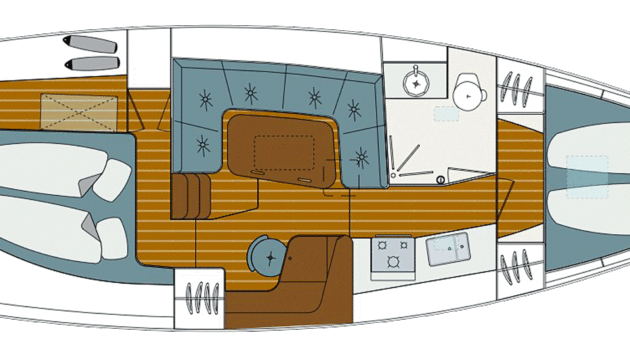
The Faurby 360DS’s layout
Enjoying the sailing, I ignored the helm load and held onto full sail for too long. She was much happier once we’d tucked a roll or two in the main, though we stuck with full jib. Sail handling is easy, with all lines led aft to powered Andersen winches.
The German mainsheet could be handled from either side, and the electric in-mast furling controlled from buttons on the wheel console (as are the winches now too). While this makes it easy to solo sail, crew need to be behind the wheel too to get involved with sail handling as the winches are well aft on the coamings.
Sailing and relaxing
Halyard tails can be stowed in the rope bins under the helm seat on the aft end of the coaming, though the split backstay stops these opening fully. Another oversight, now corrected by the yard, is that the powered winch buttons were outboard of the winches, which required reaching across the winches while operating them.
It’s extremely sheltered and secure in the forward section of the cockpit. A large stainless steel arch in the sole provides excellent bracing when heeled, as well as a base onto which the folding cockpit table is slotted.
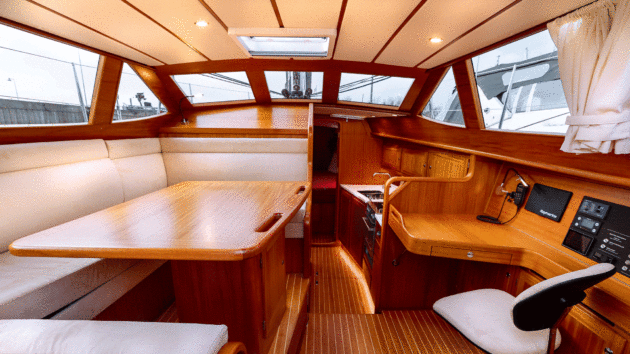
Large windows and hatches mean the saloon is generously light, whatever the weather. Photo: Paul Wyeth
The high coachroof and coamings protect crews, even without a sprayhood fitted. Of course, a major advantage of deck saloons is that you can also sit down below and enjoy the view if you want more protection or to keep an eye on the horizon without feeling groggy.
An overhanging roof top keeps rain off the windows, while a hidden recess under the cap rails makes water drip off rather than run down and streak your topsides. Clearly, every detail has been considered. At the bow, a deep anchor locker has room for a good pile of chain and the electric windlass, as well as four large fenders. Boarding via the bow, Baltic-style, was made easy by the wide moulded bowsprit and semi-open pulpit.
Article continues below…
Heyman 42PPH: Handsome new decksaloon cruiser packed with ideas and space
Think about it relative to houses, and it makes more sense. After all, who would choose to put their kitchens…

Moody 41DS review: Could this model win you over to the decksaloon lifestyle?
Whatever your opinion of decksaloons, there’s something extremely civilised about being able to walk ‘inside’ from the cockpit, staying on…
£454,608.00
Inside out
You don’t so much go below on a deck saloon as step inside, albeit down a couple of steps, into a refined world of Khaya mahogany and pristine upholstery. The woodwork all receives several coats of gloss varnish before being finished with a coat of satin, leaving a real lustre without dazzling the eye.
To port, a large table dominates with seating around three sides, from where you can see in all directions, with very little impingement on the view from structural supports.
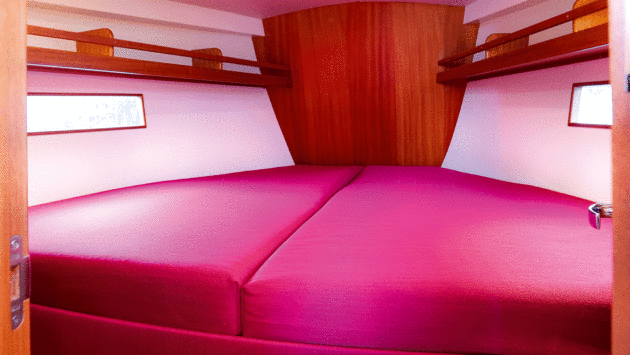
Lots of space – wide forward berth. Photo: Paul Wyeth
Behind the outboard seats is a cavernous locker, which on this boat has been used to house the generator, with plenty of space left over. To starboard is the main walkthrough and workstation. This can be arranged however you wish, but it’s most commonly done with a chart table facing diagonally forward, and a large hanging locker aft, ideal to stow wet foulies and lifejackets.
The test boat has a large linear gallery, with stowage galore, where a galley-up option in the saloon is an alternative. Below this raised sole is a generous amount of technical space for tanks and batteries, nestled into the galvanised steel keel matrix, which helps keep the heavy systems low down and central.
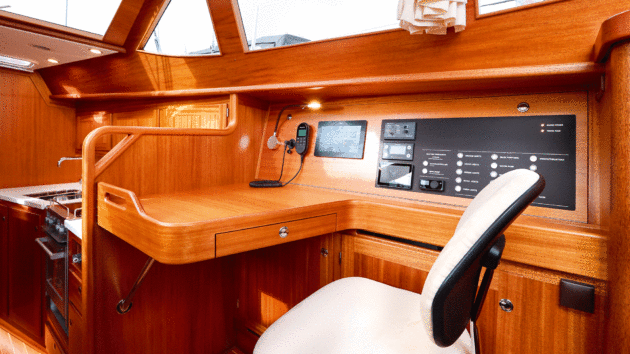
Chair for the chart table is height adjustable, making sitting here for longer periods very comfortable – perfect if working remotely on board. Photo: Paul Wyeth
The forward cabin is the master, boasting a huge berth and generous natural light and stowage. White-stained ash panelling gives a light but natural finish.
There’s only one heads on board, but it is comparatively vast, with a Corian shower tray and curtain to keep the rest of the compartment dry. Given this is an aft-cockpit 36-footer, the aft cabin is surprisingly large, with the low berth providing ample space below the relatively high cockpit sole.
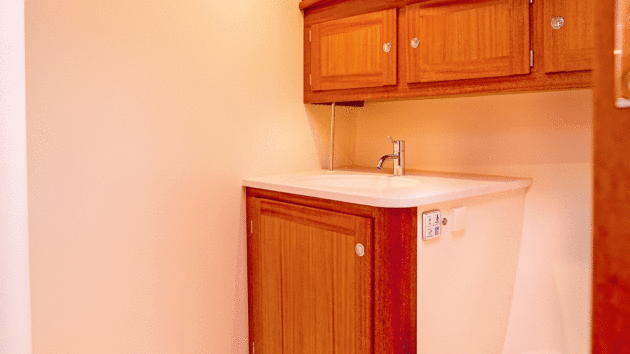
Large heads. Photo: Paul Wyeth
Further aft to port is the cockpit locker, with good internal access and a proper joinery finish, which allows it to be used as an occasional children’s cabin if needed. A hatch leads into the technical space for the electrics and plumbing.
 If you enjoyed this….
Yachting World is the world’s leading magazine for bluewater cruisers and offshore sailors. Every month we have inspirational adventures and practical features to help you realise your sailing dreams.Build your knowledge with a subscription delivered to your door. See our latest offers and save at least 30% off the cover price.
Note: We may earn a commission when you buy through links on our site, at no extra cost to you. This doesn’t affect our editorial independence.
Verdict
Faurby wanted the 360DS to be fun to sail, which means engaging on the helm, responsive to proper sail trim, and able to be pushed to its full potential. It should also have all the luxury and comfort of a deck saloon in a mere 36ft, and be built to the highest possible quality. The quality really is stunning in every detail. It is also a comfortable yacht, especially for Northern European waters. Sitting below decks with the wind howling outside and light streaming in is a lovely place to be. And it is fun to sail. The full hull shape limited what we could do in terms of pushing the boat in tricky conditions. This is, first and foremost, a cruiser, but the helm and the sails do reward good handling, while the furling sails are easy to set correctly. Things can get a little congested at the winches, but if you’re sailing short-handed, it works well. This Faurby is built individually by hand, and as such, almost everything on board is customisable.
Details
LOA:11.00m / 36ft 1in
LWL:9.76m / 32ft 0in
Beam :3.60m / 11ft 10in
Draught:1.80m / 5ft 11in
Displacement:6,500kg / 14,330lb
Ballast:2,500kg / 5,512lb
Sail area:70m2 / 753ft2
Displacement/length ratio:195.1
Sail area/disp ratio:19.6
Engine Oceanvolt:SD15
Water:385lt / 85gal
Fuel:185lt / 41gal
Designer:Buchwald & Borghegn