


Is 50 knots still the magic number? Or will the latest launches go through sailing’s ‘sound barrier’ for mile after mile offshore?

The trouble with round numbers is they always feel a bit artificial, especially when we’re talking about limits. Sailing’s so-called ‘sound barrier’ at 50 knots is a perfect example. Surely it’s just too convenient that such an easily remembered half century should be a genuine physical hurdle for speed sailing?
The limit seems especially weird when you consider how long this human-defined target has been in place in light of major technical advances over the last three decades.
But remain, it has. Breaking through that ‘barrier’ without spinning out has absorbed thousands of hours of design time as teams have tried to engineer a way to get to the other side. And while it is true to say that it is no longer the complete obstruction that it once was, it is also true that bad things still happen when you get to 50 knots, in particular cavitation.
Paul Larsen’s Vestas SailRocket 2 is the only one to have completely smashed it – getting well into the 60s with peak speeds getting close to 70. But to get there took some drastic last-minute modifications fuelled by gut feeling rather than science.
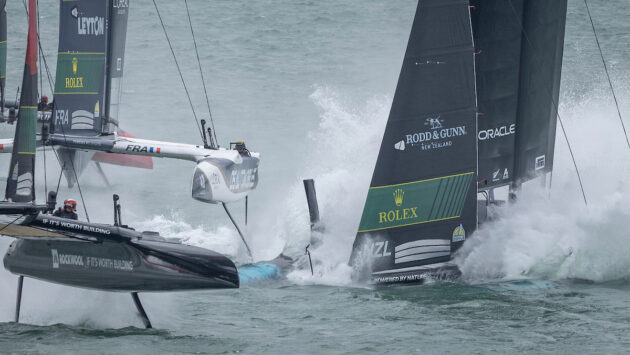
Close start for Race 6 of the Louis Vuitton 37th America’s Cup. Photo: Ian Roman / America’s Cup
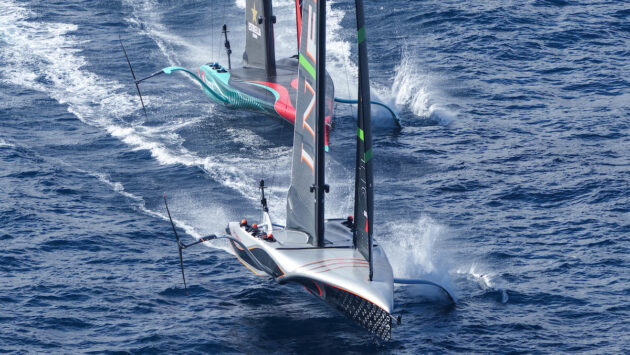
So perhaps it’s not that surprising that today there’s quite a gathering of craft around this speed threshold. In the right conditions America’s Cup boats and the SailGP F50s slip through the red line on a slingshot bear away at the top mark. And when you ask the helms about how it feels you’ll get the same answer every time: sketchy, or words to that effect. They describe how the boat has taken control and they’re simply along for the ride until the cavitation stops.
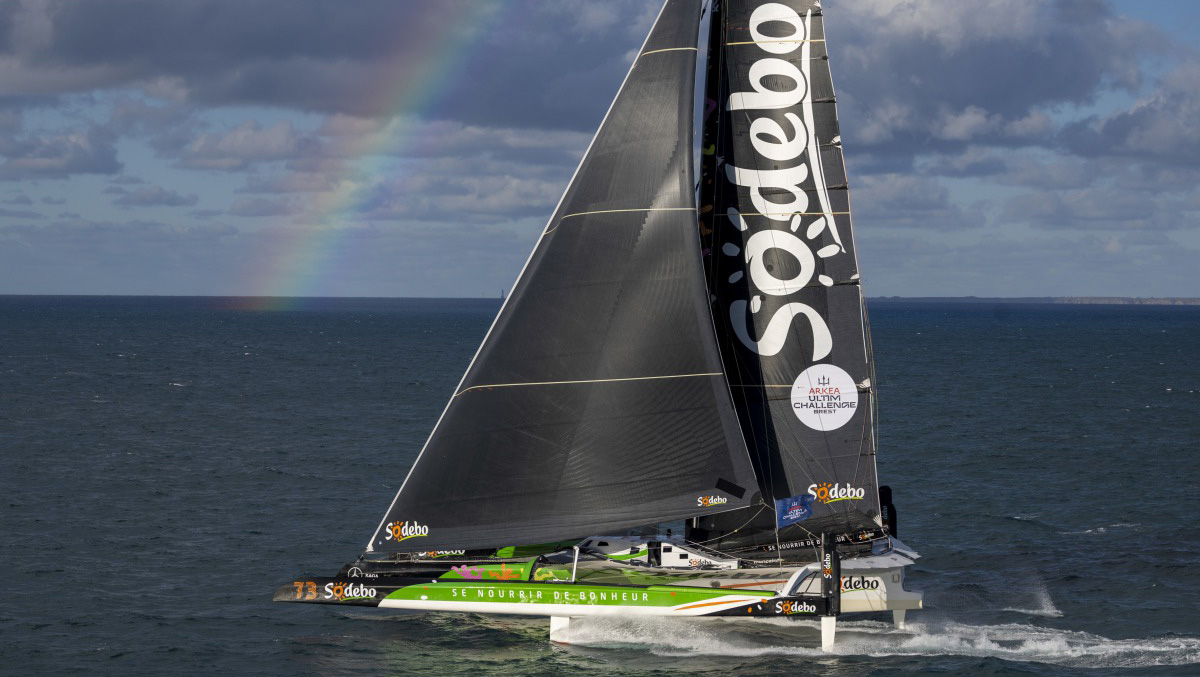
At the other end of the scale, the 32m Ultim tris up on their foils are cruising along in the mid to high 40s with the occasional nudge at the magic number. While the latest launches in the IMOCA fleet are a little behind this, it’s not going to take much to see these 60ft monohulls in the same territory if they’re ever allowed to put T-foils on the rudders.
What’s particularly interesting is the number of different approaches to raising the speed bar along with how ambitious some teams are in tackling the challenge.
Currently my favourite extreme project is the latest Ultim, Gitana 18.
Article continues below…
The unsettling silence following the Auckland SailGP collision – Matt Sheahan
The shockwaves from Auckland in February are still resonating. Since the dramatic collision in the second event of the current…
The slow, slow road to becoming flat-out fastest – Matt Sheahan
When Francis Joyon and his crew aboard IDEC Sport set a ground-breaking record for a non-stop lap of the planet…
Technical aspects such as the A-frame rudders, the Cup-style canting T-foil arms and the swinging spreaders, to name just a few, are very impressive – advances that potentially put them ahead of the competition. This team has been working together for decades, nudging the bar year by year and by doing so have delivered a track record for success.
But the machine that took my breath away the other day for its brazen ambition is the 100ft offshore flying monohull Ferrari Hypersail that’s due to be launched towards the end of the year.
The thought of what it will take to lift this beast onto its foils as it cruises at over 40 knots is difficult to imagine.
You could argue that the Ultims already do this, but the difference is that when it goes pear shaped and they fall off their foils the boat can rely on its three hulls, hopefully, to catch it. This made me wonder why the Hypersail team has chosen a monohull if they want to set new offshore records?
The answer was not what I’d expected. Towards the top of the list of reasons is rigidity. Unlike a tri that, for all its carbon structure and sophistication, bends and twists its way over the waves, a monohull structure is far more rigid which means that control of the foils and their angles of attack is more precise.
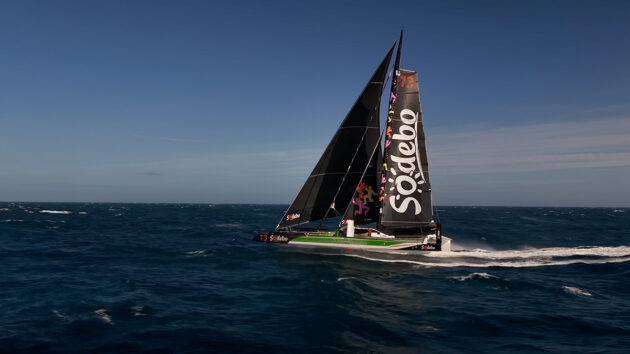
Sodebo crew and drone pilot Leonard LeGrand captures the Ultim at full speed during the Jules Verne Trophy. Photo: Leonard LeGrand/Team Sodebo
This in turn means it should be easier to achieve stable flight at high speeds in waves. While the team is coy about saying what those speed targets are it seems clear to me that with the Ultims capable of sitting at 45 knots, Ferrari Hypersail’s target has to be well above this if they’re to break records. And that in turn means getting to the 50-knot-plus red zone. When I asked whether their target was therefore around 45-55 knots there were no quick denials.
Whether or not you can imagine the new Italian super maxi sustaining over 50 knots in waves, the idea that there’s a barrier is a non-starter for this team.
Instead Hypersail, Gitana 18, the new Banque Populaire Ultim currently in build, and several other extreme projects in the offing, are proof that the grand prix end of the scene is looking beyond the 50-knot barrier and into very new territory.
 If you enjoyed this….
Yachting World is the world’s leading magazine for bluewater cruisers and offshore sailors. Every month we have inspirational adventures and practical features to help you realise your sailing dreams.Build your knowledge with a subscription delivered to your door. See our latest offers and save at least 30% off the cover price.
Note: We may earn a commission when you buy through links on our site, at no extra cost to you. This doesn’t affect our editorial independence.