



Can one boat genuinely serve both short-handed racing and cruising? For a growing number of sailors, the answer is yes. And buying into this fun-filled type of yacht ownership costs less than you might think.
Everyone is shorter on time than ever. For sailors with families, jobs and competing demands, the case for a smaller, simpler boat has never been stronger: less maintenance, fewer systems to go wrong, lower costs, and the ability to actually go sailing rather than spending the weekend on a pontoon.
But it’s not just about ease of ownership. A well-chosen performance cruiser-racer – like a Sun Fast 3200, Pogo 30, smaller JPK, or a well-set-up J/112e – can be raced offshore, solo or double-handed, at a genuinely competitive level.
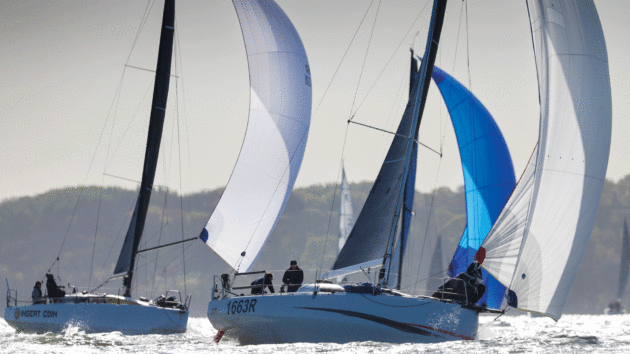
While there’s an active cross-Channel scene, short-handed racing is also growing in popularity for longer events. Photo: Paul Wyeth/RORC
The same boat can carry a family around the Channel Islands the following weekend. Join one of the short-handed and double-handed racing clubs and you find yourself part of one of the most accessible scenes in sailing. That is a lot from one relatively simple package.
Destination racing
Nigel Colley has been racing short-handed since the 1990s, when he started in a Sun Fast 32 and won the Royal Torbay Triangle Race. He runs Sea Ventures brokerage, and has watched the category transform – not just in the number of boats, but in who is sailing them and why.
It was a Bristol Channel race in 2010 that really drew him into the world of the Solo Offshore Racing Club. What he found was not what he expected. The solo and double-handed offshore world turns out to be one of the most sociable corners of sailing.
“You think it’s just a bunch of misfits with no friends going out for a weird time,” he says, “but actually it’s very social. Wherever we get to, we all help each other, go out to local harbours and restaurants. We’re all racing solo, so we’ve all won, really – everybody finished as one.”
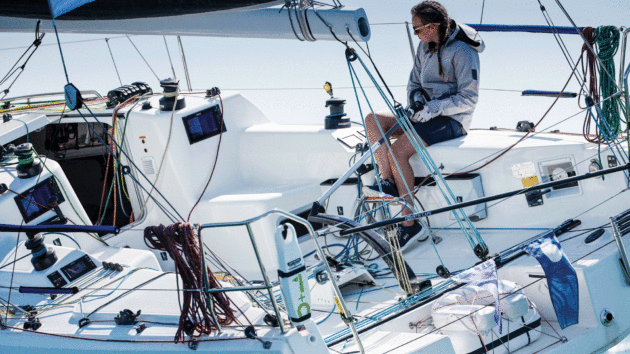
All control lines are led back for short-handed sailing on the Pogo 30. Photo: Andreas Lindlahr/Pogo Yachts
The destination is as important as the race itself. “We race somewhere, have a bit of a shindig, and we race back.” That combination – competitive offshore sailing, a sociable landfall, a manageable crew list – has proved more compelling than the numbers ever suggested.
Covid accelerated the trend. “The only racing in town was short-handed,” recalls Colley, “and we saw the double-handed scene just explode.”
The momentum has not waned. Between SORC, JOG, the UK Double-Handed Series and some RORC races, the scene is more organised, better attended and more competitive than it has ever been. Many of the new entrants came from bigger boats.
“We saw a lot of people, five or six years ago, downsizing their race boats to go short-handed – and all of a sudden they found they were actually engaged with the whole boat,” says Colley. “They’re not relegated to the back just whiddling the wheel.”
Which boat?
At the more racing-focused end of the spectrum, the Sun Fast 3200, 3300 and 3600 were designed for short-handed work from the outset: deck layouts optimised for one or two, good form stability, manageable rigs.
The 3300 and 3600 are the more demanding boats – running backstays, more specialist rigging – and require a deeper level of technical involvement between races. The 3200 sits at the more accessible end of the range and retains enough of the cruising fundamentals – a proper heads, two aft cabins, a galley – to function as a genuine family boat between race weekends.
In the blue riband offshore races, JPKs have proved hard to beat, with double-hander Alexis Loison winning the Rolex Fastnet Race overall in 2013 and 2025, while Loison also won last year’s Rolex Sydney Hobart overall two-up.
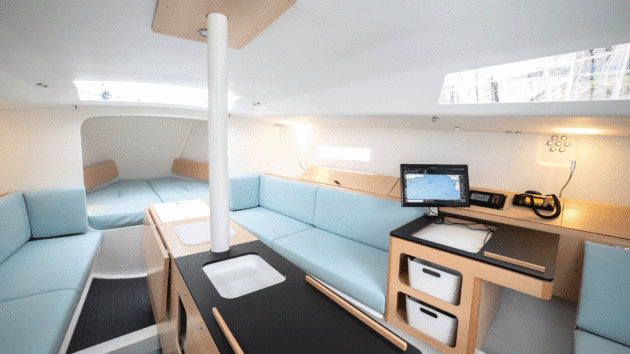
Interiors are usually simple, but sufficient for a short family cruise. Photo: Pogo Yachts
But, says Colley, “You don’t have to have a Sun Fast or a JPK to win. There’s a whole raft of cruiser-racers that have been modified by their owners to be easier to sail short-handed – and every now and again, they do very well.” The entry lists show Archambaults, Arconas, X-332s and Dufours as well as purpose-designed double-handers.
Boats at the more comfortable end of the spectrum – such as a J/112e, or a well-equipped Pogo 30 – bring more cruising volume to the equation without giving up much on the race course. Used boats in this category start from around £30-40,000 at the entry level, rising to £80,000 and beyond for more recent designs.
Coralie Colin at Pogo Structures in France says the typical Pogo customer is time-poor and planning ahead. “They know that French builders have brought racing technology down into cruising,” she says, “and that the boats will be exciting and enjoyable to sail.”
What surprises buyers, sometimes, is the advice they receive at the ordering stage.
“We always encourage people to buy the simplest possible boat,” Colin adds. “We’re really convinced they’ll enjoy sailing more that way – because if you put a huge number of systems on it, you have to maintain all of those. It doesn’t make you enjoy sailing.”
I did it
Matt Smith kept a motorboat on the River Trent. A corporate sailing weekend on the Solent 11 years ago changed that. He came home and sold the motorboat, having been sailing exactly once.
A Day Skipper course followed, then buying a Bavaria 34 (“I arrived on it after five days of training with a friend who’d never been on a sailboat; we taught ourselves around the Solent in the depths of winter.”) A Bavaria 39 came next.
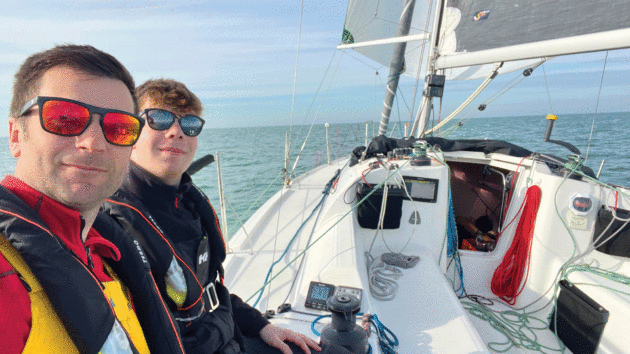
Matt Smith sailing with his son Will on Encore from the Solent to Poole. Photo: Matt Smith
Then, as his crew options narrowed, Smith moved toward racing: a Sun Fast 3200, then a Class 40 co-owned with three others (“quite extreme compared to a Bavaria 34” he notes). And then, when that chapter ended, he went back to what he knew. His current 3200 named Encore is his third. Based in Nottingham, Smith dry-sails her on the Solent; the logistics, he says, are simpler than people assume.
He races it solo and double-handed, and can line up in a RORC offshore event and be competitive. “Talking openly about money, the boat costs me 75 grand,” he says. “I have put some new race sails on it, but that was a choice. I can go and compete in the next RORC offshore event and be competitive – and the same boat can go on a week’s holiday with a small family.”
There is a community that comes with it. “We’ve got our own WhatsApp groups and we all stick together and share notes – people find something that works well technically and we all share it between us. If there’s a problem with the boat, somebody else has had it and there’s a resolution for it.” The 3200s are sporty, he says, but not unforgiving – stable and safe without being timid.
His son, Will, has done Solent to Poole with him, and Smith is planning to take him to the Channel Islands and France. Daughter, Ella, has sailed with him too. The boat has proved a good platform for taking non-sailors out. “It’s not a scary thing to look after novices on.
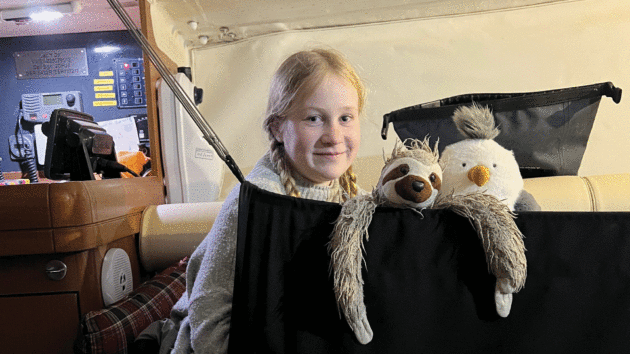
In family cruising mode, Matt’s daughter, Ella, gets comfy on Encore. Photo: Matt Smith
“I use it primarily for racing, but then take a few bits off and it’s perfectly usable to cruise. They’ve got two very big proper aft double cabins, a toilet – which a lot of race boats don’t have – a gas hob, and you don’t really need much more. I’ve owned campervans before and I’d say it’s more comfortable than a camper.
“With a couple of compromises, these boats serve the best of both worlds – and the buy-in is much more accessible than most people think, for a lot of fun.”
Class advantage
Harry Tilling at Key Yachting, the UK distributor of J/Boats, sees the double-handed and short-handed market from the sharp end of the brokerage business. Smaller boats, he says, are selling faster than larger ones, and prices have followed demand.
Within that market, J/Boats occupy an unusual position, and the appeal has two sides: community, and longevity.
“Every event, about 30-50% of the fleet are J/Boats – offshore, inshore, whatever,” Tilling says. “We run things like pontoon parties – you don’t get that with any other brand.” For many J-Boat owners it’s about being part of that family, particularly for sailors who want a social scene alongside their racing.
Another factor is how well the yachts hold their competitiveness over time. For example J/109s, a 20-year old design, are still winning at this year’s IRC Europeans. For a sailor weighing up the dual-purpose argument, Tilling notes, “They’re simple enough that you can take your family sailing, yet you can quite easily be among the fastest boats out there.”
Getting insured: What to know
“Not many insurance companies like to insure short-handed sailors,” points out Nigel Colley, “even though their accident and claims rate is lower than the fully crewed boats.”
Finding cover therefore requires a specialist approach, as Keith Lovett of Stoneways Marine advises:
- Go to a specialist broker. Mainstream insurers use automated systems that flag short-handed or racing use as a referral – the result is often a refusal or an uncompetitive quote. A specialist who understands this type of sailing can place the risk correctly from the start.
- Build a sailing CV. Underwriters want evidence: qualifications, offshore miles, named races completed. An RYA Coastal or Ocean qualification helps; a list of completed offshore events helps more.
- Understand the standard restriction. Most specialist policies include a solo passage limit of 14 to 18 hours, built around a recognised fatigue threshold. For day racing and shorter offshore events, this is unlikely to be an issue.
- Plan for longer races in advance. Events such as the Fastnet need to be declared separately and will attract an additional premium. Discuss these at the point of taking out the policy.
- Know the boat’s history. A design with a poor claims record is a harder case to make than one with a clean history. Ask the seller before you commit to a purchase.
Article continues below…

‘Boat ownership is a wildly impractical love affair, and gets complicated when you’re smitten’ – Nikki Henderson
Being a professional sailor, I realise how stupid this is, and I really should know better. From working for owners…
Taking ownership: Advice for overseas gardiennage
Pass any marina in the Balearics, and you’ll see yachts with a notice on the guardrail detailing who is responsible…
Three to consider
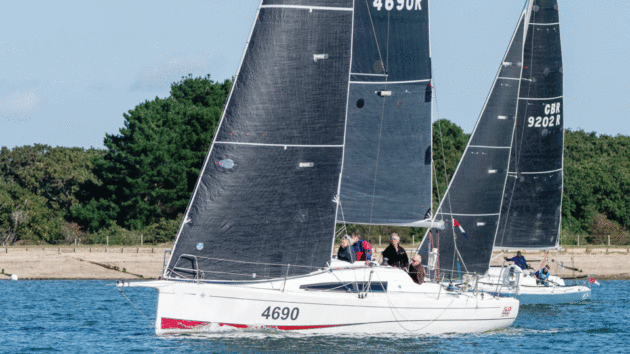
Sun Fast 3200. Photo: Sea Ventures
Sun Fast 3200 – £81,000
A 2012 version of the highly successful Jeanneau Sun Fast 3200, a 32-footer with two aft cabins and one forward. South Coast based. www.sea-ventures.co.uk
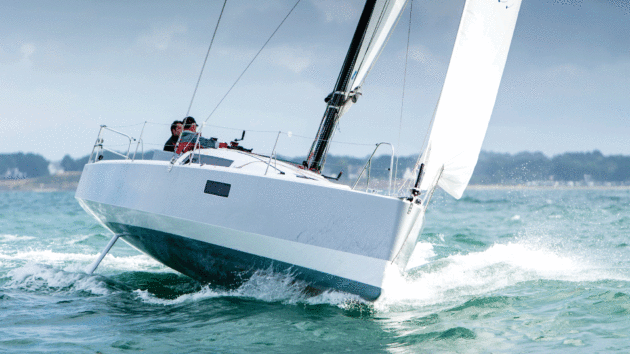
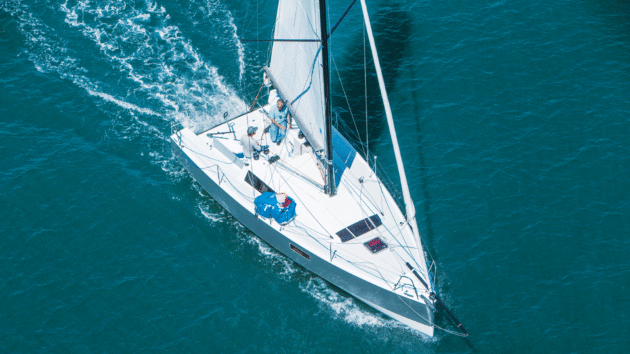
Pogo 30. Photo: Andreas Lindlahr
Pogo 30 – €120,000
A 2014 edition of the Finot Conq design with lifting keel, NKE electronics suite, Plastimo liferaft etc. www.antipode-yachts.com
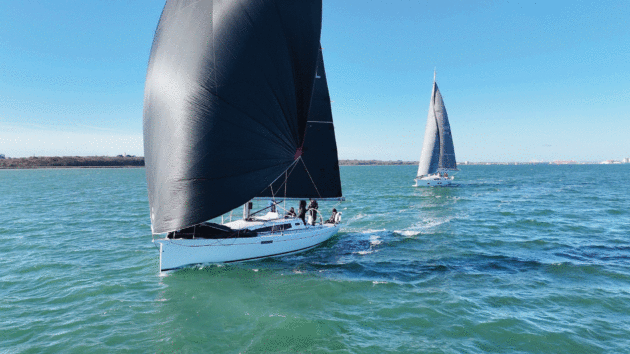
J/112e Thinking Space. Photo: Key Yachting
J/112e Thinking Space – £199,500
Originally spec’d for double-handed offshore racing, with an IRC-optimised keel, folding prop, and custom carbon symmetric pole. www.keyyachting.com
 If you enjoyed this….
Yachting World is the world’s leading magazine for bluewater cruisers and offshore sailors. Every month we have inspirational adventures and practical features to help you realise your sailing dreams.Build your knowledge with a subscription delivered to your door. See our latest offers and save at least 30% off the cover price.
Note: We may earn a commission when you buy through links on our site, at no extra cost to you. This doesn’t affect our editorial independence.