


We caught up with three liveaboard cruisers starting their families afloat to find out what happens when motherhood meets marine adventure
‘I’m just baby wrangling,’ Sara Kulins laughs over the phone as her daughter coos in the background. ‘She’s trying to chime in the conversation.’
For Kulins, the nursery isn’t a painted room in a suburban cul-de-sac; it’s the 40ft yacht where she and her partner have been simultaneously building a vessel and a family.
Kulins is a vanguard of a new Starlink Generation.
With the help of high-speed remote internet, the post-pandemic shift toward remote work, and a booming YouTube ‘sailvlog’ culture, this new wave of young families is ditching the mortgage for a life at sea.

The SV Devos family have a popular YouTube channel where they share their liveaboard lifestyle. Photo: SV Devos
But while the Instagram reels show golden hour sunsets, the reality of a positive pregnancy test in the middle of the ocean is far more complex.
What happens when morning sickness meets 10-foot swells? How do you navigate a high-risk third trimester when the nearest OBGYN is a three-day sail away?
We spoke to the women living at the intersection of marine adventure and motherhood to find out what to expect when you’re expecting at sea.
The rise of the liveaboard
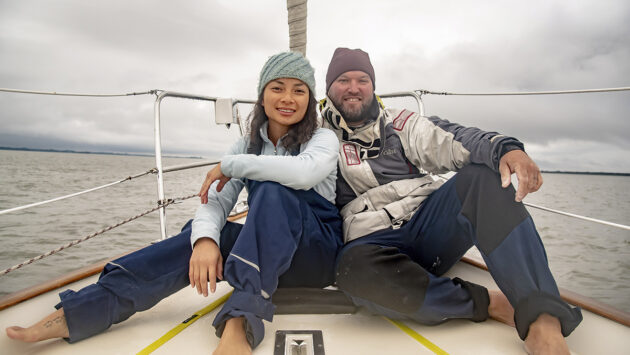
Vivian Vuong and her partner Nathan onboard in 2021. Photo by Vivian Vuong
While younger liveaboards and families may not be an entirely new part of sailing life, they’re newly widespread.
‘Since the pandemic and with YouTube, remote work, and Starlink available, we’re seeing a lot more young people being part of the cruising communities,’ reflects Vivian Vuong, who runs an offshore cruising sailing business with her husband of twelve years.
Before purchasing their Compass 47 Ultima they worked as delivery skippers, crewed on superyachts, and managed a sail charter company in the Caribbean.
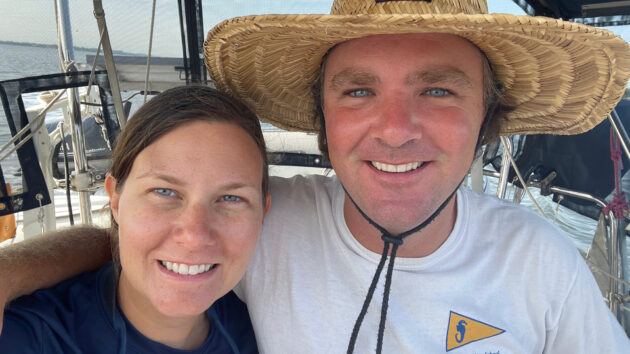
Burk and her husband Brian. Credit: Kirsten Burk
Lifelong sailor Kirsten Burk and her husband Brian were part of that pandemic liveaboard boom.
‘We sold everything – our condo, our car, a lot of our stuff – packed up the rest of it into storage, and took off,’ says Kirsten, adding they had purchased their Morgan 382 off an older couple who had sailed with their children.
‘There were a lot of people buying boats then,’ she recalls. ‘There was definitely a shift. Sailing became cool again.’
Burk’s mother, who passed away in 2017, had dreamt of being a liveaboard herself.
‘She had her captain’s license, and had worked on mega yachts and done the whole thing, but got cancer before she was able to buy her own boat. I thought this would be a great way to honour her.’
Choosing life afloat
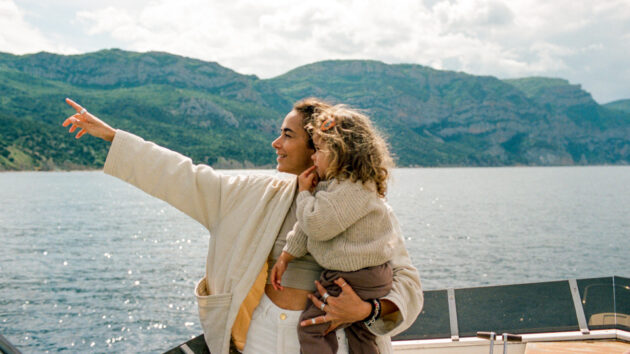
Anastasiia Krivenok via Getty Images
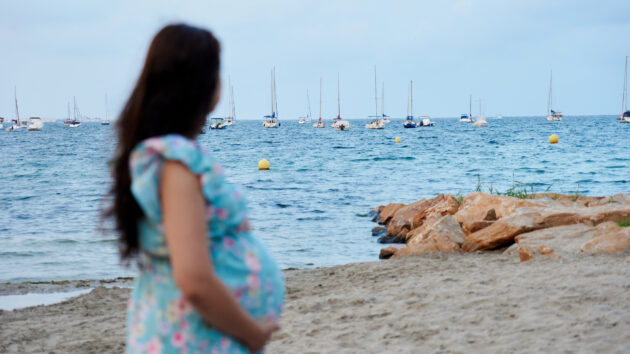
After trading ‘suburbia’ (Long Island, NY) for sea swells, Kulins and her husband lived onboard for two years before getting pregnant.
‘I love this lifestyle,’ Kulins says. ‘I was pretty invested in it from the start.’
Raising a family at sea was always part of their plan. ‘I knew it was going to be hard, but I was committed to giving it a good go.’
After moving to New Zealand, Kulins, a marine scientist, realised she wanted her children to have a different upbringing than she’d had.
‘I saw the way that kids were running around barefoot, on boats and by the water. I thought how cool would it be to raise little ocean lovers that are so connected to their environment.’
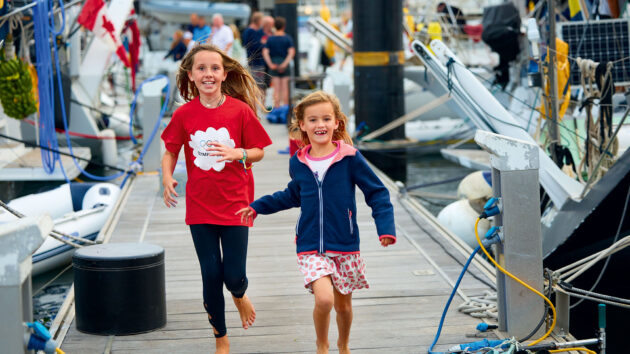
Photo: James Mitchell / World Cruising Club
Vuong echoes, ‘[Living aboard] is a good opportunity to see how you can live differently, with less work demand, without the grind and the business of living in a city and having to keep up with the Joneses.’
She appreciates, ‘Just having that freedom, traveling and seeing people with less, seeing that there are different ways to live. If I can expose my kid to that, that’d be really cool.’
‘Although,’ she admits, ‘It can also be lonely.’
Sailing for a living
Unlike many cruising couples, for Vuong and her partner Ultima doubles as both a business and a mobile home.
They have sailed her over 50,000 miles since they started running offshore training passages, including along the East Coast and back across the Atlantic.
When sailing is your livelihood, Vuong says, ‘Being pregnant changes everything.’
Even when she started to miscarry at around 12 weeks, ‘We couldn’t just cancel the trip. We had five people flying in that day.’
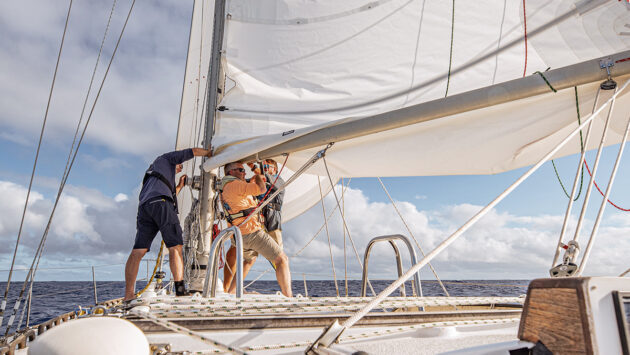
Photo by Vivian Vuong
While her husband sailed the incoming crew from the Marquesas to Tahiti, Vuong flew to Tahiti and had a natural miscarriage by herself.
‘It was really, really lonely. I was grateful that my aunt and cousin ended up coming over to be around for the after care, but not having more family and friend support was really difficult.’
She discovered she was pregnant again at 13 weeks, not long after having sailed from Tonga to Fiji.
‘We’ve put the boat first for the last six years, even putting ourselves and our relationship second.
Shifting our priorities to us and the baby first has been a new challenge.’
The challenges of mobile motherhood

Vuong’s miscarriage left her with a heightened awareness of how isolating a nomadic liveaboard life can be, and apprehension for how this might shape her experience of motherhood.
‘What if I have postpartum depression after I give birth?’ she wonders.
‘Am I going to be lonely? What do we do when Nathan is gone and I’m in the country by myself if a medical emergency happens, or there’s complications after the birth?’
While having remote communication options like Starlink has facilitated communication with friends, family, and even clients,
‘It would be easier to have my group of friends or my close family around.
Sailing around the world has put us in a place where we’re not going to be around our people.’

Ultima‘s Skipper Nathan Zahrt trims the sails. Photo: Vivian Vuong
The parents-to-be are considering various arrangements, including Vuong finding accommodation on land during offshore passages, and later taking the child along with clients with whom they already have a relationship.
‘My grandfather was a Merchant Marine, and he would be gone nine months out of the year. So when I look at it, two weeks every other month is nothing compared to what my grandparents did, and they had six kids.’
Still, she says her husband worries about missing important milestones like the baby’s first steps, and not being around to support his partner.
Marina mom
Kulins has instead opted to live aboard in a marina, where she can access mom coffee groups, consistent medical care, and refit supplies while she and her husband work on their boat.
She finds that pregnancy onboard is ‘not that different than expecting on land. The boat was my home before, and it’s our home now.’
However, ‘If we end up just living on anchor and being really mobile, I would struggle with the lack of relationships.’
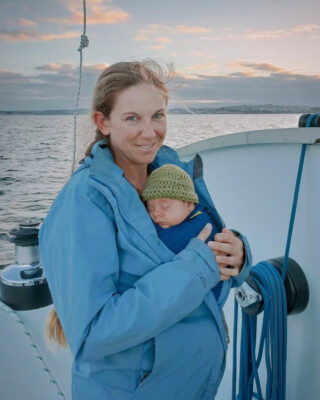
Sara with her daughter Madison. Credit: Sara Kulins
Burk, who moved onshore before going into labour, echoes, ‘If I was to have a baby on a boat, I would have to do it in a marina, or at least within an established community where there were resources.
There are so many different things to keep track of, it would be really difficult if you were sailing around and moving places all the time.
I know there are women out there who do it, and those women are superheroes. But I felt that I needed a hospital, and some land support. I needed a Target where I could go and buy diapers at 2am!’
Accessing healthcare
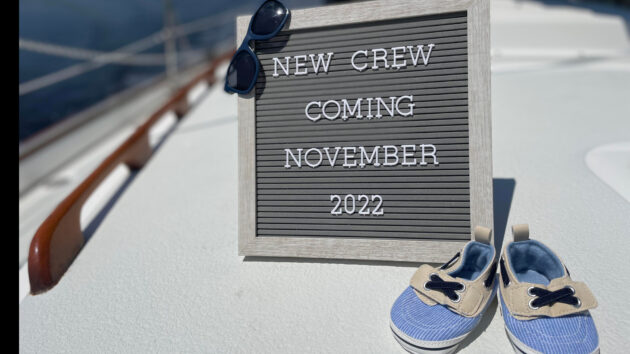
Credit: Kirsten Burk
‘The transition back to land was generally stressful, but the biggest stressor of all was the pregnancy, and trying to find a doctor,’ Burk says.
‘It was hard trying to establish care in these different places and reaching roadblock after roadblock. America’s health insurance is ridiculous, and very difficult to navigate.’
When they returned to the US to live near family, Burk and her husband had Medicaid as their only option.
They struggled to find a medical practitioner who would take the insurance, or accept a patient in her third trimester.
‘They said it would be too much of a risk for the practice,’ Burk explains. According to the American Medical Association, OBGYNs are among the most sued medical practitioners in the US.
In the end, ‘There was only one practice in the whole of Northern Virginia that would take us. Luckily she was fabulous, but it was disconcerting to just be told, this is your doctor. As a pregnant woman, you want to have options.’

Ultima getting a fresh rinse from a fast passing rainstorm. Photo by Vivian Vuong
Vuong has also made healthcare access a priority in her geographic considerations.
‘In New Zealand, because they’re in a social health care system, if you’re a pregnant woman and you need care, you get care. No questions asked.’
She points out that the same cannot be said for the United States.
She is considering giving birth in New Zealand, Canada, Australia, and the Philippines, where she has family, also weighing out birthright citizenship rules in each location.
Physical challenges onboard

Ultima under full sail between islands. Photo by Vivian Vuong
Living onboard while pregnant brings unique physical challenges.
Burk remembers sucking on a grape Jolly Rancher and regularly being sick in a bucket while sailing into the Intracoastal Waterway at 14 weeks pregnant.
‘Morning sickness became seasickness, which I don’t usually have. I was just laying in the galley, thinking, Please God, get me through this night,’ she recalls.
‘To this day, I can’t eat a grape Jolly Rancher.’
For Kulins, accessing and fitting into her berth became increasingly challenging, as did basic daily tasks like reaching into the chest fridge on their boat.
‘I couldn’t reach all the way into the bottom. I needed a stepstool, and even then it was difficult.’
The unique spaces of onboard life have also had unexpected benefits.
Kulins says her infant daughter, ‘has been hitting movement milestones and climbing around much earlier than some babies.’
No regrets
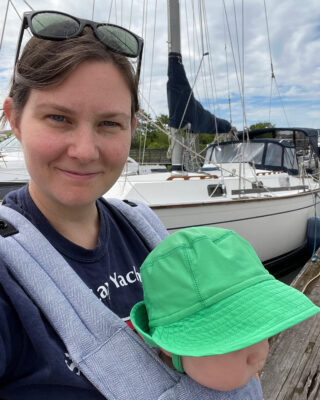
Credit: Kirsten Burk
Despite the occasional discomfort, Burk maintains, ‘The whole whole experience of being pregnant on a boat was exciting. It was stressful, but I wouldn’t change it.’
Kulins says she wouldn’t, either.
‘It’s kind of special that as I was going through the pregnancy, we made progress on the boat while still taking it to beautiful places.
Every milestone pregnancy moment is tied in with our boat. The weekend that I took a pregnancy test, we were out cruising. The day that I first felt a kick was the day that we put the rig on.’
Resources for onboard pregnancy
I was connected to all three women through a facebook group, Women Who Sail, which hosts several comment threads containing practical advice for new liveaboard mothers.
Many posts stress that materially, children need much less than advertising would lead us to believe: just warm blankets, diapers, a safe sleep spot, and milk cover the bases.
Some commenters offer space saving tips, like adopting multipurpose microfibre towels that can double as blankets, and recommend sling carriers as an indispensable item.
Others offer advice for containment and safety through a range of options like bed attachments, porta-cots, dog nets or gates, bassinets, and even tents.
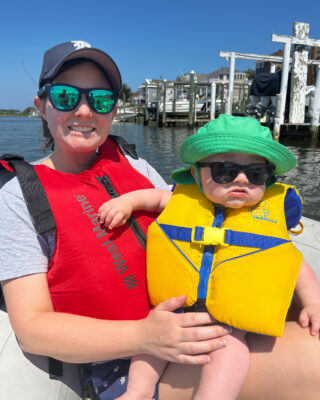
Credit: Kirsten Burk
Still, all three women interviewed felt that having access to more resources, community, and liveaboard-specific advice would’ve improved their experience of pregnancy.
‘Having someone who understands the constants of boat life would’ve helped,’ Burk says.
‘Being a first time parent is so difficult. Having somebody within the maritime community or a compiled place where you can ask questions like how do I find diapers, or approach breastfeeding postpartum, would have been really nice.’
She now makes an effort to reach out to women in similar situations.
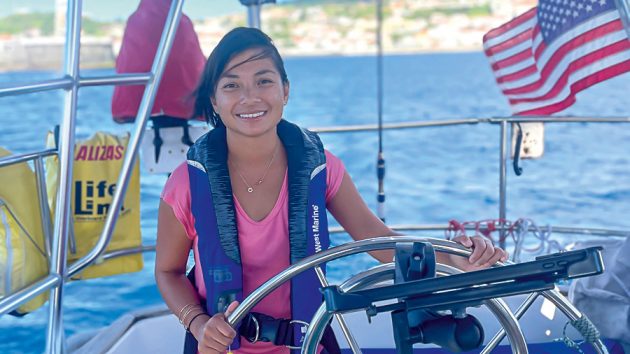
Vuong and her husband have sailed over 50,000 miles on their sloop Ultima. Photo by Vivian Vuong
Vuong points out that if information for expecting liveaboard mothers is scarce, there is even less for those dealing with miscarriage or complications.
‘I follow some people on social media that have had really positive experiences giving birth abroad and raising their baby on the boat, but you don’t hear about loss, particularly in the maritime industry. That’s why I wanted to share my story.
After my miscarriage, I learned that one in four pregnancies end in loss. But it’s one of those things where it’s not really talked about until it happens to you. The more we talk about our lives and our suffering, the more people are willing to open up about their own.’
She cites Tommy’s and Rachel’s Gift as resources, and cruising database No Foreign Land as a useful social tool for cruising families.
Going with the flow
Burk and her partner Brian are now expecting their second child. While they have sold their boat, they plan to return to cruising when the children are older.
‘Parenthood and sailing are very similar,’ she reflects.
‘Kids will blow up your plan no matter what, and sailing has taught us the same thing. The weather is going to do what it wants, the boat is going to do what it wants. Going with the flow and enjoying the ride is the only way to do it.’

Off the coast of Maine, Vuong cleans a fresh batch of giant local crabs before steaming them for supper. Photo by Vivian Vuong
Vuong, who is set to give birth early this summer, echoes the sentiment.
‘Having the miscarriage also taught me that you can only plan so much. We had derailed our whole business with the expectation that we’re going to have a baby.
But if sailing has taught me anything, it’s that you just have to go with the flow.’
She and Nathan plan to continue their itinerant lifestyle, adapting their business to their baby’s needs as they go along.
‘We have this whole big world to explore,’ she says, eyes bright. ‘I want to keep going.’
 If you enjoyed this article about expecting at sea….

Yachting World is the world’s leading magazine for bluewater cruisers and offshore sailors. Every month we have inspirational adventures and practical features to help you realise your sailing dreams.Build your knowledge with a subscription delivered to your door. See our latest offers and save at least 30% off the cover price.
Note: We may earn a commission when you buy through links on our site, at no extra cost to you. This doesn’t affect our editorial independence.