




Make the most of your sailing season by stretching time in the Eastern Mediterranean. Janneke Kuysters explains how
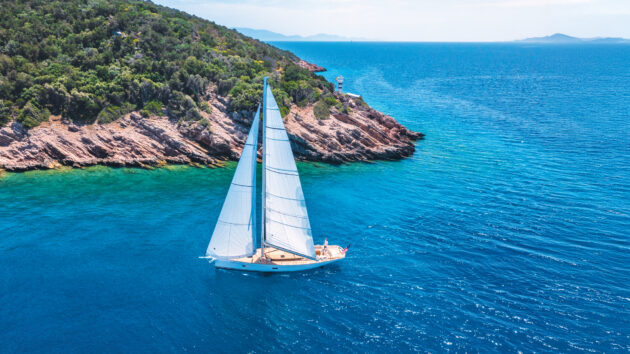
The eastern Mediterranean is a treasure trove of beautiful cruising grounds, spectacular natural beauty, ancient cities and amazing food. Many sailors would love to linger there for at least a very long season, although a 90-day Schengen limit can make an extended summer feel out of reach.
But is it? With clever planning, you can stretch your cruising adventures, because the eastern Med has some great opportunities to ‘play’ with the Schengen- and non-Schengen zones. Here’s how savvy cruisers can double the 90 days for a satisfyingly long season.
Croatia: A blissful start
Assuming your boat over-wintered in a port in Italy, Spain or France, start your eastern adventure by sailing around the ‘heel’ of the Italian ‘boot’ and up the Adriatic Sea to Croatia. Croatia is part of Schengen, so within the available 90 days.
Sailing in Croatia is increasingly popular, and for all the right reasons. With more than 1,200 islands begging to be explored it’s one of the best cruising grounds in the eastern Med. Distances between islands are short, so you can take a leisurely sail to one bay for lunch, then onto the next island for a quiet night at anchor. Alternatively, there is a good choice of well-equipped marinas. From May to October winds are steady and predictable and the swell is minimal in the sheltered waters behind the islands.
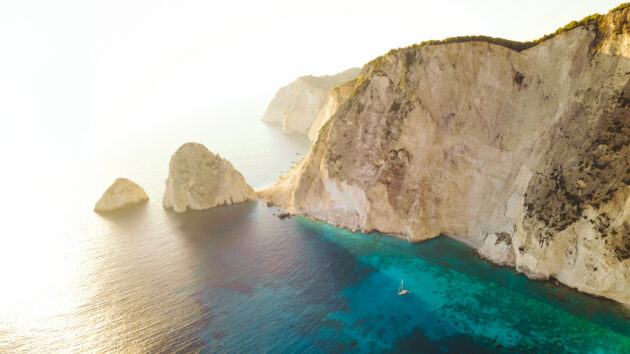
Photo: Phil Johnson
The highlight for many cruisers is the Dalmatian coast, with Agana in the north and Dubrovnik in the south as key hubs. Charter sailors with limited time available flock here for one or two weeks of easy sailing along this beautiful coast.
Dutch cruiser Martin Vooijs has extensively explored the Croatian archipelago in his Beneteau First 47.7 Blue Skies. He advises: “Croatia is growing in popularity, so the fleet of charter yachts is sizeable around the main charter bases. Pick your dates carefully to avoid the crowds.”
However, it is the Vooijs’ favourite location for family cruising. “It’s such a great place to sail, because of the variety of destinations. One of our favourite islands is Lastovo, a beautiful and very quiet island just south of Korčula, roughly 8 miles due south. Lastovo is a protected natural area.
“On the north side is Zaklopatica, a spectacular bay which can be reached through a narrow entrance. Deep in the bay are restaurants with very hospitable owners. Savouring an alfresco dinner of fresh lobster while the sun sets behind your own boat is spectacular. The island can easily be explored, the forest and wineries are beautiful and enough to make you linger on Lastovo.”
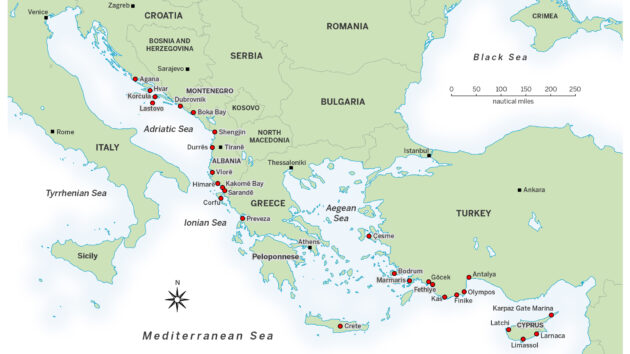
“The added bonus is the proximity of other lovely islands in the area: Korčula at 21 miles, Mljet at 20 miles, Vis at 35 miles and of course Hvar at 30 miles.”
There is no need to clear into Croatia when coming from another Schengen-country (though there are limited ports of entry if coming from outside the EU). However, be sure to obtain a navigation permit and that tourist tax on the boat is paid – fees are relatively high for even short visits.
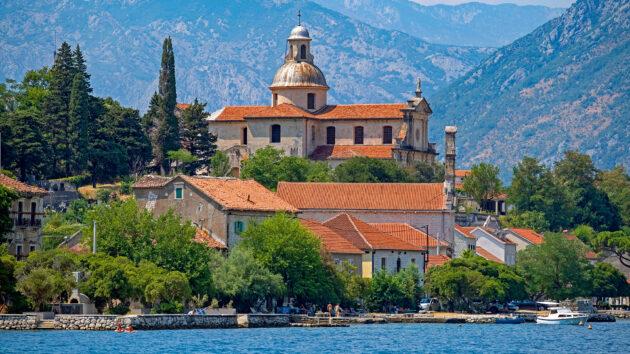
The Montenegrin town of Prčanj in the Adriatic’s Bay of Kotor. Photo: Marica van der Meer/Arterra/Universal Images/Getty
Montenegro: Alpine style
Make sure to check out of Croatia before sailing to Montenegro, which is not part of Schengen. That stops the 90-day clock to enjoy a lesser-known cruising ground. Martin Vooijs notes: “When we sailed to Montenegro, we did the exit paperwork in Dubrovnik – a very easy procedure. Clearing into Montenegro is an easy process as well: no agents are needed.”
Cruising in Montenegro is growing in popularity. Its short, but very scenic Adriatic coastline offers brisk sailing in azure water. But the pearl for many cruisers is Boka Bay: a large, fjord-like inland sea. “It feels like you’re sailing in Switzerland. It’s very sheltered, so the engine has to do most of the work. But the experience more than makes up for it,” says Vooijs.
If you venture further into Boka Bay, you’ll find the authentic Montenegrin culture and history. Kotor, at the south side of the inland sea, is a true gem with fortified walls (and a UNESCO World Heritage site). “We moored our boat on a small jetty and wandered all over Kotor. There are lovely squares, where the sunlight is filtered by the leafy trees, and music everywhere,” says Vooijs.
There are modern marinas in Portonovi and Porto Montenegro with full facilities. Because of Montenegro’s proximity to other Eastern European countries, you’ll find many different nationalities in the marina.
Montenegro enjoys a long sailing season from April to October. Summer brings predictable sea breezes, warm temperatures, and excellent visibility. Spring and early autumn are favoured for fewer boats, mild weather, and smooth sailing conditions. But unlike many Med destinations, Montenegro rarely feels overcrowded, even in peak season. This means less stress in marinas, easier anchoring, and more freedom of choice.
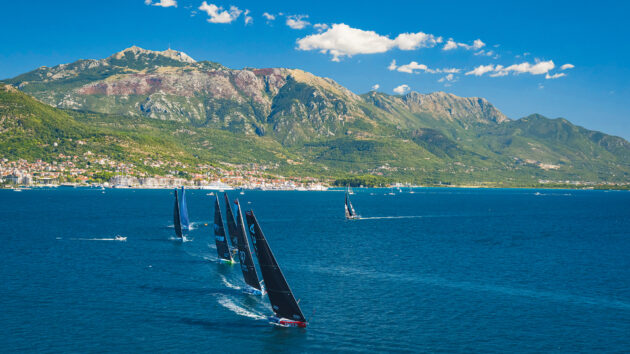
The Ocean Race fleet in Boka Bay. Photo: Lloyd Images/TORE/Getty
Albania: Off the beaten track
“Albania was a pleasant surprise,” Dutch cruiser Brend Vlaanderen recalls. “Last year, my wife, Silke, and I were sailing our Piewiet 36 Aim in Corfu and saw Albania in the distance. Curiosity got the better of us and we decided to go.”
“It is recommended to use an agent for the clearance process. When we contacted an agent, the whole process was very quick.” The Vlaanderens cleared in at Sarandë – a pleasant town with a seafront boulevard lined with the restaurants overlooking the bay.
“We also got our internet sorted there, because it’s out of the EU and the standard EU SIM cards don’t work,” Vlaanderen adds. As a non-EU country, Albania is another option to extend your season if limited to 90 days of Schengen zone.
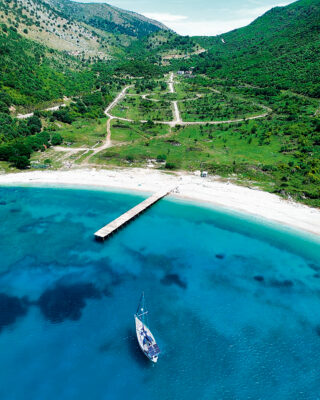
The secluded and pristine Kakomë Bay on the south coast of Albania. Photo: B Vlaanderen
“Once we’d got our Lek currency at the ATM, we went food shopping. At the market, we were pleasantly surprised by the low prices and excellent quality. Next stop was Kakomë Bay: stunning blue water, a pristine white beach and an abandoned monastery at the head of the bay. We donned our hiking boots and had a few blissful days hiking in the valley. This year, we are on our way back to Albania to explore much more of this lovely country: by sea and over land.”
Both tourism and cruising to Albania are growing in popularity, and large cruise ships anchor off Sarandë. It offers an affordable and uncrowded Mediterranean experience, with rugged coastlines, hidden coves, and crystal-clear waters along the Ionian and Adriatic Seas. There is a single, basic marina at Orikum near Vlorë, so Albania is a perfect fit for adventurous cruisers seeking untouched nature rather than luxurious services.
Highlights of the different sailing areas include the Albanian Rivièra in the south, known for dramatic limestone cliffs and crystal-clear waters near Himarë and Ksamil. Porto Palermo offers excellent shelter and a historic castle, while the Vlorë and Karaburun peninsula features the Haxhi Ali sea cave and pristine, secluded beaches. Sazan Island, a formerly restricted military island, has isolated snorkelling and exploration.
Ports of entry are Shengjin, Durrës, Vlorë, Sarandë and Himarë (only operates in summer). In general, the cost of cruising in Albania is much lower than nearby Greece or Croatia. The season runs from May to October, with
June and September offering the best weather while avoiding high-season. The coastline is safe, but in some areas the anchorages are poorly protected. Daylight navigation is recommended.
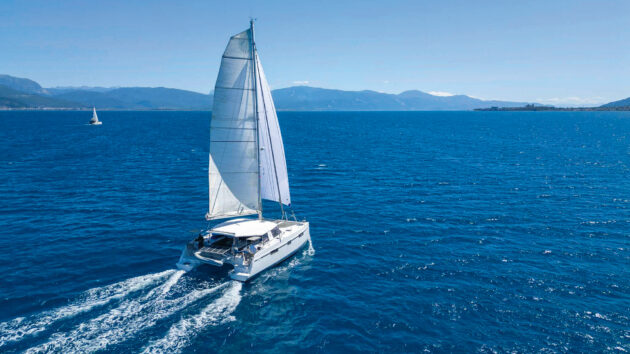
A quiet anchorage on the Greek island of Aegina in the Saronic Gulf. Photo: Ian Roman
Greece: Endless options
There is a huge choice of sailing areas in Greece, so you need to plan the remainder of your 90 Schengen days wisely. Heading from west to east, the first and most westernmost cruising area is around Corfu, known for light winds and pleasant sailing along the island’s rugged coast. Then the Ionian Sea – winds can be stronger here, but there is always a sheltered bay to be found to drop the anchor and spend a pleasant evening.
You can sail around the Peloponnese or take the shortcut of the Corinth Canal from the Ionian to the Aegean Sea. The latter, of course, brings you more quickly to Athens, which makes crew changes easier.
You could spend months exploring the Aegean, pottering from bay to bay, dining out in the tavernas serving delicious salads and the freshest of fishes.
Greetje Tops, delivery and charter skipper, says: “What I love about sailing in Greece is the proximity of destinations. You have a leisurely sail for a few hours and drop the hook in another beautiful bay. Sometimes, when you sail a bit further away from the popular spots, you can have the bay all to yourself.”
Crete is another highlight, but quite far from other island groups: it’s a destination in itself. If you decide to circumnavigate it, make sure you allow plenty of time.
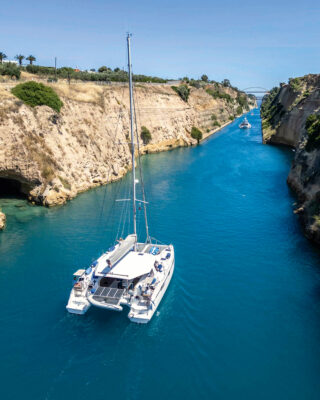
Passage through the Corinth Canal. Photo: Ian Roman
Tops advises: “Keep a keen eye on the weather when sailing around Crete: especially around the capes, the wind can pick up rapidly making for either stressful or exhilarating sailing.”
If you decide to store the boat in Greece for the winter, it pays to start enquiring early. Preveza is popular, but it fills up quickly. Because of winter storms, most boats (and pontoons) are taken out of the water for the winter.
The TEPAI (Recreational and Daily Tour Cruise Ships Fee) is a mandatory cruising tax in Greece for private and professional leisure boats over 7m (22ft) long, regardless of flag. It is an online-based fee – often referred to as eTEPAI – levied on vessels operating in Greek waters, typically costing €8 per metre per month.
There are additional demands for clearing into Greece if you are not an EU vessel; for example insurance certificates need to be translated into Greek, and a Transit Log is required.
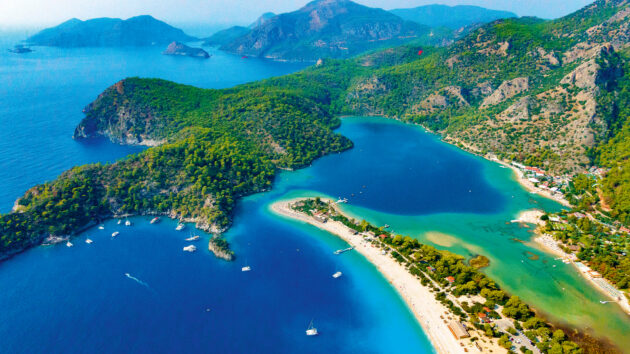
the beach and spectacular Blue Lagoon nature reserve at Oludeniz south of Fethiye. Photo: Amazing Aerial/Alamy
Türkiye: Spoilt for choice
Türkiye offers great opportunities for the end of the season; the crowds are less and it takes you back outside Schengen. You might choose to remain for the winter, or leave your boat and travel home.
Turquoise waters, ancient ruins and hidden bays: it’s easy to see why so many people keep coming back. The season typically runs from late April to October. Conditions for sailing are the best in May, June and September; July and August are hotter and can have (very) strong Meltemi winds.
The area between Fethiye and Olympos is known as the ‘blue cruise’ and very popular: taking in the Butterfly Valley nature reserve, the ancient town of Kas and sunken city of Kekova. The area between Bodrum and Marmaris is a bustling hive of yachting activity with some large marinas plus a good number of quiet anchorages nearby. Göcek is known for its stunning bay and sheltered sailing. Ayvalik and Cunda Island are well-suited for cruisers looking for quieter and less-frequented bays in the north.
Large charter bases can be found near Bodrum, Marmaris and Fethiye, making them good places to head if you need spare parts or repair facilities at the end of season. Marmaris is a premier port with large marinas and extensive repair facilities. Fethiye is a popular place to clear in and begin sailing the Turquoise Coast. Göcek is another popular central entry point. Bodrum is a major hub with multiple marinas. Kaş is a small, charming port, ideal for entering near the Greek island of Meis. If you want to winter your boat in Türkiye, Finike is a popular spot.
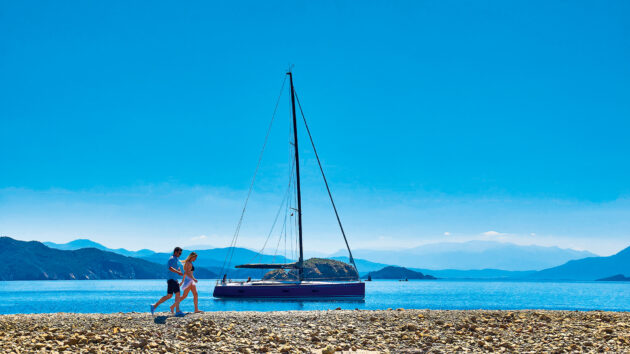
Fethiye is a popular place to clear in and begin sailing Türkiye’s Turquoise Coast. Photo: Ed Holt/Alamy
If entering Türkiye from a Schengen country you will need to clear in; key ports of entry for yachts include Marmaris, Fethiye, Göcek, Bodrum, Kas, Antalya, and Çeşme. When entering from foreign waters, yachts must check in with harbour authorities, customs, and immigration to secure a transit log.
It is not necessary to hire an agent, but doing so can make the process easier because the different institutions may be spread all over town.
A transit log is compulsory; it acts as a permit to sail and stay in Türkiye. All vessels must also use a Blue Card system to log waste disposal at marinas and reception facilities. Foreign tourists are allowed to stay for 90 days in Türkiye (after which point a 90/180-day rule applies).
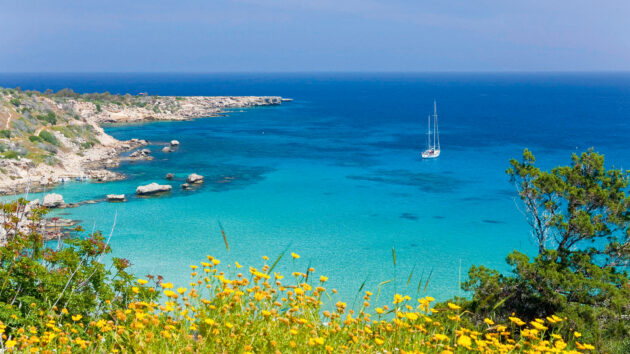
Konnos Bay is not far from busy Ayia Napa. Photo: Mauritius Images/Alamy
Cyprus: An interesting detour
After a summer of island-hopping, the sail from Türkiye to Cyprus (specifically the Southern Republic of Cyprus or South Cyprus) means back to making a proper passage plan – distances between a port in Türkiye and one on Cyprus can be anything between 50-150 miles. Cyprus is in the EU, but it is not part of Schengen, so arrivals need to comply with strict customs and immigration procedures.
Before sailing to Cyprus, it is recommended to familiarise yourself with its history, and the present political situation. There is also a military presence on the island. Northern Cyprus, or the Turkish Republic of Northern Cyprus, or TRNC, is a state recognised only by Türkiye.
There are three ports of entry in the Southern Republic of Cyprus: Limassol Marina, Latchi and Larnaca. In the TRNC, the port of entry is Karpaz Gate Marina. You will also need to factor in your choice of entry point to your onward planning – Noonsite advises that: “It should be noted that if you declare your last port as being Southern Cyprus when you clear into Türkiye you will not be permitted to enter the country.” If you choose to explore the less developed northern TRNC, then sailing on to Türkiye is more straightforward.
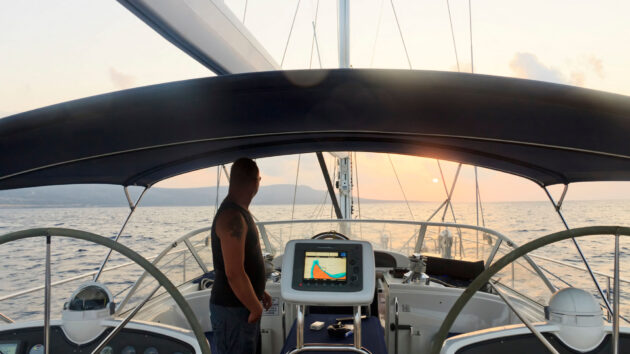
Sunset over the Akamas peninsula. Photo: Plamen Peev/Alamy
Sailing in Cyprus offers year-round Mediterranean cruising with stable winds, warm, clear waters, and scenic, rugged coastlines. You could circumnavigate Cyprus via daytrips, overnighting in bays or local harbours. But for a shorter stay, you could base yourself in one of the popular marinas – Limassol Marina is a luxury yachting hub and an excellent starting point for day trips.
Another highlight is the breathtaking Akamas Peninsula (Latchi) on the north-west tip, famous for its rugged beauty, small caves and the Blue Lagoon. The vibrant Ayia Napa and Protaras area are known for calm waters and scenic bays like Konnos Bay (though famously popular with Brits seeking nightlife). The Paphos coast offers a mix of sandy beaches, sea caves, and historical sites.
Spring and autumn offer the best conditions, with mild weather and warm seas in autumn.
 If you enjoyed this….

Yachting World is the world’s leading magazine for bluewater cruisers and offshore sailors. Every month we have inspirational adventures and practical features to help you realise your sailing dreams.Build your knowledge with a subscription delivered to your door. See our latest offers and save at least 30% off the cover price.
Note: We may earn a commission when you buy through links on our site, at no extra cost to you. This doesn’t affect our editorial independence.