



From Red Sea pirates to North Pacific hurricanes, the "safe" choice is rarely a straight line. It’s all a gamble—not just sailing says Nikki Henderson

I have to confess, I’m very resistant to the daily news drip-feed. The constant drama is overwhelming. I’ve often gone offline for weeks at sea and realised that when back on land, it doesn’t take long to get back up to speed on current affairs.
But despite a natural urge to shut the world out, we can’t.
Since the days of the earliest seafarers, it has always been important for sailors to know what parts of the globe to avoid, where the safe-ish areas were, and what the pirates were up to. (Unless of course, you were the pirates…)
Except for more data, nothing has really changed. We still must educate ourselves on global epidemics, piracy, geopolitics and war – and plan accordingly. So considering the elevated risks in the Middle East, parts of South America, Africa and South East Asia, does that mean any passages in this area are too dangerous?
The question makes me think of a talk I heard from a family of four who took the Red Sea short cut from Australia back home to France last year. They had no security aboard yet deemed it ‘safe enough’. In their case, it was. I have to say I found listening uncomfortable. For me, the trip would have been too much of a risk.
In 2019 I did the reverse passage on Maiden and felt like I was threading the needle of it being a good vs an idiotic choice. And that was with four armed security personnel on board. Once was enough.
Article continues below…

The inside story of Greta Thunberg’s upwind Atlantic crossing on La Vagabonde
The sky flashed a blinding white light and a spark came down just a few hundred metres to port. We…
Sailors get a unique and fascinating perspective on risk. The questions people ask before you go on a trip show what your community considers dangerous at any given time.
In 2021, people were more afraid of Covid than storms. In 2019 I sailed Greta Thunberg eastbound across the Atlantic to COP25 – with climate activism trending, and people were suddenly very interested in hurricane paths. Earlier that year, as I sailed Maiden past Saudi Arabia and Somalia, pirates were the hot topic. The war zone and cholera epidemic in Yemen were not considered that relevant!
When you read this, I’ll have returned from a transpacific passage on an Outremer 52. The thing my family and friends were most concerned about ahead of this trip from the Galapagos to the Marquesas was whether my flight home went eastbound over the US or west bound via the Middle East. The latter, they considered more dangerous than 3,000 miles of ocean sailing.
Our fears are not particularly good indicators of real risk. It just shows where we are focusing our attention. One day storms are less dangerous than pirates. The next weather is more dangerous than a world war. Keeping a level head and staying informed are important, but not always easy.
Risk is inherent to sailing. Whenever we step aboard, we accept a level of risk. Calculating and considering every ‘what if’ scenario helps us make plans to keep us safe. Risk is so top of the mind, that we consider everything more diligently. But in truth, risk is no more integral to sailing than everyday life. Normal humans take just as many risks – they just don’t choose them in the same conscious way.
Looking back I can count on one hand specific moments at sea where I thought maybe I’d pushed it too far. Four hours into a hurricane in the North Pacific on the Clipper Race when a sustained 70 knots gusting 90 wasn’t abating and night was drawing in. Looking up at the shaking rig of a 40-footer as we propelled over icicle ledge waves above the Biscay Shelf in a Force 10 wondering whether it would drop, or we would capsize first.
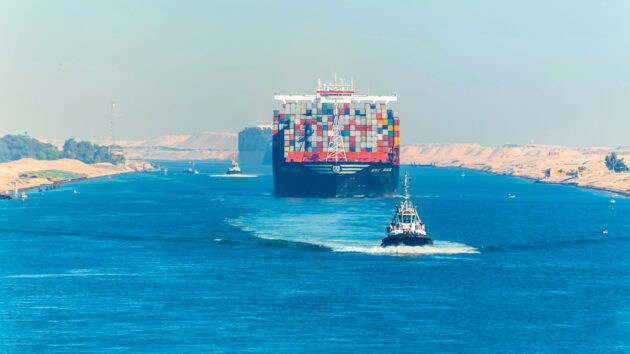
On Maiden docked in Port Said, awaiting our Suez transit, finding myself face-to-face down below with four armed military personnel.
With all these ‘Oh s**t’ moments, the common factor was how confrontational the danger was. The nature of the situation removed the option of downplaying the reality. I was unquestionably conscious of the risk I faced.
So, if you’re considering a risky passage, reinvent these scenarios. Whether it’s putting up the bigger sail, sailing past a war zone, or anything that might be considered ‘dangerous’ – imagine yourself face-to-face with the worst-case scenario.
How does it feel? Do you have a plan? Then, run it by a fellow sailor or someone who understands what it means to be a conscious risk taker. If you can justify it to them, it’s probably a safe bet.
But remember that word ‘bet’. It’s all a gamble – not just sailing, but anything in life.
 If you enjoyed this….
Yachting World is the world’s leading magazine for bluewater cruisers and offshore sailors. Every month we have inspirational adventures and practical features to help you realise your sailing dreams.Build your knowledge with a subscription delivered to your door. See our latest offers and save at least 30% off the cover price.
Note: We may earn a commission when you buy through links on our site, at no extra cost to you. This doesn’t affect our editorial independence.