




The insiders’ lowdown on buying a pre-loved yacht: Will Bruton has expert advice on how to seal the deal

Choosing the type of yacht you want is the easy part. Everyone loves browsing boat listings. But buying with intent? Finding the right boat, working out what an advert omits, and agreeing a price – that’s the tricky bit. And this where a good broker earns their keep. We get expert advice from those in the know.
Nowadays the search for a bluewater yacht often begins online, scrolling one evening a long way from the water. That has changed what a good listing looks like, and a broker’s role. But it has not changed why people buy.
“You buy a bluewater-focused sailing yacht to do something you want to do,” says Alex Grabau of Grabau International in Lymington, a broker for 25 years. “It’s not a lifestyle accessory in the way a Sunseeker might be. You’re buying it because you’ve got a life plan, and it’s going to take a lot to stop you.”
This is why, in a market he and others describe as quieter, this sector has held its ground. And why all the brokers we talked to focussed on how to buy well, rather than whether to buy at all.
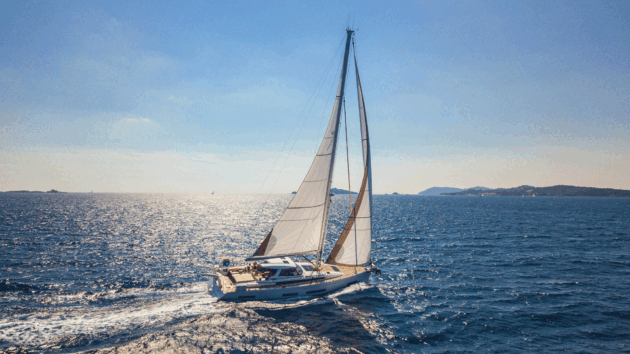
The evergreen Amel 50. Carefully consider how you plan to use any yacht to narrow your design choices. Photo: Robin Christol
All about you
Grabau’s first piece of advice is not to name a boat. “You can phone a broker and start plucking boat names out of the air. What about a Contest, what about a Discovery, what about an Oyster? But what you should really be talking about is you.
“What experience have you got? Where do you want to go, how long for, with how many people? What do you – and don’t you – feel comfortable with? Then, how much do you want to spend? Go down that list without mentioning a boat, and at the end it’s far easier to define the boats you should be considering.”
One question now carries more weight than it used to. “Where are you going to keep the boat? That’s quite important post-Brexit, because it defines whether you buy in the UK, where there are fewer options, or in Europe, where there are more.”
The most frequent mistakes come from skipping that conversation, says Grabau.
“Number one is coming in with a preconception of the boat you think is right. Number two is not working out what you’re going to do with it. I’ve spent years selling boats with five-cabin layouts because people had grandchildren, and the grandchildren never go sailing. They end up lugging around a boat 15ft longer than they want, when they could have bought something far better suited and more luxurious for them.”
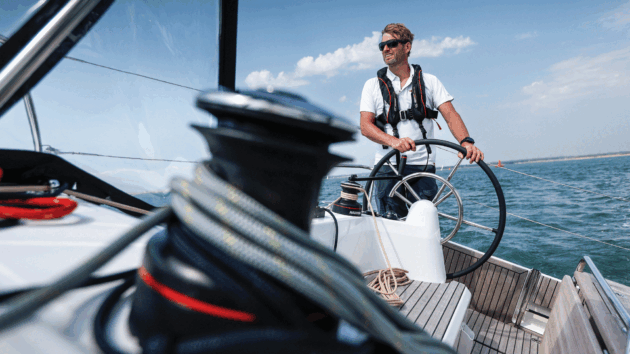
A test sail is the fun bit, but plan to spend a good proportion of any yacht viewing on the dock. Photo: Paul Wyeth
A broker’s fees are paid by the seller, so this conversation costs the buyer nothing, but it pays back later. “If the broker understands where you are at, and what you’re planning, it’s much more likely you’ll get an offer accepted. Quite often the broker is working very hard to sell an offer to a seller,” explains Grabau.
“While buyer’s brokers are standard in superyacht transactions, many sub-60ft buyers don’t realise they can use one at zero added cost,” explains Jean-Paul Baudains of PWS Yachts, a broker who is also pro superyacht crew and a liveaboard cruiser.
“Having your own broker means having a dedicated advocate in your corner; someone to spot hidden red flags before you pay for a survey, navigate complex cross-border paperwork and tax status, and negotiate objectively on your behalf.”
Jeremy Mason of Transworld Yachts at Hamble Point, Hallberg-Rassy’s UK dealer since 1985, says relationships between broker and buyer/seller can last for decades.
“Probably 80% of the boats we sell are boats we’ve sold before. We’ll know the boat, we’ll know its history, we’ll probably have a file on it from when it was new.” One yacht the firm delivered back in 1994 has just come back to market, but Mason’s team can trace its ownership history.
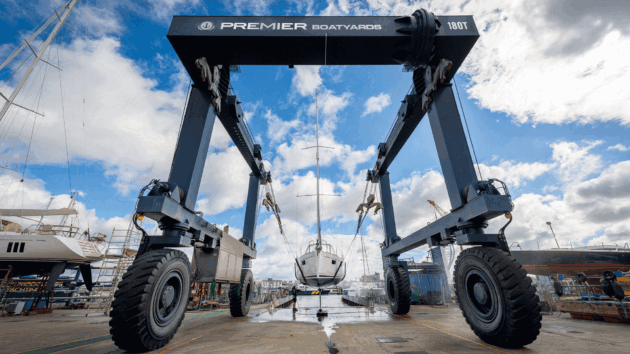
A survey is essential, but an out of water survey cannot cover the rig or most systems. Photo: Premier Marinas
Devil in the details
Only after that conversation is it time to go onto the selling portals – now armed with a brief rather than a mood.
“Once you know you want 45-50ft, for sale in the UK not Europe, centre cockpit, metal not GRP, you can whittle down from 10,000-plus boats to half a dozen very quickly,” explains Grabau.
“Going into YachtWorld with no idea what you want is like going on Rightmove with no idea where you want to live.” YachtWorld remains by far the largest resource; TheYachtMarket, a British company, is the other Grabau recommends.
Phil Dollin, a director of Inspiration Marine at Hamble Point, asked his buyers what they most wanted to see in listings.
“What came back was: when were things updated? When was the standing rigging changed? When was the saildrive seal replaced? How old are the batteries? So now we list the spec and – in brackets – when it was last serviced, replaced or upgraded. You can have two ostensibly identical boats, but if one’s had the rigging done, the seal done and new batteries, that’s probably £15,000 that doesn’t need spending.”
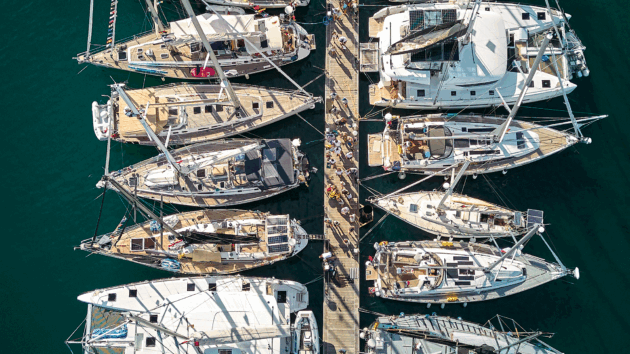
Bluewater yachts of all shapes and sizes ahead of the ARC start in Las Palmas. Photo: James Mitchell/WCC
Bluewater kit does not hold its value with age, Mason warns. “A generator or watermaker installed 10 or 15 years ago doesn’t have the value of one done two or four years ago. A cruising chute that’s done a circumnavigation probably isn’t going to do another Atlantic crossing.”
The corollary is his favourite kind of yacht purchase. “We have a lot of coastal sailing boats with downwind sails that are almost unused, because people don’t find themselves on the right point of sail for long enough to get excited about hoisting a cruising chute. You can get a very good buy in a cruiser with a few offshore concessions and not many miles, maybe all you’ve got to do to get bluewater ready is add a watermaker.”
Mason advises that a listing that’s thin on details is a signal in itself. “If you don’t give people the information they want to read, they assume you don’t know what you’re talking about.”
Rupert Knox-Johnston, head of brokerage at Oyster Yachts in Ipswich, agrees that a listing showcases the owner’s approach as much as the yacht itself. “You’re looking for pedigree first. Then evidence that the owner has been looking after the boat. Let’s be realistic – there’s going to be a refit cost to any bluewater boat before you can head off. What you’re looking for is the seller’s commitment: spending money, keeping her going.”

When were items such as standing rigging last replaced? You’ll need to factor in refit costs. Photo: Christopher Ison/Oyster
The item that can most affect that refit cost is teak. “Teak decks are the killers on a 20- or 30-year-old boat, because the cost has roughly doubled,” Knox-Johnston points out. “Standing rigging everyone knows about; then it’s the engine and generator.
“Sails, batteries and instruments I’d regard as running costs, like tyres on your car.”
But a well-used boat can be a good buy for other reasons, explains Sophie Kemp, yacht broker at Berthon International: “We get well maintained listings that have finished their circumnavigation then been put on the market. It’s likely money will still need to be spent on things that have simply worn out, but a yacht that’s completed that sort of adventure recently can still represent a great opportunity, partly because there’s a clear reason for sale and the owner is motivated.
“It’s a yacht that’s well known at the point of sale, rather than one that’s been sat for a long time.”
Trial on the dock
When it comes to viewing a yacht, many buyers often misunderstand what a sea trial is for, says Dolin. “Most of our boats are ashore, so people have an out-of-water survey first, which covers 90% of the boat.
“But the rig can’t be checked, and the systems that need water running through them can’t be checked either. If it’s a bluewater boat with a generator, watermaker and air-con, none of that can be tested in a meaningful way ashore. People think the sea trial is about hoisting the sails. Actually 90% of it is done on the dock, running systems. You’re not doing it to see how it sails. You’re doing it to test the kit you can’t test ashore.”
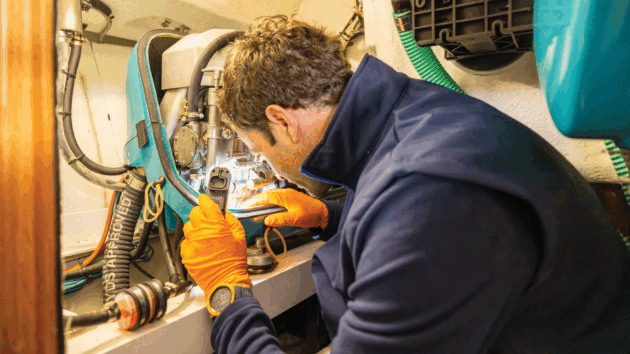
Look for evidence of professional maintenance, service logs, invoices etc. Photo: White Dot Sailing
Dig around for clear service logs and current manuals. “Not only do these give you figures you’ll want to know but they also represent a diligent and proud boat owner. An organised nav station usually mirrors an organised boat,” says Baudains.
He adds: “Check the condition of chain plates, through-hulls and keel bolts. Ensure the chainplates aren’t rusty or eroded, the keel bolts are solid and the hull fittings are high-quality bronze or composite that have been regularly exercised. Beware brown rust streaks running down the hull bulkheads or deck knees around chainplate chain connections.
“Stainless steel rots from the inside out in anaerobic environment (crevice corrosion) – hidden chainplate failure can lead to rig loss.”
And be cautious of fresh paint. “A freshly spray-painted engine block often hides oil/coolant leaks, corroded heat exchangers, or rusted engine mounts. Look beneath the oil pan and around pump seals for fresh drips.”
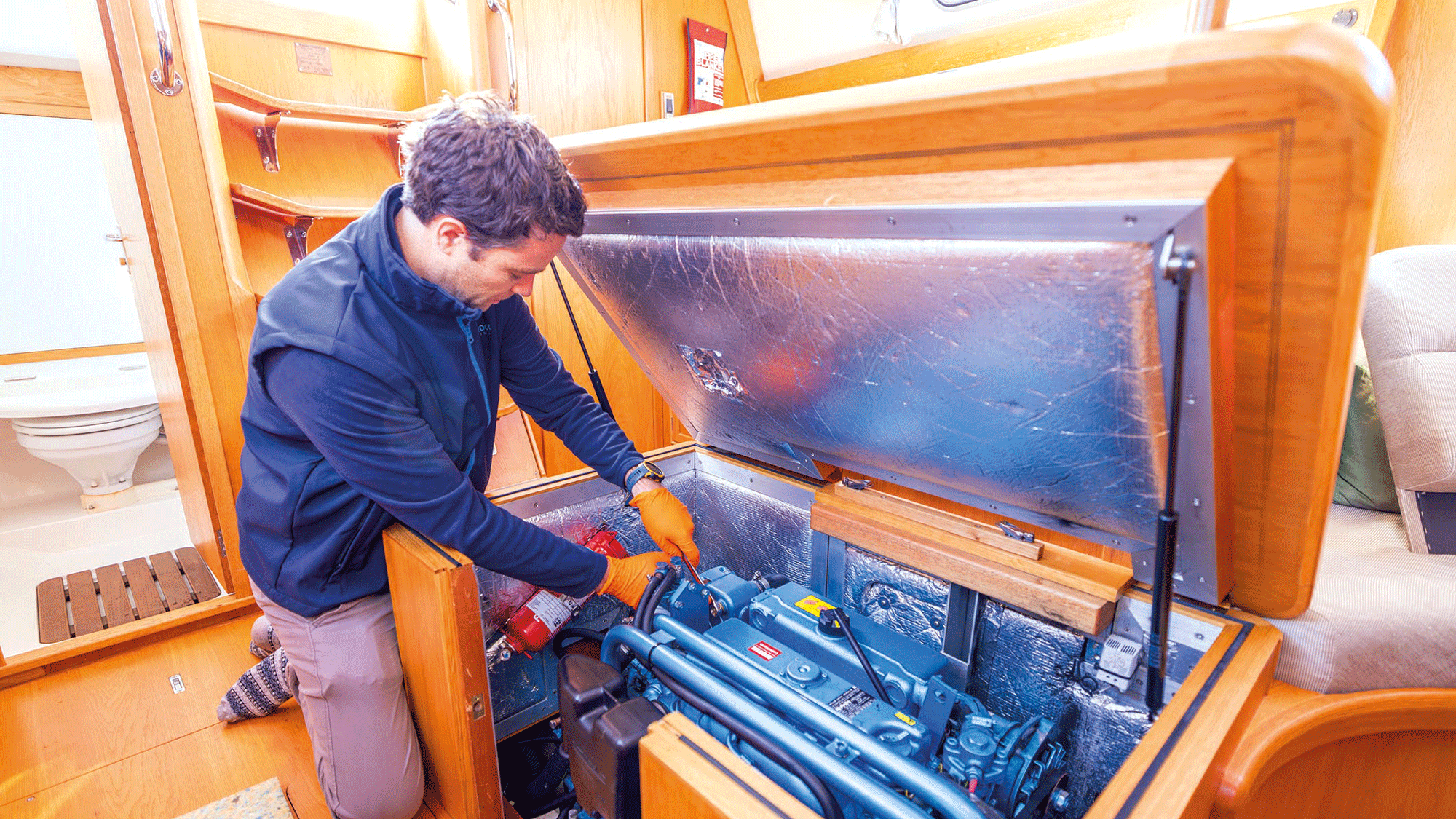
While Dolin advises taking your surveyor along to the trial, Knox-Johnston sees buyers going further. “An increasing trend is people bringing an engineer with them, which I think is a great idea. The engineer spends his time in the engine bay looking for problems.
“A standard sea trial allows four hours; it’s often less. [Having an engineer on board] is a way of making sure everything’s functioning.”
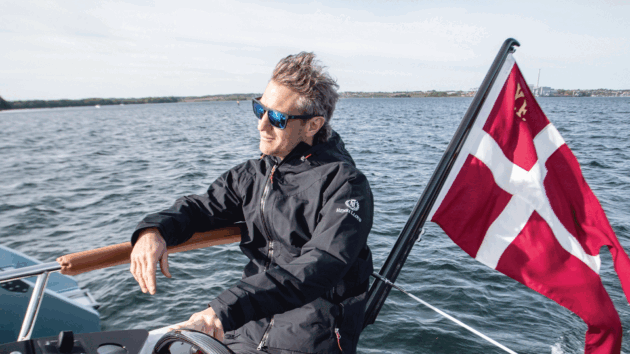
See our boat test archive at yachtingworld.com and YouTube for onboard reports on hundreds of yachts. Photo: Richard Langdon/Ocean Imagtes
Price point
On price, the brokers are calmer than the general mood might suggest. “The market is a little bit soft,” Dollin admits, “but 2020 to 2022 were just silly. Prices have come back to a normal level. They’re not depressed.”
Knox-Johnston saw the usual midsummer lull when anyone with a boat is out using it, “but since then we’ve definitely seen recovery. A few months later people get bored of sitting on their hands.”
His advice on offers is brisk. “We’re obliged to pass on any offer we receive, however derisory. If you like the boat, always make an offer; the worst that can happen is they say no. Get within about 10% of the asking price and you can normally find an acceptable position.
“I tell both parties I’m looking for ‘mutual disappointment’! The seller should feel he’s let go a little too cheaply, and the buyer should think he’s overpaid slightly.”
However, Dollin points out that value isn’t always about getting the lowest price. “If you buy at what everybody feels is a fair price, the seller will spend time showing you where the fuse is and how to bleed the watermaker. Annoy them, and you’ve probably spent £1,000 with somebody else trying to find the problem.”

Oyster brokerage report some buyers now take their own engineer aboard for sea trials. Photo: Christopher Ison
Trust your broker, advises Baudains. “Your broker will have access to information that you are not privy to – such as what comparable boats had sold for compared to list price, and how long they were on the market for. Remember: a fair offer backed up by a clean survey contingency is far more attractive to a seller than a lowball bid with endless strings attached.”
Autumn favours the yacht buyer, Grabau says: “Owners who’ve decided this was their last season would rather sell now than carry the boat through winter. The purchase takes plus or minus four weeks, and the survey produces a job list you’ll split into immediate, medium and long term. Buy now and you can deal with it over the off-season. Wait until March and you’ll spend most of the first season getting sorted.”
“If your plan is to go sailing, don’t sit and doomscroll the news; get on with it. If you keep putting yourself off, you’ll never do it.”
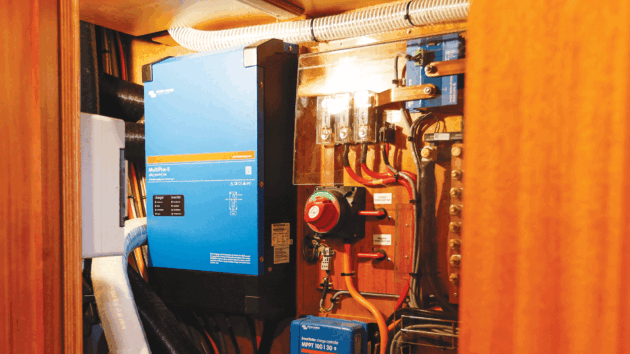
Look for tidy installations, and functional organisation. Photo: Paul Wyeth
Sea trial tips
- An out-of-water survey covers most of the boat. It cannot test the rig aloft or anything that needs water running through it.
- Run every system at the dock first: generator, watermaker, air-con, heads, autopilot under load. This will be most of the trial.
- Bring the surveyor, and consider bringing an engineer (have them in the engine bay while you’re underway).
- A sea trial contract typically allows four hours. Spend the time on the kit, not the view.
- Then sail the boat hard enough to load the rig, and go below while heeled – can you walk around?
Article continues below…
Preparing for an Atlantic crossing: How to budget and avoid expensive late discoveries
The two most oft-cited reasons to join the Atlantic Rally for Cruisers are for the safety element and the social…

Buying a ‘Bulletproof’ Yacht: New and Used Adventure Boat Advice
Those planning to sail to inhospitable places tend to have a strong vision of what is needed from the craft…
On the market: Bluewater buys
Oyster 495 Mayfly, 2023
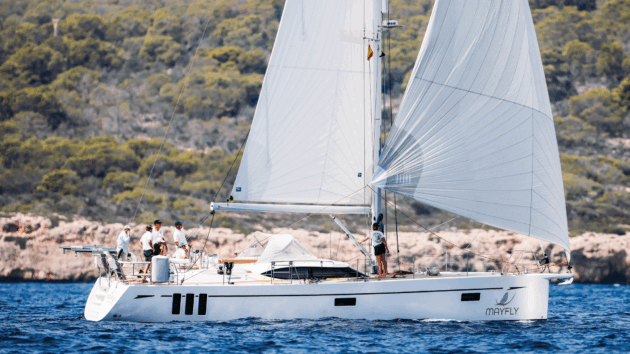
Oyster 495 Mayfly, 2023. Photo: Sailing Energy
Hull six of the 495 series, with in-mast furling, three cabins and an oak interior. A three-year-old example of the smallest current Oyster, sold through the yard’s own brokerage with its service network behind her. Price: £1,320,000 ex VAT, lying Palma. www.oysteryachts.com
Moody 54 Lady Mayfair, 2002
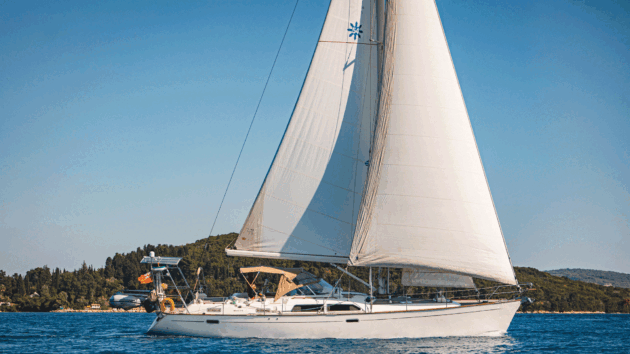
Moody 54 Lady Mayfair, 2002. Photo: Joe Snowdon Photography
Bill Dixon’s centre-cockpit bluewater cruiser, three owners from new and much updated by current liveaboard owners: standing rigging and in-mast main 2023, Coppercoat 2024, lithium battery banks, 940W of solar, Onan generator and a 2021 Schenker watermaker. Price: €395,000 tax paid, lying Dubrovnik.
www.grabauinternational.com
Discovery 55 Dandilyon X, 2011
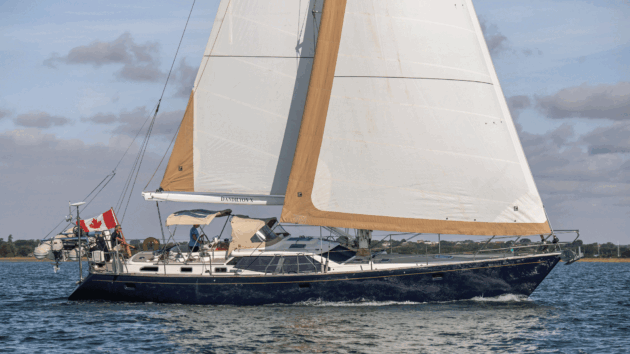
Discovery 55 Dandilyon X, 2011. Photo: Berthon International
Ron Holland raised-saloon design, push-button sailing from a protected cockpit. Current owners have spent five years Mediterranean cruising, with new topsides, standing and running rigging, saloon windows and tender added along the way. Berthon has sold her before and knows her. Price: £450,000 plus VAT, lying Lymington, UK. www.berthoninternational.com
Beneteau Oceanis 48, Blumax, 2014

Beneteau Oceanis 48, Blumax, 2014. Photo: PWS Yachts
Blumax is a privately owned, two-cabin Oceanis 48 that has never seen charter service. Upgraded extensively between 2024-2026 with a brand-new lithium battery bank, watermaker, and air conditioning, she offers a deep, protected cockpit and owner-focused layout – ready to set sail immediately. Price: €264,900 EU VAT paid, lying Malta. www.pwsyachts.com
Hallberg-Rassy 44 Tam Lin, 2019

Hallberg-Rassy 44 Tam Lin, 2019. Photo: Tam Lin/Transworld Yachts
One owner from new, who completed a two-handed circumnavigation in 2025. Generator, Spectra watermaker, new mainsail in 2025, genoa and Blue Water Runner in 2024, and rerigged. A veteran cruiser with everything already on board. Price: £549,950 tax paid, lying Portsmouth UK. www.transworldyachts.co.uk
Regina 40 Eoji, 2017
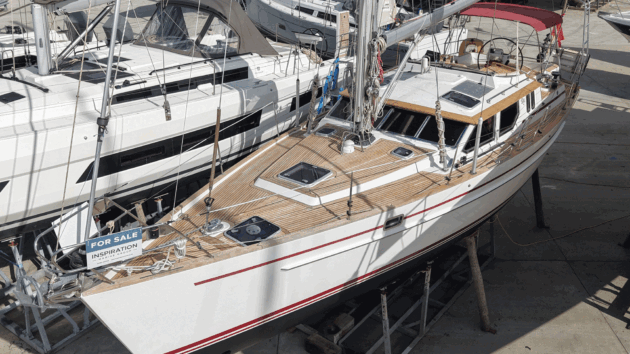
Regina 40 Eoji, 2017. Photo: Inspiration Marine
Swedish pilothouse yacht set up by her owner for bluewater liveaboard cruising: cockpit arch with solar, Hydrovane, Code 0 and gennaker on furlers, Iridium GO!, 600lt water tankage, Yanmar 57hp (2,047 hours, saildrive seal replaced in 2024). Traditional bluewater cruiser for a couple. Price: €349,990 EU VAT paid, lying Southampton, UK. www.inspirationmarine.co.uk
Kinetic KC54 Happy Together, 2023
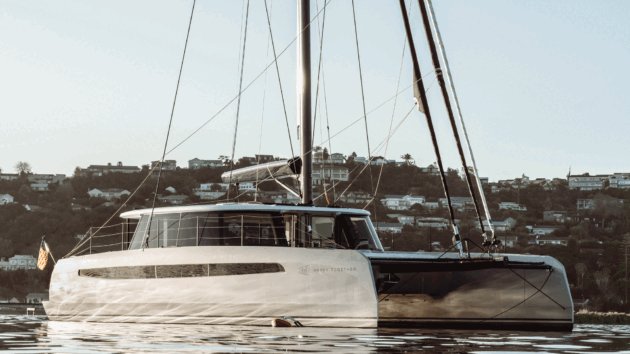
Kinetic KC54 Happy Together, 2023. Photo: Grabau International
Carbon epoxy performance catamaran from Knysna – one owner from new, a Caribbean season and a Pacific crossing to New Zealand behind her, with a €300,000 upgrade programme since. North 3Di sails, new main in 2026, 1,200Ah lithium, 2.6kW of solar. Price €2,400,000 tax not paid, lying Genoa. www.grabauinternational.com
Bali 4.6 Open Space, 2024
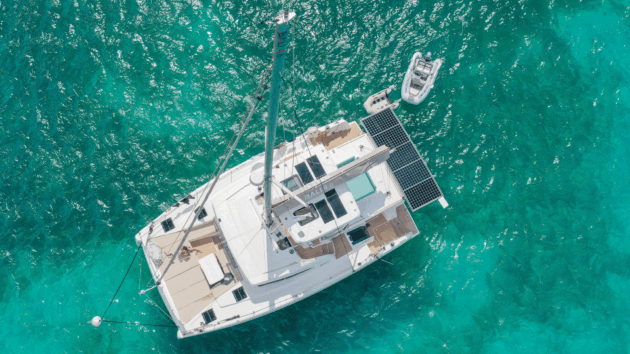
Bali 4.6 Open Space, 2024. Photo: PWS Yachts
Unlike many cats, this 2024 Bali 4.6 has been strictly owner-maintained as a full-time liveaboard in the Caribbean. Featuring massive solar capacity, a dedicated watermaker, and upgraded propulsion, she offers vast living space, and self-sufficiency for tropical island-hopping or tradewind crossings.
Price $995,000 tax paid (Canada), lying St Maarten. www.pwsyachts.com
Read between the lines
Things to look for in a brokerage listing:
1. Dates, not just kit. When were the standing rigging, saildrive or shaft seal and batteries last replaced? A big system item like a generator or watermaker fitted 15 years ago is not the asset a four-year-old one is. Look for dates in brackets.
2. Well thought-out deck hardware. “You can often tell the quality of a sailor by how their deck is set up,” says Jean-Paul Baudains. “Zoom in on photos of the deck and see if it’s how you would go to set up your sailing boat.”
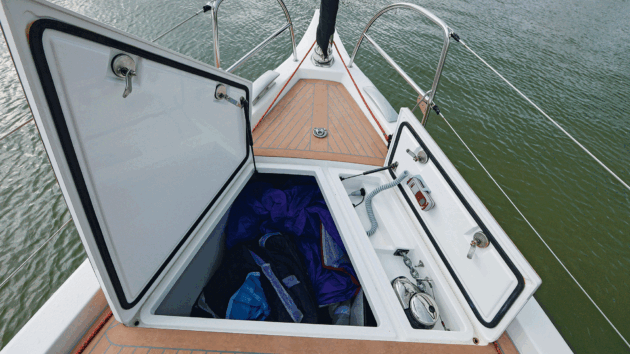
Get into the sail locker: how much wear have key sails had? Photo: Paul Wyeth
3. Sails with a history. A cruising chute that has done a circumnavigation has done its work. An unused one on a coastal boat could be a bargain.
4. Teak. On a 20 years-plus yacht, a tired teak deck can be the single biggest bill.
5. Retrofitted lithium. Brokers are wary of it. A good installation will show in the price; a cheap one will show later.
6. Evidence of commitment. A recently replaced engine or rig, invoices on file, service logs. You are buying the owner’s spending as much as the boat.
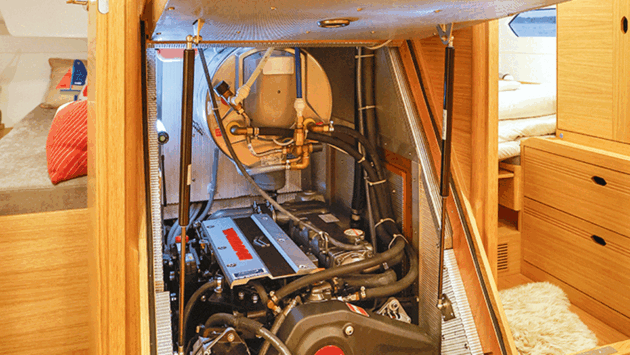
Check the engine running while underway if possible. Photo: Paul Wyeth
7. What’s missing? Beware a listing with little detail and few pictures. Look for unedited video walkarounds.
8. VAT. If planning to sail long-distance, where the VAT was paid matters less than buyers assume. UK-paid has value in the UK; keep an open mind and ask advice.
 If you enjoyed this….
Yachting World is the world’s leading magazine for bluewater cruisers and offshore sailors. Every month we have inspirational adventures and practical features to help you realise your sailing dreams.Build your knowledge with a subscription delivered to your door. See our latest offers and save at least 30% off the cover price.
Note: We may earn a commission when you buy through links on our site, at no extra cost to you. This doesn’t affect our editorial independence.