



Offshore racer Michaela Robinson talks to Andy Rice about how to make the most out of a delivery passage
A delivery trip, at its most basic, is simply about getting the boat from Point A to Point B. However, according to Michaela Robinson, offshore delivery trips offer the perfect training ground for sharpening both handling and tactical skills.
Robinson secured an internship with 11th Hour Racing during the 2023 Ocean Race, and was then selected from 120 applicants to join the elite, all-female UpWind by MerConcept Ocean 50 campaign where she works today.
A key part of being a member of such teams is sailing as delivery crew, either with or without the race team on board.
Free from the frantic, tunnel vision of a race, deliveries offer the luxury of time and opportunity to try new things. It’s a good chance to test onboard systems, master advanced navigation software, and rotate through unfamiliar crew roles.
But when handling high-performance offshore multihulls like the Ocean 50 trimarans, you can’t take too many risks. In the past year, four of these frisky trimarans have capsized.
Sailing these platforms short-handed on a delivery requires a shift in mindset from pure speed to boat preservation. At the same time, provided you’re sensible you can still hone your racing skills as you’re going along.
There’s no substitute for time on the boat and, according to Robinson, passage sailing can still usefully add to your all-round boathandling and navigating skills. Here are her five tips for successful delivery trips:
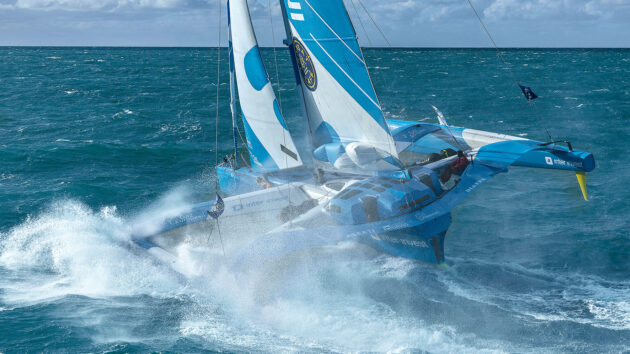
the Ocean Fifty trimarans had a dramatic start to the Transat Café l’Or in 2025. Photo: Jean-Marie Liot/Alea
Shift your mindset
The most critical adjustment I have to make when moving from a race to a delivery is purely mental. It’s a shift from speed to preservation.
I have to constantly remind myself that this is not a race, and that the main purpose is to get the boat and crew safely to our destination.
Rather than pushing for speed, the focus in stronger conditions is on slowing the boat down and keeping things at safe, stable sailing angles.
For example, when you’re on a reaching course, it’s important to avoid hot, aggressive wind angles between 90° and 110° – the so-called multihull ‘Death Zone’ – because this puts you in unnecessary jeopardy.
The main objective is always to bring the boat through the delivery in the best possible condition with minimal wear and tear, creating the minimum amount of repair or maintenance work.
Article continues below…

5 tips: Vendee Globe veteran explains how to face the fear and do it anyway
Facing your fears is something that challenges every sailor, but none more so than those taking on single-handed offshore racing.…

5 tips: faster foils – make sure your keel and rudder are in tip top condition
If you want to go faster, which would you choose: a new headsail or a fully faired and professionally finished…
Reef early
When you’re sailing short-handed on a delivery, reacting to the weather as it happens is not good enough; you have to anticipate it.
High-performance multihulls accelerate so rapidly that trying to manage your sail area after a squall hits becomes exponentially more dangerous and difficult.
Use the routing software to constantly look ahead and prepare the boat well in advance. If the forecast is for stronger winds, make sure you tuck in a reef or drop a headsail an hour early, even if it means sacrificing a few knots of speed in the short term.
On a delivery, being under-canvassed is just good seamanship. It prevents high-load breakages and keeps you firmly in control.
Reaching is inherently one of the most volatile and dangerous points of sail on a high-speed multihull. Because of this, before we go into a headsail change, it can make life on the foredeck much less hazardous if you steer deep downwind to significantly drop the apparent wind speed and calm the motion of the boat.
When it comes to reefing the mainsail, the safest method is to keep the jib in to maintain an element of forward motion, while heading upwind just enough to let the mainsail flap and flag safely. This allows you to lower the halyard and secure the reef lines with minimal drama.
Practising these processes on a delivery builds vital muscle memory that will help you out when it really matters in the heat of a race.

For best performance an autopilot needs to be constantly monitored and adjusted. Photo: Paul Wyeth
Train up the autopilot
Modern autopilots are incredibly intelligent. In challenging sea states, they often steer the boat better than a human could.
During a delivery I use the time to practise instructing the autopilot to bear away and execute gybes.
To ensure a clean, decisive turn, I manually programme an extra 10° onto the preset gybing angle. This forces a bold, smooth bear-away.
Go for a low-ego team culture
The safety of a short-handed crew depends on trust and transparent communication.
Because our delivery crews often feature varying levels of experience, it’s important to create an environment where everyone feels comfortable speaking up.
The biggest problem people can face out here is overconfidence. A sailor who tries to tough it out through exhaustion or hides their discomfort in heavy weather poses a severe risk to the entire boat.
It’s good to build a culture where there are absolutely no stupid questions, and where we actively alert each other the moment we feel overwhelmed.
Also, when less experienced crew are on watch in rough conditions, the more experienced sailors must remain awake and on standby, ready to step in the moment a situation looks like it might deteriorate.
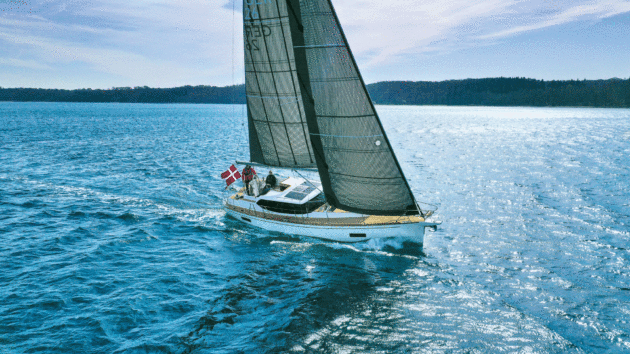
Make the delivery your test lab
Because the strict, high-stress pressures of the racecourse are completely removed, a delivery gives you the ideal opportunity to systematically test adjustments and learn the boat’s nuances. While we typically protect our premium racing sails by using an older inventory on deliveries, the overall sail plan and control layout remain more or less the same.
Use the long offshore hours to experiment: ease the jib slightly, adjust the inhauler, or alter the traveller position, and closely observe how each tiny tweak impacts your speed, balance, and feel.
Sailing on short-handed deliveries forces all of us out of our specialised racing roles. You can spend hours mastering the mechanics of the bow or managing the navigation software under the guidance of someone more expert, which ultimately makes you a far more rounded crew.
Deliveries are also the ideal time to review and practise your emergency fail-safes. For instance, in heavy squalls where a high-speed gybe carries an unacceptable risk of damage, I never hesitate to execute a ‘granny tack’ by tacking around rather than going for a higher-risk gybe downwind. While it might feel like a conservative cop-out to racing purists, it is a low-risk, highly effective seamanship manoeuvre when sailing short-handed.
It’s also important to drill your MOB [Man Overboard] process for short-handed crews. For example, if a crew member goes overboard, the immediate priority for whoever is at the helm is to execute a massive, unmistakable course change – such as a sharp bear-away or a sudden tack – to carve a distinct tracking mark onto our navigation plotter. This creates an instant visual reference point on the screen.
I find this is more reliable than scrambling to click a digital MOB button while desperately trying to keep your eyes on the person in the water. And it’s a great routine to practice.
 In association with Musto…
This summer, Musto will be front and centre of the UK sailing season, supporting athletes, teams and events across every level of the sport.
The weekend of 25-26 July sees the Emirates Great Britain Sail Grand Prix kick off in Portsmouth.
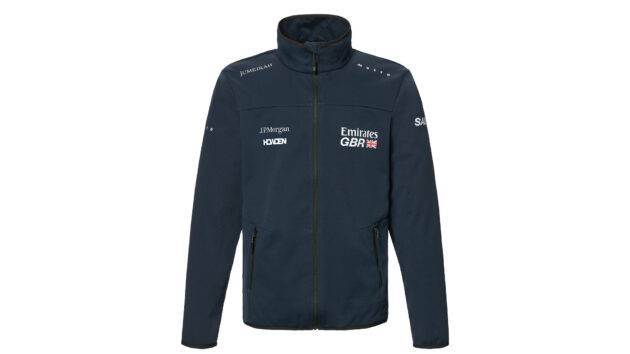
As Official Technical Clothing Partner to the Emirates Great Britain SailGP Team, Musto has launched an exclusive range of team merchandise, allowing fans to wear the same Musto designs inspired by the athletes on the water. The range is available online and at Musto’s flagship stores in Portsmouth and Cowes.
The same weekend will also see the Clipper Race fleet complete its 11-month circumnavigation, arriving back in Portsmouth having crossed some of the world’s most demanding oceans in Musto kit.
A week later the bicentenary of Cowes Week gets underway. As Official Clothing Partner Musto will release a special edition 200th Anniversary T-shirt, available exclusively at the Cowes Musto store.