




Entering the famous ARC (Atlantic Rally for Cruisers) provides a hard deadline for skippers to face ocean preparation
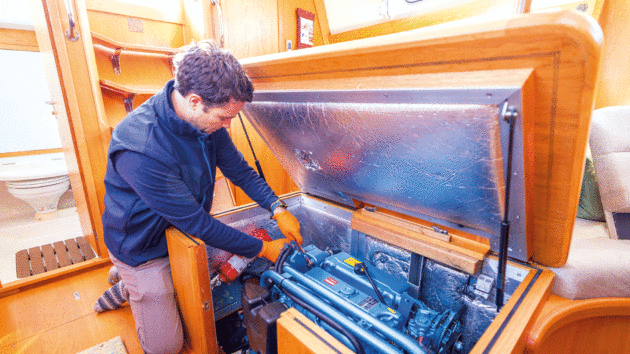
The two most oft-cited reasons to join the Atlantic Rally for Cruisers are for the safety element and the social side. But a third reason is equally key: it’s a hard deadline. The ARC rally has a start date, and a schedule, and so begins the countdown to your crossing.
You don’t have to join a rally to fix a departure date. Sometimes the deadline sets itself – due to seasonal weather patterns, or personal reasons – but there will be a day, or a week, when you have to just go. So if you know when you’re leaving, how long do you need to prepare? Chances are, you’ll underestimate it.
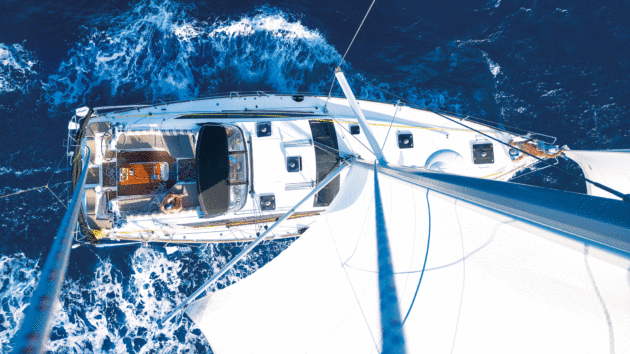
Photo: Tor Johnson
Ahead of this year’s ARC, Will Spencer from White Dot Sailing surveyed 70 participants to ask how long their preparation took, and what they wished they’d known before starting the process. White Dot Sailing provides maintenance, prep, consultancy and coaching services.
Spencer conducted the survey working with organisers World Cruising Club to identify how they could both best help sailors planning for future ARCs. But their findings are relevant to any cruiser planning a major passage.
How ready do you need to be?
The ARC skippers surveyed included a mix, from those who’d been planning an ARC for a decade, to others who signed up last minute. Some had owned their boats for decades, others bought them specifically for the trip. The most common scenario was owners who had their yacht for 3-5 years prior, and decided to do the ARC on a similar time frame.
Generally most skippers reported feeling prepared, but accepted that included compromises, rather than having everything 100% as they wanted. Around half said they were not fully prepared when they set off on the delivery to the start, with many planning to complete outstanding jobs either en-route or in Las Palmas.
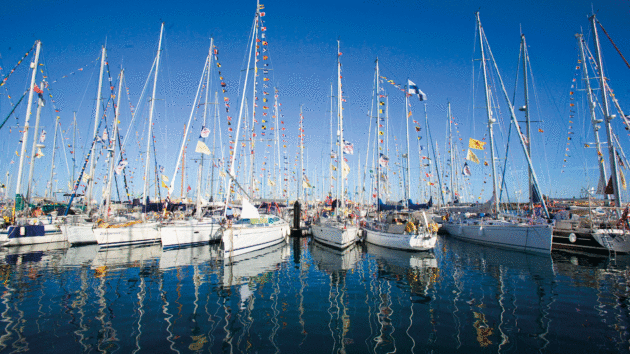
‘50% of boats were not ready by the delivery’ Photo: Richard Langdon/Ocean Images
Others had unexpected jobs crop up on the way. Several reported concerns about setting off with new equipment which was untested (eg watermakers, generators, parasailors).
Regardless of how long they’d had their boat or dreamt of doing the ARC, the majority of skippers surveyed felt with hindsight that preparation takes 12 months or more.
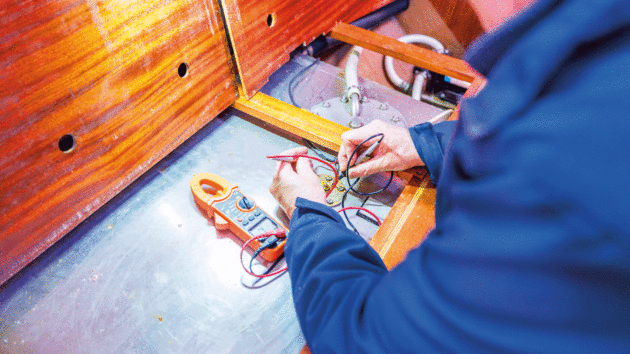
Calibrating tank gauges is important ahead of long distance cruising. Photo: White Dot Sailing/Maritime Filming UK
Where to start
Whether you’re upgrading a yacht that you’ve used for coastal sailing, or preparing a new boat, it can be a daunting proposition. The temptation is to think of ocean readiness as a shopping list, adding on equipment such as a watermaker, liferaft etc. But, Spencer explains, that’s not the first thing to focus on.
“I always start with three key pillars of the project: the crew, the boat and the timeline,” he says. “If you don’t look at it from all three perspectives, you can’t really make good decisions.
“Ideal planning starts with knowing what you’re actually trying to achieve, even if the details aren’t fully confirmed. For example, if you’re just participating in the ARC, then spending a season in the Caribbean and shipping back to the UK, your decisions can be based on that mileage and level of wear. ‘Will this piece of kit last 5,000 miles?’ and plan accordingly.
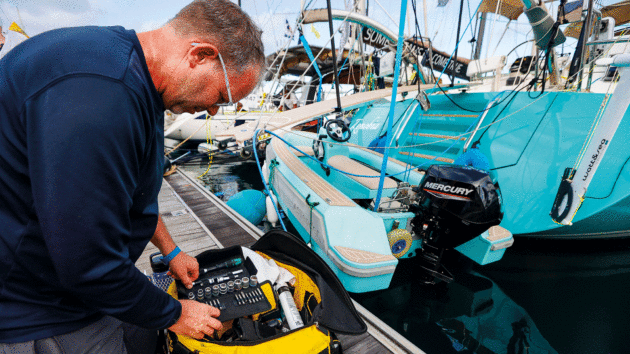
if you need warranty or servicing work in Las Palmas be sure to book it well in advance. Photo: Paul Wyeth/WCC
“But if you’re going further – maybe crossing the Pacific or going round the world – then the questions change. Does that equipment have the service life to get you halfway round the world? What maintenance needs to happen before you leave? What preventative work will you need to do along the way?
“This approach also applies to crew – if you are doing a single ARC crossing, you only need to prep one set of crew. But if you are planning on cruising as a family for the season then sailing back, you need another set of crew, so you need people to commit and ideally train together on the boat before it leaves.”
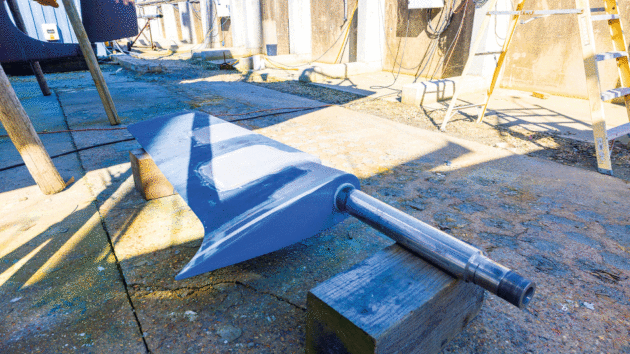
Plan when a rudder needs to be dropped for any repairs or stock checks. Photo: White Dot Sailing/Maritime Filming UK
Aim to work in reverse, not just from the departure date, but your end goal. “Understand what you’re trying to do, then work backwards. The preparation timeline sits inside the bigger project timeline.
“What often happens in reality is that people decide a bit more arbitrarily what they want to upgrade. But they don’t always look at the whole boat – the rudder, the engine, the drivetrain, the rig and sails. They focus on what feels achievable in the prep window, rather than the complete system.”
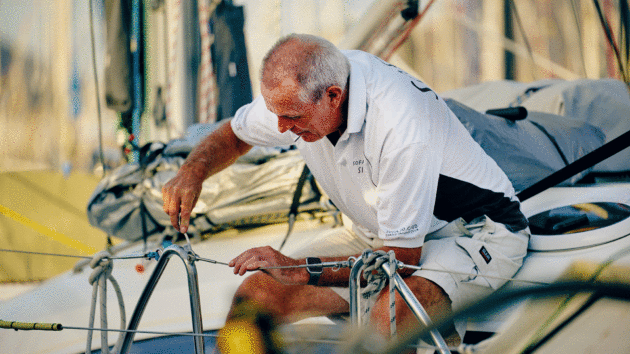
Photo: James Mitchell/WCC
Stretching the budget
Less than half of the skippers surveyed had set a preparation budget at the start. Of those that did, about 50% (ie 25% of the total) feel they got it about right. Three-quarters either underestimated the costs, went over budget or spent without really having a plan. Those that were happy to quote figures tended to be close to their budget, coming in at €60,000-100,000.
Once you know what your big picture plans look like, you can prioritise what to spend on. “Your core spend should go on the fundamentals,” says Spencer. “Hull, rudder, engine, rig. Electrical systems that work properly and safely – not necessarily upgrades, just solid. Safety kit. And sails, because they’re your primary propulsion.
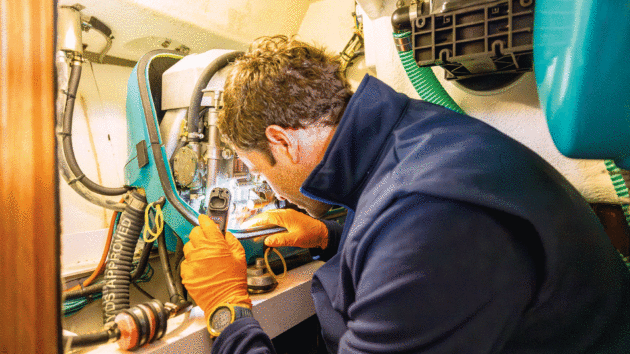
Inspecting the Mastervolt Whisper generator. Photo: White Dot Sailing/Maritime Filming UK
“If budget is tight, you’ve got to get the big picture of the boat’s health first. Then apply the funds in priority order.
“Sometimes people jump to upgrades when actually extending the life of what you’ve got is the smarter move. Lithium batteries are great, but they often trigger other electrical modifications. Simply replacing your existing battery bank for one ocean crossing might be the more sensible route.
“If you are looking at your budget for the whole trip as 100%, probably 60% should be allocated to the prep stage. You need another 10-15% for emergencies and spares. The rest is what is available for actually doing the trip.
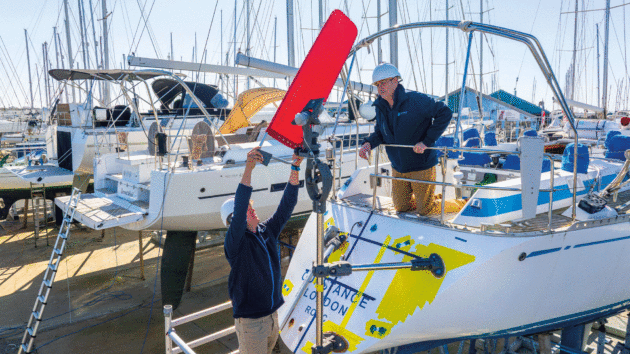
Fitting a Hydrovane auxiliary steering system to a Swan 441 ahead of a World ARC. Photo: White Dot Sailing/Maritime Filming UK
“If you don’t put enough into the prep stage, it will have a knock-on effect on spares and repairs later and reduce your ‘fun’ fund. For example, if you don’t drop your rudder to check and service it during your initial prep, you might end up doing the same thing in the Caribbean where it will probably cost more – at the very least you are paying for another lift out.
“You might not be able to get replacement parts locally and need to ship them in, often paying import duties too. Sometimes it feels like you are spending a lot of money at the beginning, but you are saving money, and stress, further down the line.”
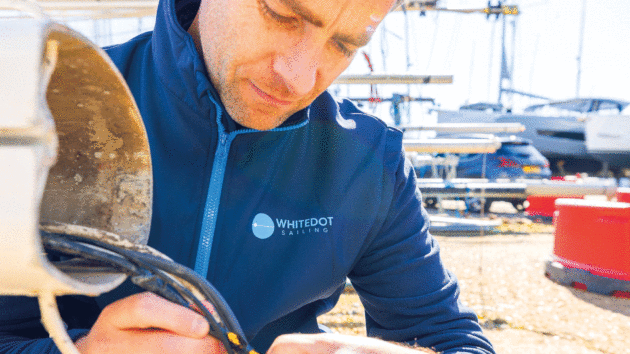
In-mast wiring checks while the rig is down. Photo: White Dot Sailing/Maritime Filming UK
Plan to save
Planning out a full schedule of work in advance can stretch your budget further, explains Spencer: “With a boat we are looking after, we’d start by scoping out everything that needs doing. If we know we’re going to be taking the rig out and lifting the boat to Coppercoat it, we would plan a timeline so the boat spends as little time [in the marina] as possible, as berthing costs are higher.
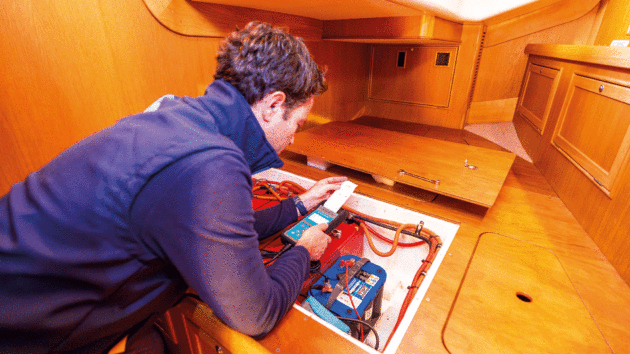
Checking the engine battery state of health with a conductance battery tester. Photo: White Dot Sailing/Maritime Filming UK
“As soon as the boat arrives, we’d do an engine service in the water, so any faults we find can be fixed during the 3-4 months in the yard. We’d also arrange the rig to come out just before the boat is lifted, so that the rig is on the ground for the riggers to work on.
“Then we’d get the boat placed straight into the blast bay to clean the hull down, saving another move later. We sometimes book a lift over lunchtime, so that the yacht is sat in the slings for longer – handy for boats with really long rudders which can’t be removed once the boat is in the cradle. While the crane guys are on their lunch break we whip out the rudder – saving an extra lifting cost later.”
Article continues below…

40 years of the ARC: The evolution of a transatlantic icon
Back in 1985 Margaret Thatcher was in Downing Street, Mikhail Gorbachev in the Kremlin, and a world-famous pop star was…

Buying a Yacht for £250,000-£500,0000: Inside the World of ARC Sailors Buying Their Dream Boat
The average house in the UK today costs around £290,000. But rather than buying a house, you could spend that…
Power requirements
Any installations requiring power should be factored in at an early stage. “Run a power audit in two modes, at sea and at anchor. Once you’ve worked out your power requirements, you can then successfully balance that with power regeneration. We often see yachts with a large imbalance having to run engines or generators extensively, creating more maintenance and wear.”
You also need to be realistic about the existing maintenance level of your yacht.
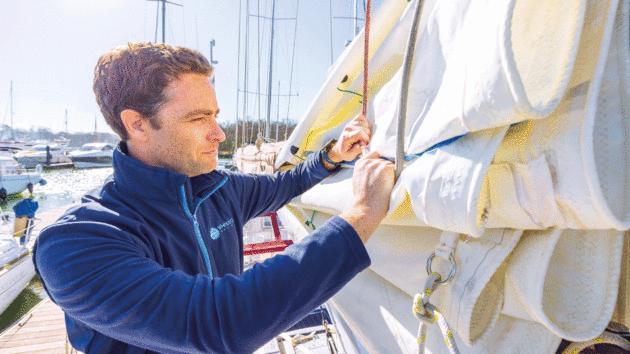
Halyard chafe needs checking regularly during shakedown sails and passages. Photo: White Dot Sailing/Maritime Filming UK
“We’ve got a project where the owner is preparing for three years of circumnavigation,” explains Spencer.
“So we’re really looking at 15 years of accumulated maintenance – rigging, rudder, plumbing, things that don’t get looked at every season – plus annual servicing, plus three years of preventative work so he doesn’t have to deal with it in the Canaries, the Caribbean or a remote Pacific island.
“That’s often a shock to owners. It’s not just about this year’s antifoul and engine service, it’s the backlog of jobs and the future preventative work combined.”
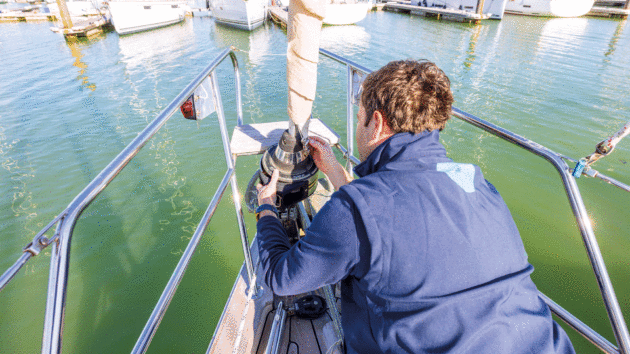
Checking headsail furler for drum damage and line alignment. Photo: White Dot Sailing/Maritime Filming UK
Avoid time-sucks
If you walk the docks of Las Palmas ahead of the ARC you will find yachts in all states of readiness, some having simply run out of days. So what are the biggest time traps?
“Starting late is the biggest one,” says Spencer. “Once you’re behind, you’re at the back of the queue for everything. Contractors are busy. Jobs get squeezed in. Installations are done to tight deadlines, which means it’s more likely that things won’t function properly and there’s less time to test and recalibrate, so you end up leaving late.
“Then there’s a problem when you are underway and you need to divert somewhere to get it rectified, you get stuck waiting for parts… Time pressures tend to have a cumulative effect. Starting early and allowing some slack in the plan is really helpful.”
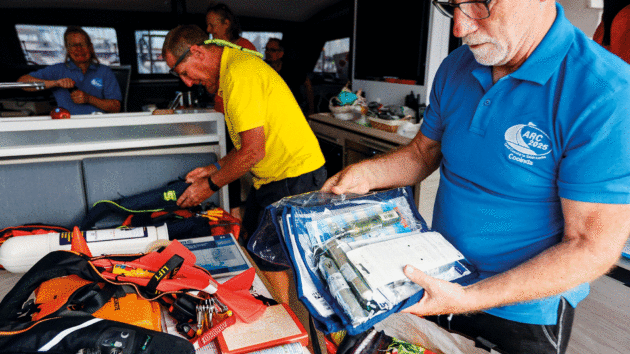
The ARC has stringent safety requirements.Photo: Paul Wyeth/WCC
Seasonality is also key. “January to April in the northern hemisphere is peak demand. If you can book contractors in November or December, you might avoid price rises and you’ll secure a slot in their schedule,” adds Spencer. “Sailmakers are a classic example. If you go in January to order, you might not see the sail until May. But if you order in November or December when they are quiet, you often get a better price and quicker turnaround.
“Logistics can also eat time – especially post-Brexit with customs delays. And weather-dependent jobs can cause real hold-ups if you don’t build enough margin.”
Another time trap is dealing with issues that could have been identified earlier.
“Again and again we see the most expensive problems aren’t dramatic failures – they’re late discoveries. It’s finding a damaged shroud when you’re already in Las Palmas, or realising your insurance requires a hull survey when your boat is back in the water. None of those are particularly complicated, but if they’re discovered too late they can impact the schedule and usually cost more to fix quickly.
“The key to good preparation is getting visibility early – understanding every system on the boat well enough that you know what needs attention before you leave.”
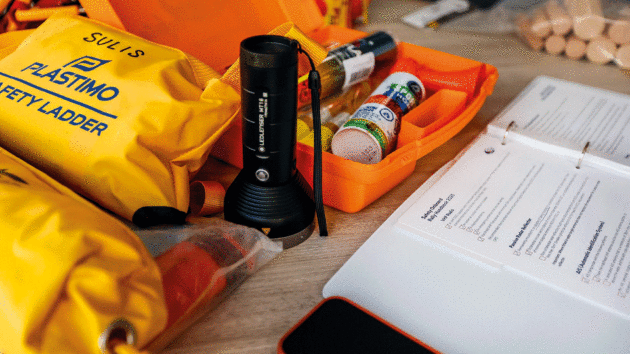
A virtual safety check before arrival gives extra time to make any upgrades or updates needed, before the final sign-off in port. Photo: Paul Wyeth/WCC
What spares to take
“By the time you have finished the yard period, you should have a good idea of what you’ll need to take with you,” suggests Spencer, but notes this is different for each boat and skipper’s expertise and confidence. “Ideally you don’t want to be carrying around a lot of stuff that you can’t fit yourself, but it can be helpful if you have bespoke or unusual parts, which might be difficult to source.
“It is always worth taking engine spares like oil filters, impellers, belts etc, even if you don’t know how to fit them because you’ll always find a mechanic who can.
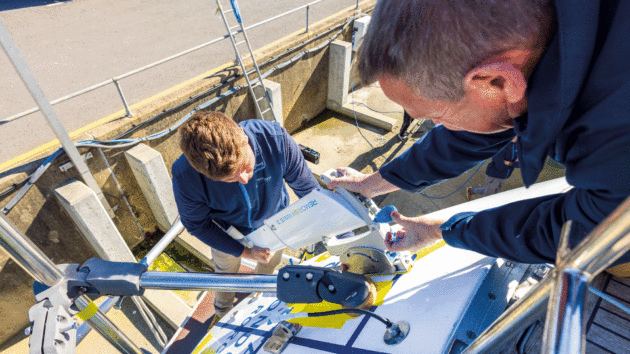
Allow plenty of time to test items such as hydrogenerators or watermakers. Photo: White Dot Sailing/Maritime Filming UK
“Redundancy really depends on how you have set up the boat. For example, if you already have several ways of generating electricity in addition to your engine, such as solar panels and a hydrogenator, then you already have several levels of redundancy and even if one of those went down, you’d still be able to charge your batteries.
“If you were solely reliant on your engine, you’d want to carry a lot more engine spares and extra oil, as you’ll also be putting more hours on the engine.”
Shakedown sails
When scheduling, be sure to allow enough time for delivery and shakedown sails, particularly if you’ve made a lot of upgrades or changes – 33% of skippers surveyed experienced issues with work completed, requiring further repairs/modifications.
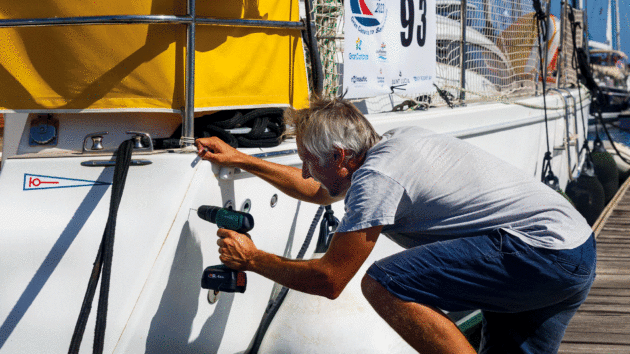
Tthe pontoons in Las Palmas are always busy with skippers finishing final preparations, and many are often willing to share expertise and tools. Photo: James Mitchell/WCC
“Shakedown sails are absolutely vital,” says Spencer. “If you break a delivery into 400- to 500-mile legs – say three nights at sea – it’s a brilliant way to test everything. Crew dynamics, charging systems, water usage, fuel gauge accuracy. Day sailing doesn’t expose weaknesses in the same way.
“If you’ve always plugged into shore power every night to charge up your batteries, you don’t really know how long they last. The same applies to calibrations of fuel and water gauges; if you keep your tanks topped up and shower ashore, you never really know how accurate they are. A few days offshore is a great way to see how your systems really perform.
“A proper delivery passage works the whole boat. Ideally, split it into sections so you can tweak things between legs.”
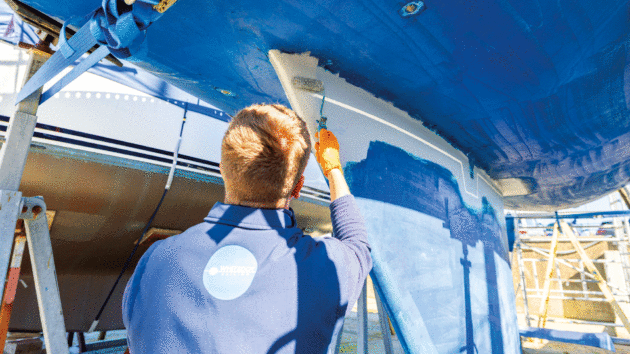
Painting over keel repairs – best utilise time when the yacht will be in a cradle. Photo: Photos: White Dot Sailing/Maritime Filming UK
If delivering down to the ARC start, he adds: “It’s really valuable to get your full Atlantic crew on at least one of those legs together, so you can see how the personalities and watch systems actually function.”
Of crews surveyed, just 22% had their full transat crew on the delivery to Las Palmas.
To avoid knock-on delays, you need to be smart with your timings. “Crossing Biscay between mid-June and early September statistically gives you the best weather window. If prep delays push you later, you’re more exposed to low pressure systems and weather delays.
“I would recommend aiming to arrive in Las Palmas for the rally opening. But I would aim to be in the Canaries at least a month before. Worst case scenario, this gives you time to fix any issues from the delivery and find local services away from peak intensity of the rally start. Best case, you have a bonus month of cruising in the Canaries, or you can fly home for a few weeks before setting off.”
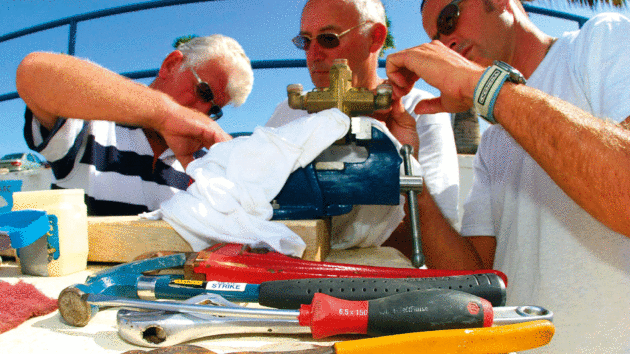
Photo: Richard Langdon/Ocean Images
Beyond the ARC
The jobs list doesn’t end when you cross the start – or finish line. “There’s so much focus on getting to the start line,” says Spencer. “Everyone arrives in the Caribbean and heads for a rum and coke, then goes off cruising for Christmas. But an Atlantic crossing puts a huge amount of wear on a boat.
“I’d say one crossing is equivalent to two average UK seasons. The boat is sailing 24 hours a day, constantly under load. Most people underestimate the amount of wear and tear they’ll experience compared to coastal cruising where you’re probably only doing 4-6 hours per day.
“From the moment you depart you need to be thinking about ongoing maintenance. As soon as you arrive in the Caribbean you need to check everything, making sure it’s all still functioning properly, and making sure any small issues don’t become big ones.
“Preparation doesn’t stop once you’ve set off.”

Local riggers will be busy ahead of the ARC start, as will the lift-out facility at Rol Nautic. Photo: James Mitchell/WCC
Crew preparation
Crew planning should run parallel to the boat project – not afterwards, says White Dot Sailing’s Will Spencer:
- Build your crew pool early. Get them interested in the preparation if you can. I know it’s not always logistically possible, but the more they’re involved, the better they’ll understand the boat set-up.
- Some skippers focus all their effort into the boat prep, but find they’ve neglected the crew element, and haven’t been able to arrange a crew in time. Then there are also those who have dreamt about doing a crossing for years, but the wrong crew dynamic on board made it a different experience than they were hoping for. Of those surveyed, 12% still hadn’t finalised their crew in Las Palmas.
- Compatibility and enthusiasm are key. They need to want to do it. Once they’ve committed, you need a training plan based on the skills required on board 24 hours a day.
- You need watch leaders. You need people who are confident in the dark. You need overlapping skills – maybe one mechanical, one electrical, one navigation-focused. Find out where each crewmember’s skills and interests lie, and work out what the gaps are. Then you can create a plan around that. At White Dot Sailing we have developed a crew matrix to map this out for each crewmember, and make planning training more straightforward.
- Shore-based training like sea survival and first aid lend themselves to being completed over the winter, but there also needs to be practical onboard training — man overboard recovery, fire procedures, what to do in a dismasting. This blends theory with also knowing where everything is on the boat. Of the survey sample, 88% had included overnight passages within their crew preparation (though 12% hadn’t!).
- Make sure the boat is set up for the planned number of crew. If you normally sail as a couple, but will have five on board for the crossing, the set-up needs to reflect this.
- Plan training sessions or shakedown sails well in advance. People’s diaries fill up quickly.

Sail repairs by Alisios, opposite the marina in Las Palmas. Photo: James Mitchell/WCC
Don’t leave without
‘Non-negotiable’ prep list:
- Core systems: hull, rudder, rig, sails, engine and electrical systems. They have to be sound and proven before you set sail on longer passages.
- Safety kit is non-negotiable (and for the ARC, subject to a mandatory check). That includes an in-date liferaft, properly serviced lifejackets, EPIRB, man overboard kit, flares, bilge pumps, VHF and some form of satcoms (ability to send and receive an email on the boat). I’ve opened brand-new lifejackets still in their packaging and found loose cylinders or out-of-date cartridges. So it’s not just having the kit – it requires checking properly.
- Sea survival and proper first aid training should be considered non-negotiable too, particularly for the core crew. Many one-day first aid courses focus on how to stabilise someone until an ambulance comes – but at sea, an ambulance isn’t going to come, so consider a more comprehensive course such as the four-day MCA Medical First Aid.
- Remember, ultimately the skipper is responsible for the yacht, that the crew are ready and the boat is fit for sea.
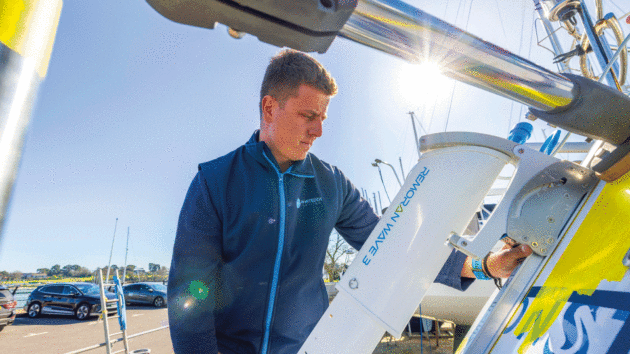
If adding a hydrogenerator and windvane, you’ll need to plan fittings and brackets with care. Photo: Photos: White Dot Sailing/Maritime Filming UK
Case Study – Shawe Thing
Clive Yarwood’s experience was typical of many owners. Yarwood bought his 2013 Hanse 575 in 2020, having progressively owned larger boats. Going into the ARC, he had more than 5,000 miles and 12 months of sailing time aboard the yacht.
He had known what he wanted to add or upgrade for the crossing (watermaker, new main, hydro-generator, parasailor and new chartplotters). Not all items were tested before he set off, but his ‘delivery’ sail began from Greece, via Sicily and southern Spain, en route to Las Palmas.
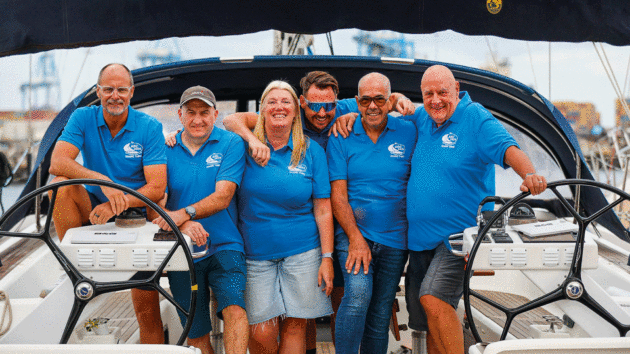
Photo: Paul Wyeth/WCC
On arrival, repairs were required to the generator and sails, and he felt it prudent to have the fuel polished before the crossing. Late additions included installing a tricolour masthead unit (an ARC safety requirement), a spare spinnaker halyard, and a second autopilot ram for redundancy. Bojan Michiels van Kessenich of Parasailor also spotted that the blocks had been under-spec’d, and so were upgraded.
Clive planned to sail with his wife and son, plus three crew, sourced from Oceanlink. Over three deliveries he had trialled seven crew, but only one was successfully recruited for the transatlantic. Clive says there were various reasons, from work pressures to incompatible personalities.
“In principle I did everything I could to prepare the yacht and the crew, we started early, knew much of what needed to be done, but still found that the preparation came up short with crew and some last-minute additions.”
His experience highlights the importance of delivery trips to trial new crew for compatibility, and shakedown sails – with gaps for remedial work in between.
 If you enjoyed this….
Yachting World is the world’s leading magazine for bluewater cruisers and offshore sailors. Every month we have inspirational adventures and practical features to help you realise your sailing dreams.Build your knowledge with a subscription delivered to your door. See our latest offers and save at least 30% off the cover price.
Note: We may earn a commission when you buy through links on our site, at no extra cost to you. This doesn’t affect our editorial independence.