


It’s 40 years on from the first ARC rally. Yachts are bigger, and technology is smarter – but experiencing the crossing of an ocean remains unchanged. Elaine Bunting reports
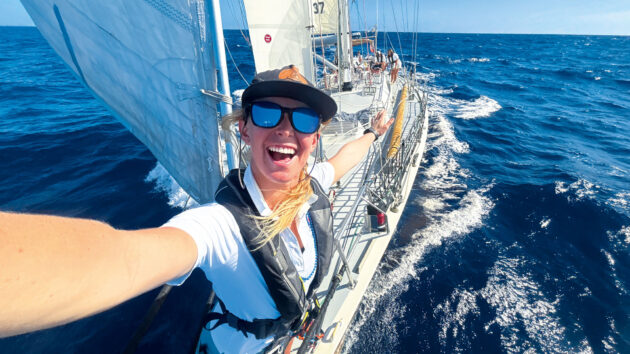
Ask Atlantic Rally for Cruisers sailors arriving in St Lucia what it was like to cross the Atlantic and most people will tell you about the practicalities, the weather, the preparation, the fishing and so on. But when I asked one crewmember about his first-time experience on the 2025 ARC rally he put it very differently.
“Out there it is just you and the sea and space and the stars, and you feel a part of it,” reflects US sailor Dan Power. “At night, sitting at the helm with the instrument panel in front, all orange-lit on a black background, you kind of felt like you were flying through outer space and barrelling along into the void. I’m trying to keep remembering the beauty of it.”
The Atlantic Rally for Cruisers was launched 40 years ago by BBC journalist and circumnavigator Jimmy Cornell at the Cruising Association. It was described at the time as ‘a new transatlantic sailing race designed, not for racing’s elite of semi-professional sponsored yachtsmen, but strictly for true cruising enthusiasts’.
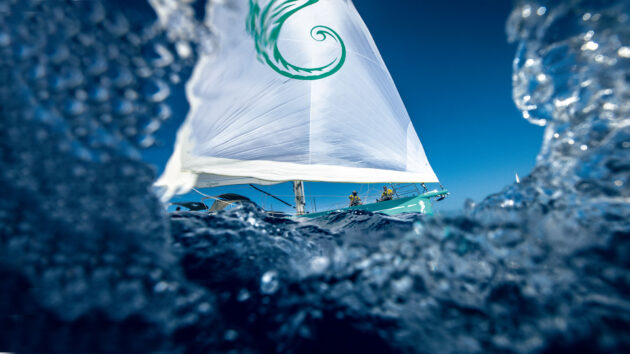
Photo: Paul Wyeth
It ran from Las Palmas to Barbados that year and proved a great success. Dreamed up in partnership with Yachting World, then-editor Dick Johnson later summed up its appeal: “It seemed that the combination of safety, education, parties and a destination in the Caribbean couldn’t be beaten. There was nothing like it in the world at the time, and there still isn’t.”
The ARC continues every year to do what it always did best, but is bigger, more refined, better. And now there are two of them when you count the parallel ARC+ rally which goes to Grenada via Cape Verde, and this year added 86 yachts to the 145 yachts in the ARC.
From the first, the rally established itself as the world’s largest transocean event and has never lost momentum.
It has weathered recessions, financial crises, geopolitical uncertainty, shifts in how and where people live and work, and evolutions in yacht design and technology to sit as one of the few sailing achievements that is genuinely within reach of ordinary sailors.
For most skippers it’s a once-in-a-lifetime undertaking. But its pull is strong enough that some return repeatedly. German sailor Manfred Kerstan, for instance, crossed the Atlantic more than 20 times in a succession of Swan yachts, all named Albatros.
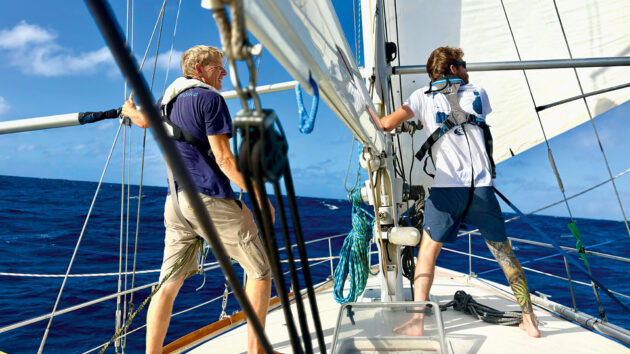
Sail changes on Amel Super Maramu Perdika, a family boat on a sustainable sailing mission. Photo: sailingperdika.com
I’m not in that league, but I do have a drawer full of faded ARC T-shirts. I’ve covered the rally for Yachting World almost every year since the early 1990s – sailed it too – which gives me a vantage point on the changes it reflects. Entry pathways, levels of prior experience and approaches to preparation have all shifted, but without diluting the fundamental demands or unique experiences that give the event its status.
One of the most profound shifts over the ARC’s history is the people sailing in the rally. In the 1980s, an Atlantic crossing was primarily the domain of lifelong sailors who had accumulated decades of sea time. The boats were small by today’s measures – certainly so by volume.
Today, a significant proportion of participants arrive in large, expensive, often new yachts and it is not unusual to meet crews with only a handful of years’ experience.
Yet these are not casual adventurers. They are generally successful businesspeople who bring the same discipline and strategic thinking that shaped their careers. Instead of relying on long experience, they compensate with meticulous preparation.
They invest in professional training and expert support, they do detailed planning, and they make significant investments in systems and safety.
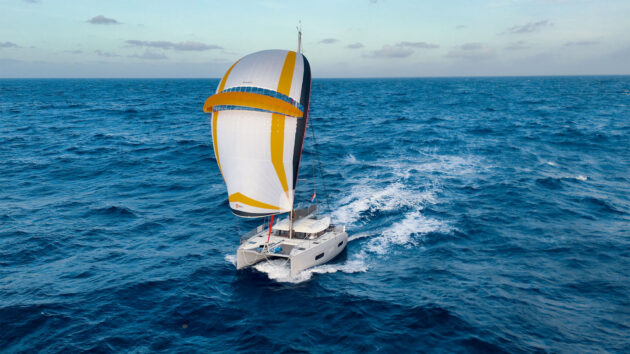
Parasailor up for easy family cruising on the Excess 11 Lyfe during the 2025-26 ARC+ rally. Photo: @lyfesailing/WCC
The result is a new kind of ocean sailor, less traditional but arguably more organised. By any objective measure, they are just as capable of getting safely across an ocean – or of sailing round the world, which some do.
“The route to getting here is different,” agrees Paul Tetlow, managing director of organisers World Cruising Club. “We run seminars each year and other events to generate interest and pass on knowledge, and we know the pipeline to participation is up to five years.”
Taking advice on the Atlantic Rally for Cruisers
You can’t miss Zenobia as you walk along the dock. The shiny new Oyster 595 hull colour is a vivid turquoise and looks confidently different. She belongs to Mike and Vic Brown, who bought her with the intention of doing the Oyster World Rally in 2028. Zenobia was launched in Ipswich in April 2025.
Mike and Vic are comparatively new to sailing. They used to keep a powerboat in Lymington, which they enjoyed with their family.
Vic recalls, “We were just thinking about retirement and wanted to do something adventurous now that the children are older.”
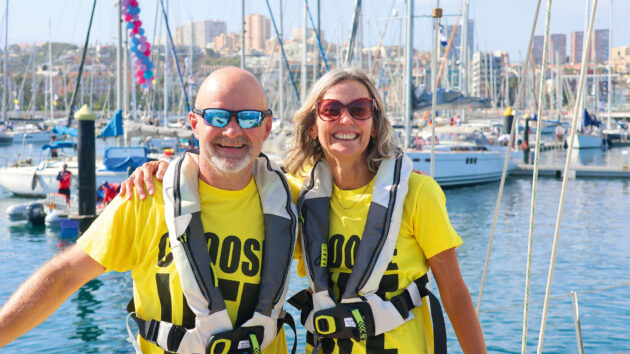
Mike and Vic Brown gave up motor racing and bought the Oyster 595 Zenobia for new adventures. Photo: Mike and Vic Brown/SV Zenobia
A serious medical emergency concentrated their ideas. Three years ago, Mike had a motor racing accident at the Thruxton circuit and spent two months in intensive care. When he recovered, he decided the time had come for a new adventure. “Nine months after the accident, we ordered the boat,” he says.
After signing the contract, they began their training, mixing boat-specific experience with the traditional RYA syllabus pathway. “We did our Competent Crew course in the Mediterranean, our Day Theory course in London and the Day Skipper practical in the Caribbean and in the Solent,” says Mike.
“We have also done the Yachtmaster theory course, and when we’ve got the mileage we will do the practical exam, then we will have two more years to learn on board before we do the Oyster World Rally.”
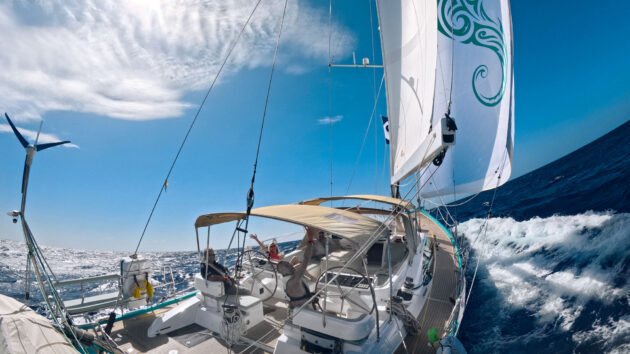
Mike and Vic Brown’s Oyster 595 Zenobia. Photo: Mike and Vic Brown/SV Zenobia
Oyster’s project management and know-how from running their round the world rallies has been invaluable to the Browns.
“They have a huge spreadsheet that covers safety equipment, spares, and consumables etc, and they break it down into recommended lists of ‘must’, ‘should’ and ‘nice to have’,” says Mike.
Other perspectives on the Atlantic Rally for Cruisers
The connections the couple made while learning provided another valuable perspective. “The chap who taught us the Day Skipper course became a friend and adviser, and we were able to discuss options that affected the sailing capabilities, such as the sail inventory,” he adds.
The Browns also sought guidance from Will Spencer of White Dot Sailing (whitedotsailing.com), who specialises in preparing people for bluewater and adventure sailing.
“He prepared a maintenance log system recording all the service schedules and component expiry dates. There are so many different things to think of – from keeping the batteries in your EPIRB in date to oil changes – and you need to be ahead of it and be proactive,” says Mike.
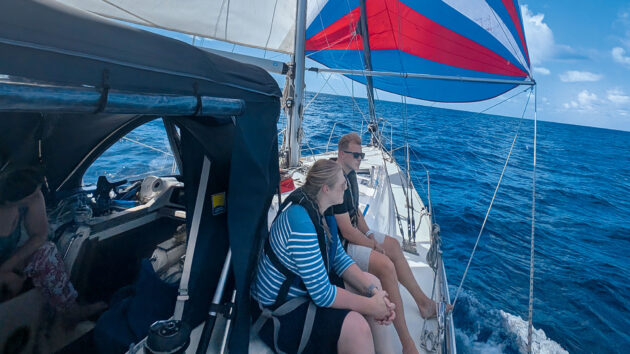
Joe Sage and family aboard the Moody 44 Ocean Strider. Photo: Ocean Strider
Mike and Vic again chose to lean on expert help when Zenobia was delivered, employing an experienced skipper to assist with the handover and initial training. “At the handover you have so much thrown at you in a short time, everything from the operating systems, the electrics, the B&G systems, and the routine maintenance, strainers, bilge pumps, seacocks, checks, processes and procedures,” Mike says.
For the ARC, they took on a different skipper, Matt, who had done eight previous transatlantic crossings.
“He was the official skipper and had overriding responsibility. He chose the sailplan and where to go and when to reef,” Vic explains.
“Every day he would discuss the weather and the bigger picture and he really took into account that we were nervous and wanted time to learn. He was very conservative and it was all about doing things properly.”
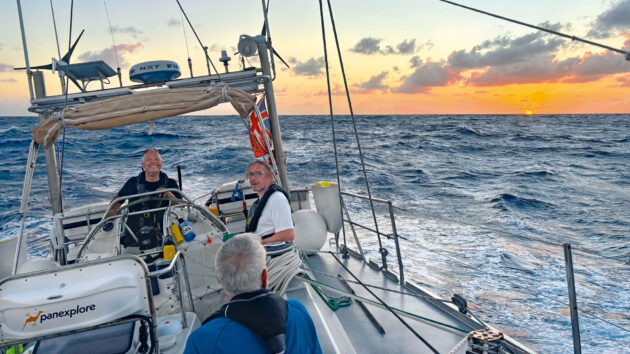
Sunset mid-ocean on the 72ft SV Sea Dragon. Photo: PanExplore.com
For the couple, the great advantage of this approach is that “we know everything equally. We’ve both been beneficiaries of the same training and come from the same position because of how we tackled it,” says Mike.
Considering their equipment choices, Vic says that some recommendations initially seemed excessive.
“When you’re not a sailor, you wonder why you are recommended to take so many sails.” Along with the high-cut yankee, blade jib, staysail and Code 0, Zenobia carries an Elvstrom bluewater runner sail. “That was brilliant – we had it up most of the 17 days,” says Mike.
Article continues below…
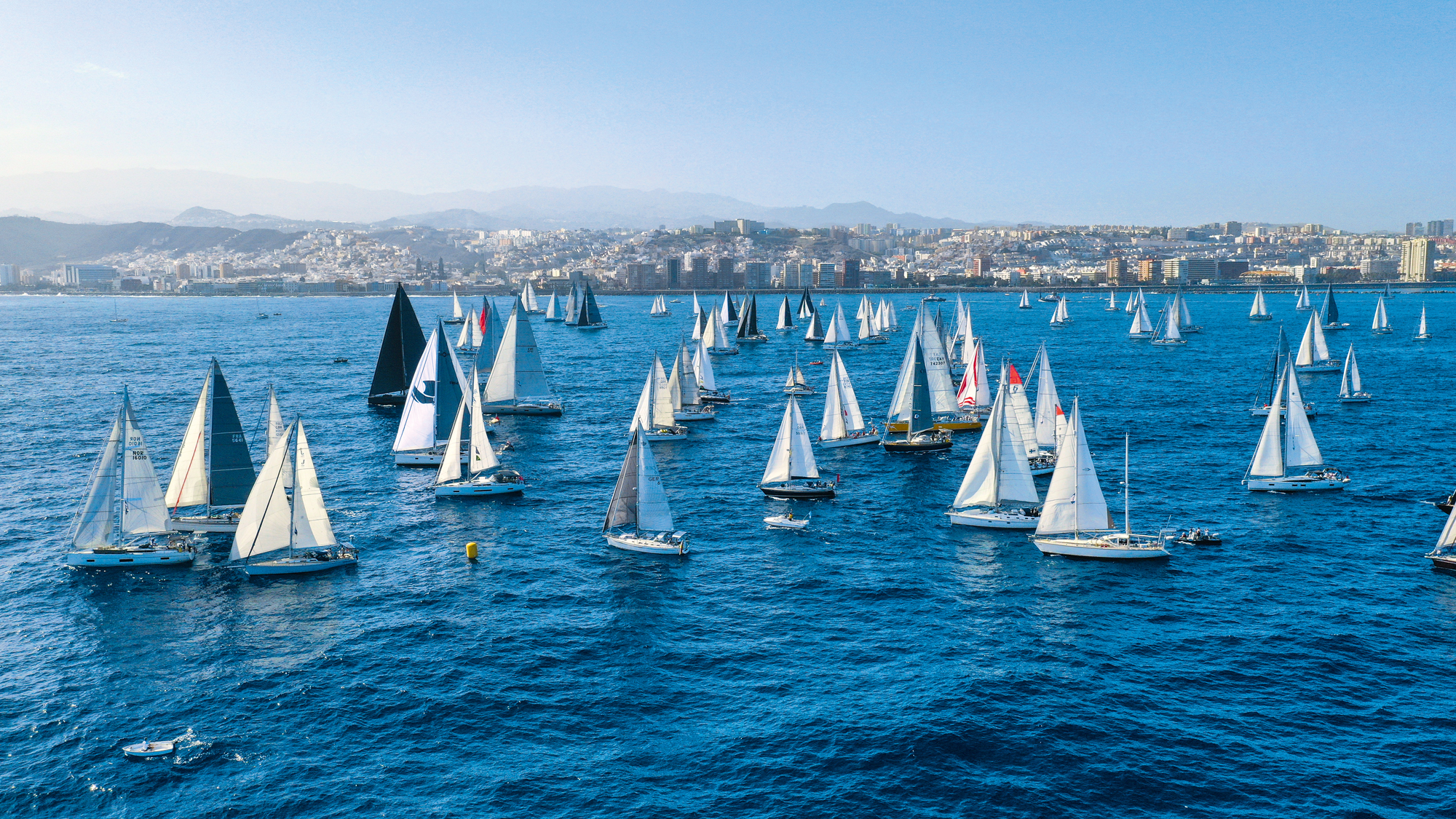
40 years of the ARC: The evolution of a transatlantic icon
Back in 1985 Margaret Thatcher was in Downing Street, Mikhail Gorbachev in the Kremlin, and a world-famous pop star was…
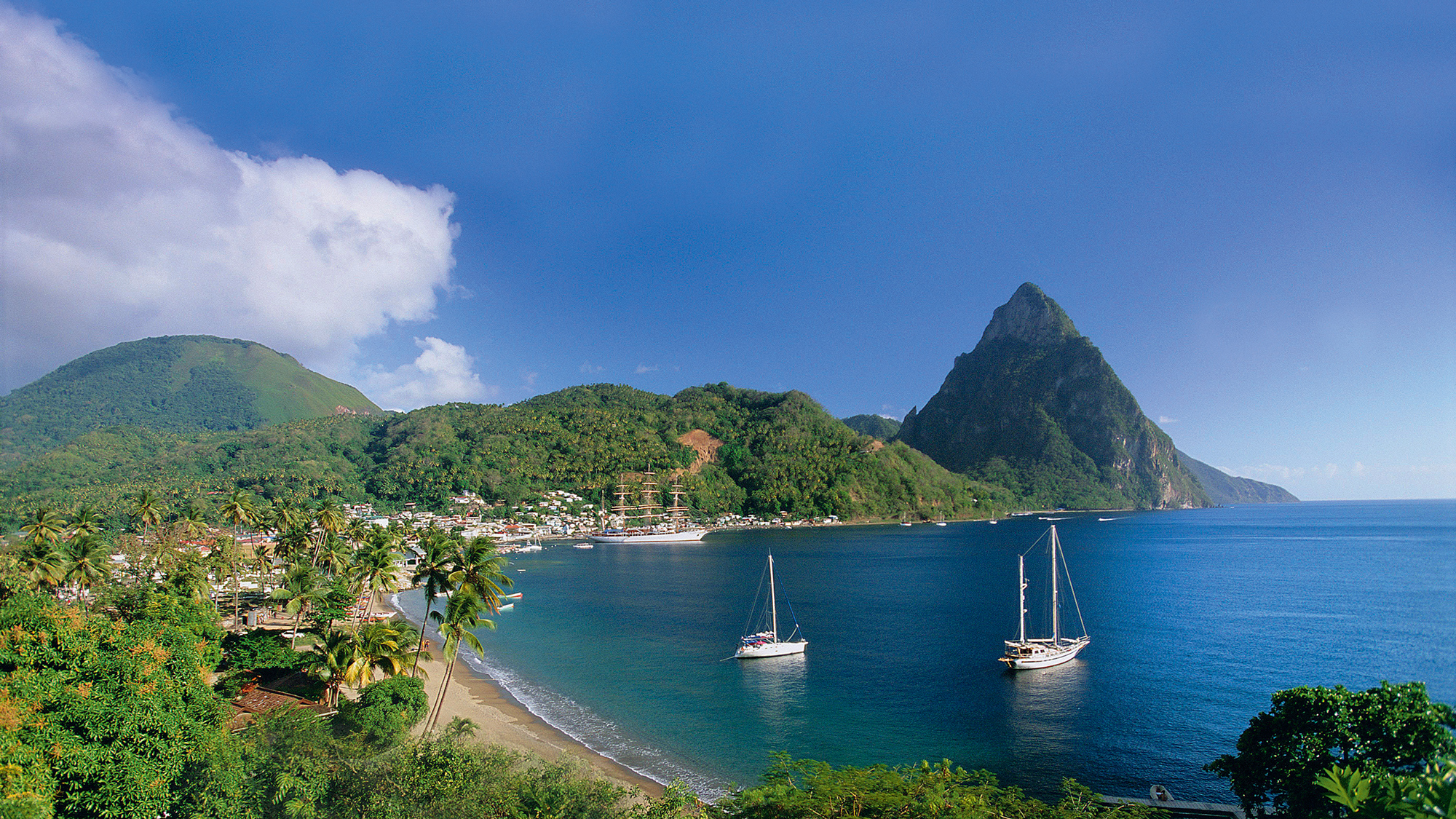
Saint Lucia: not just a transatlantic stopover
At the end of a long transatlantic crossing, the island of Saint Lucia is a dreamlike landfall. Its hills and…
Shakedown ready?
There is a pattern of owners ordering new yachts for an Atlantic circuit and taking delivery in time to depart with the rally. They are starting their voyage with a warrantied boat configured for extended cruising rather than adapted later, and the rally start date naturally sets the timetable for departure.
German sailor Karsten Becker bought his new Ovni 430 Micado for the ARC. The recently retired surgeon had chartered for years, but when he sold his surgery to go cruising, he opted to buy his own yacht.
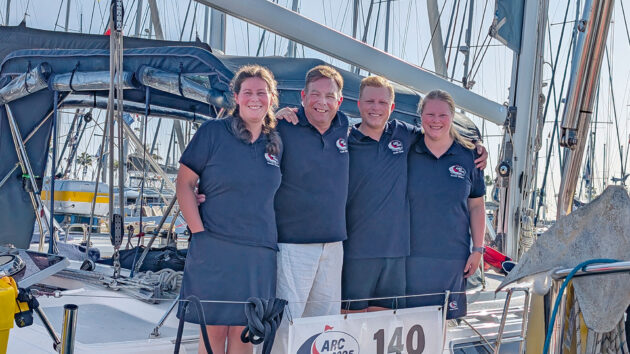
Joe Sage and family. Photo: Ocean Strider
Becker experienced a series of problems on the crossing. “We had issues with the generator, a rope in the propeller, a leaking shaft seal, a broken spinnaker halyard and problems with the alternator,” he says.
The volume of issues is nothing unusual on a first major passage, but as a first-time owner Becker admits he was surprised. “I thought that with a new boat nothing would happen.”
With hindsight, he says a longer shakedown period would have helped. “Looking back, it would be better to spend a year sailing before the Atlantic. You need a long trip to see problems, but not be too far from home. It would make the crossing safer – and more enjoyable.”
His advice is pragmatic: “Prepare as much as possible, but don’t expect that you know everything. Every day you will learn something. Be open-minded about what can happen.”
The connected era?
Long-term family ownership of yachts was common in the 1980s; today it is rare. Boats are usually bought for a defined bluewater voyage, then sold once it ends.
Ocean Strider is a Moody 44 from this earlier era. I recognised the name when I saw it on the pontoons in St Lucia, but couldn’t quite place where I’d come across it.
But when I stopped to talk to Joe Sage, who sailed across this year with his adult children, I realised that I’d met them before – 20 years previously.
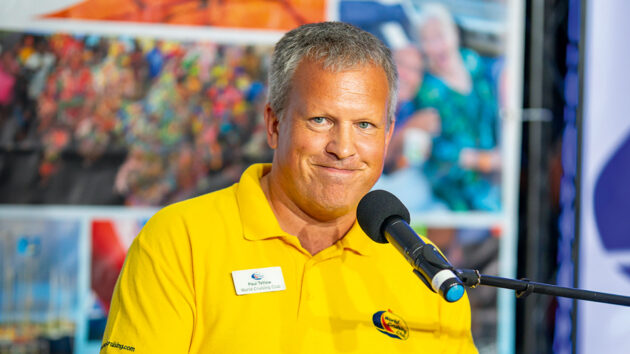
WCC’s Paul Tetlow. Photo: Acheryphotography/WCC
In 2005 Joe and his wife, Kim, crossed with the ARC, together with their three young children. Kim sadly died six years ago, but the family still sail together regularly and returned for the 20th anniversary of their crossing.
Joe has now owned Ocean Strider for 23 years and jokes that “it’s not the original boat.”
“It has been re-engined, re-rigged and modified,” he explains, “and I do all the work myself. I didn’t feel well prepared when we did the ARC the first time, but this time we were.”
Their plan is to enjoy the boat on the far side of the Atlantic for the next three years. They will spend six months in the Caribbean moving towards Puerto Rico before going south to lay up in Grenada for the hurricane season. Next year they intend to cruise in Trinidad and Tobago, the ABC islands, Jamaica and Cuba, and the year after that in Belize, Guatemala and Panama. They are in no hurry.
Joe Sage identifies Starlink as one of the most consequential changes. Now fitted on almost every yacht in the fleet, it has normalised instant connection and communication with the world ashore, and subtly altered expectations.
Being at sea lends itself to a kind of quiet cognitive dissonance. A common observation among crews was that the open ocean feels far larger than they envisaged, and a yacht more isolated. The Atlantic Ocean’s 41 million square nautical miles of water just collapses to abstraction on a computer screen.
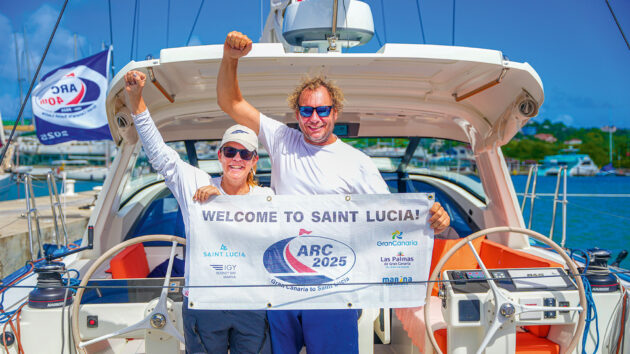
Astrid De Vin and Roeland Franssens sailed the Pegasus 50 Sedem. Photo: ES Promotions/WCC
“With so many boats, we thought we would stay in contact with other people,” Vic Brown observes. “With the Yellowbrick tracker and WhatsApp groups coming into play you get the feeling that there are always other boats around, but after leaving the Canary Islands we were almost immediately out of range of others.”
This immersion in wilderness, marked by sunrises, sunsets and night skies, is what makes an ocean crossing so rare. On land, it is increasingly difficult to find anywhere that time loosens its grip in the same way.
For all the technological progress of the past 40 years, the basic character of the crossing is unchanged.
“It’s mesmerising to be in a place where there is nothing for 1,000 miles in either direction,” remarks Vic Brown.
Dan Power calls it “the trackless void”. For him, the crossing distilled itself in the hours when there was nothing to look at but the sky.
“Sometimes on my night watch I’d lie back and look up,” he says. “From horizon to horizon, there were just stars. To see that scale, and to feel part of it – you don’t get many chances to do that.”
The project-manager/owner
The ARC increasingly attracts a particular archetype: the business owner/project-manager. Estonian businessman Kalev Päll, who crossed in Lara, a Nautitech 40 Open, is a clear example of this.
Päll had wanted to do the ARC for several years but only committed once he was able to step back from his construction and design business. He approached the project analytically. “Before buying the boat, I had already compiled a full list of preferred options,” he says. “I knew the cost of all the different parts and already had some of them in my garage.”
He rejected many standard factory systems and reconfigured the boat to suit his priorities, re-doing electrical systems and converting to 24V, switching to a lighter weight generator and rethinking how equipment was installed and maintained.
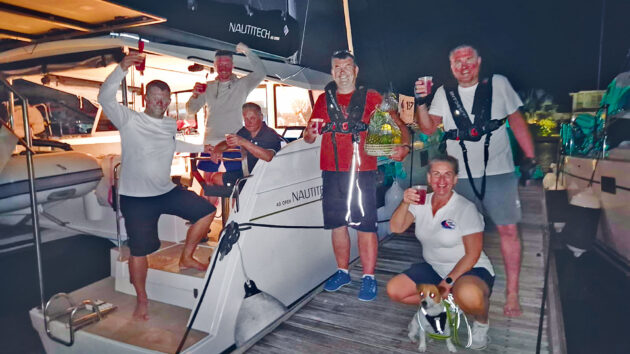
Estonian Kalev Päll and his crew on the Nautitech 40 Open Lara celebrate arriving in St Lucia. Photo: SV Lara
“I can say we almost rebuilt the boat,” he says, describing weeks spent refitting systems with friends before departure, then going to a Portuguese yard for the final touches, a radar system and teak decking in the cockpit.
Preparation extended beyond hardware. Päll analysed several years of ARC weather data and routing decisions to understand how previous fleets had crossed, though the variability of conditions still delivered surprises. “This year was absolutely different,” he admits.
Is the ARC getting faster?
Despite decades of advances in yacht and sail design, average Atlantic crossing times have not changed greatly in recent decades. The ARC route is a predominantly downwind passage that favours conservative ‘barn door’ sailplans and rewards consistency over high VMG angles, which limits the gains modern designs can make.
There have been outliers. The transatlantic ‘course record’ stands at 8 days 6 hours, set in 2016 by George David’s canting-keel maxi Rambler 88. But such boats operate far beyond the cruising brief and rarely enter the event.
For most of the fleet, elapsed times still cluster between 16 and 18 days – in the 2025 ARC, the largest finishers’ grouping was around 17 days. Even among identical yachts, results can vary by a day or more, as times are shaped less by design than by skipper choices, willingness to push and to motor in light airs.
In the end, an Atlantic crossing with family and friends remains a passage where comfort is much more meaningful than outright speed.
 If you enjoyed this….
Yachting World is the world’s leading magazine for bluewater cruisers and offshore sailors. Every month we have inspirational adventures and practical features to help you realise your sailing dreams.Build your knowledge with a subscription delivered to your door. See our latest offers and save at least 30% off the cover price.
Note: We may earn a commission when you buy through links on our site, at no extra cost to you. This doesn’t affect our editorial independence.