



Developments in solid state battery technology could see us on the cusp of a brave new world of safe, emissions-free sailing
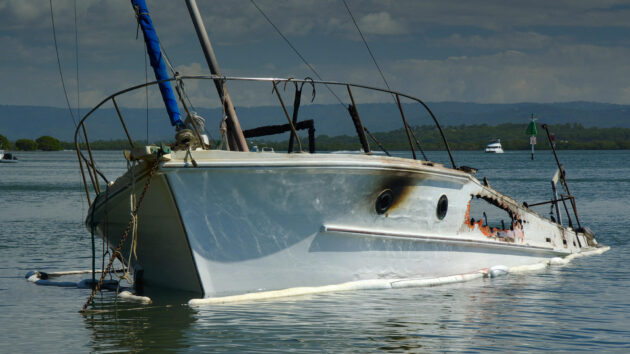
Unlike the motoring world, one of the biggest barriers to marine electrification has not been range, charging infrastructure or perhaps even cost. It has been fear. And it’s not difficult to see why.
Few situations can be more alarming than the prospect of a fire at sea. On land, a burning vehicle can be abandoned and emergency crews can arrive quickly. At sea, it’s clearly a different story and in the case of lithium battery fires, crews can face the added danger of thermal runaway, a chain reaction in which damaged battery cells continue generating heat, flammable gases and reignition risks long after the initial blaze appears under control.
The marine industry has become increasingly alert to these risks as lithium battery installations have spread rapidly through recreational and commercial vessels. Stories of electric bike batteries igniting in marinas, poorly installed lithium retrofits catching fire and battery compartments reigniting hours after being extinguished have fuelled concerns that electrification may introduce a new category of danger aboard.
And yet the broader statistics tell a more nuanced story.
According to Sweden’s Civil Contingencies Agency, electric vehicles are around 20 times less likely to catch fire than petrol or diesel cars. Internal combustion vehicles routinely carry tens of litres of highly flammable fuel, operate at extreme temperatures and contain numerous ignition sources. Conventional vehicle fires are so common they rarely attract headlines. Battery fires remain comparatively rare but command enormous attention.
At our end of the scale the UK’s MAIB is quoted as saying that, ‘40% of yacht fires in recent years were caused by lithium batteries.’ The challenge for electric propulsion is now not just about safety, but confidence too.
That’s why the announcement by EPTechnologies of the world’s first DNV (Det Norske Veritas maritime classification) class-approved solid-state marine battery could be one of the most significant milestones yet in the electric evolution.
Article continues below…
Lithium battery fires: the 10-point safety checklist every boat owner needs
Resilient to heavy loads, longer lasting, smarter and, some would argue, cheaper over the long term; lithium batteries technology is…
According to the Danish company their new Svenner battery system can withstand six-times overcharging and even an 8mm nail penetration test without thermal reaction. That’s a big deal because conventional lithium-ion batteries rely on liquid electrolytes to transport ions between electrodes. Those liquid electrolytes are flammable and can trigger thermal runaway when damaged, overheated or improperly charged. Solid-state batteries replace much of that liquid material with solid electrolytes, dramatically reducing the risk of combustion.
In practical terms, that means a battery that is substantially more resistant to fire following impact damage, manufacturing faults, vibration, overcharging or puncture, all highly relevant concerns in a marine environment where batteries endure constant movement, salt exposure and confined installation spaces.
Electric boats and cars have been constrained by the same three problems, limited range, long charging times and heavy battery weight. Solid-state technology has the potential to improve all three at once.
Current lithium-ion batteries used in electric vehicles typically achieve energy densities of around 250-300 watt-hours per kilogram. Many solid-state battery developers are targeting 400-500Wh/kg, with some experimental designs exceeding 700Wh/kg in laboratory conditions. That’s a huge leap in capacity that could mean batteries storing roughly twice as much energy for the same weight. In marine use, where weight and space are critical design considerations, the implications are enormous.
Solid-state batteries may last longer too. EPTechnologies says its Svenner system is designed to exceed 10,000 charge cycles. By comparison, many conventional lithium-ion marine systems are rated for around 2,000 to 4,000 cycles before significant degradation occurs.
Charging speed may also prove equally transformative. Solid-state chemistry promises dramatically faster charging because solid electrolytes can tolerate higher charging currents while generating less heat.
And that could change everything. Because a battery that’s more stable, more energy dense, faster charging and longer lasting stops being a compromise and starts feeling like a superior technology. And aside from the fear of it going up in smoke, that’s what’s holding things back for many of us.
 If you enjoyed this….
Yachting World is the world’s leading magazine for bluewater cruisers and offshore sailors. Every month we have inspirational adventures and practical features to help you realise your sailing dreams.Build your knowledge with a subscription delivered to your door. See our latest offers and save at least 30% off the cover price.
Note: We may earn a commission when you buy through links on our site, at no extra cost to you. This doesn’t affect our editorial independence.